






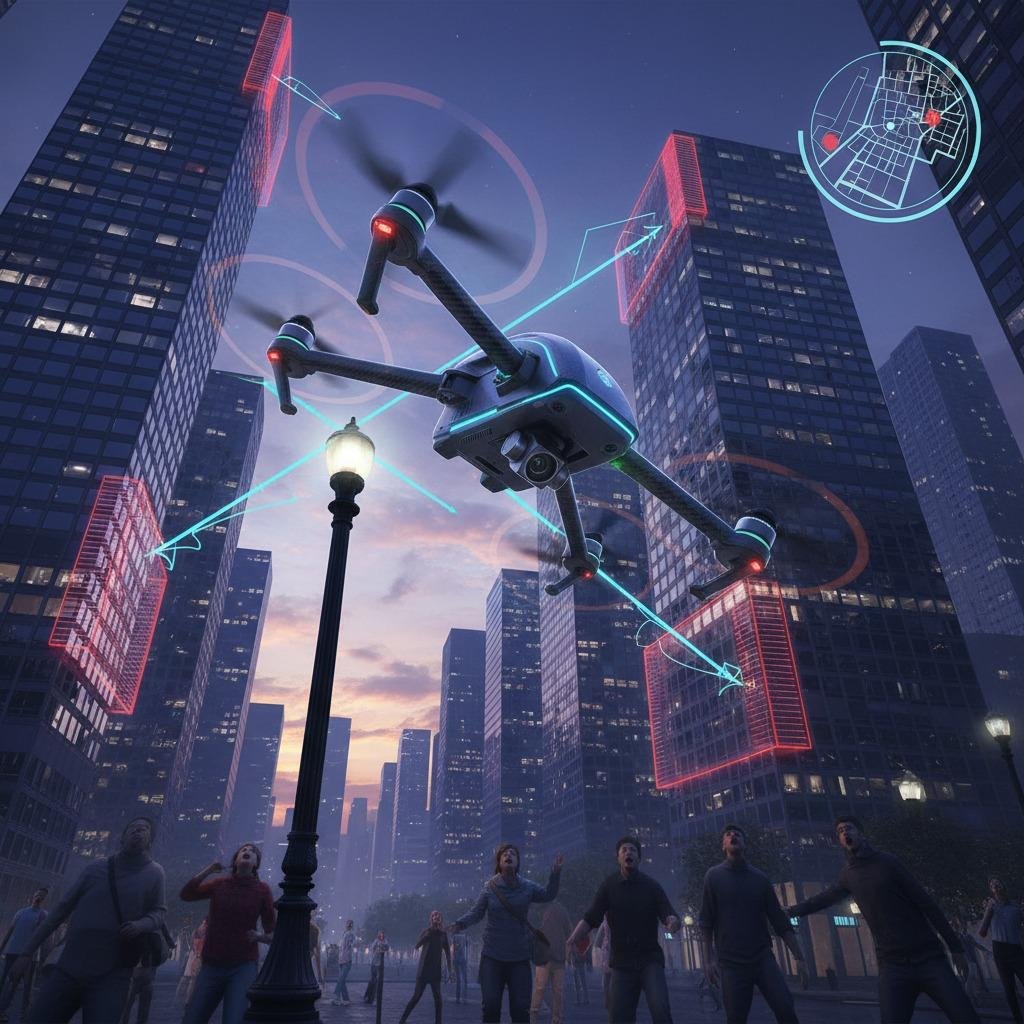
Safe Flight: Challenges of Unforeseen Obstacles in Drone Operations
In the rapidly evolving field of aerial robotics, one of the most pressing issues facing operators is the risk of collisions during flight, especially in complex environments such as urban areas or dense forests. Collision avoidance systems are crucial for mitigating these risks, ensuring that drones detect and avoid obstacles in real time. Without this technology, missions could abruptly terminate due to collisions, resulting in equipment damage, data loss, and safety hazards to people and property below. Traditional navigation methods often have shortcomings; they rely on pre-mapped routes that cannot adapt to dynamic changes, making drones vulnerable to unexpected obstacles.
Real-time navigation: the foundation of effective avoidance
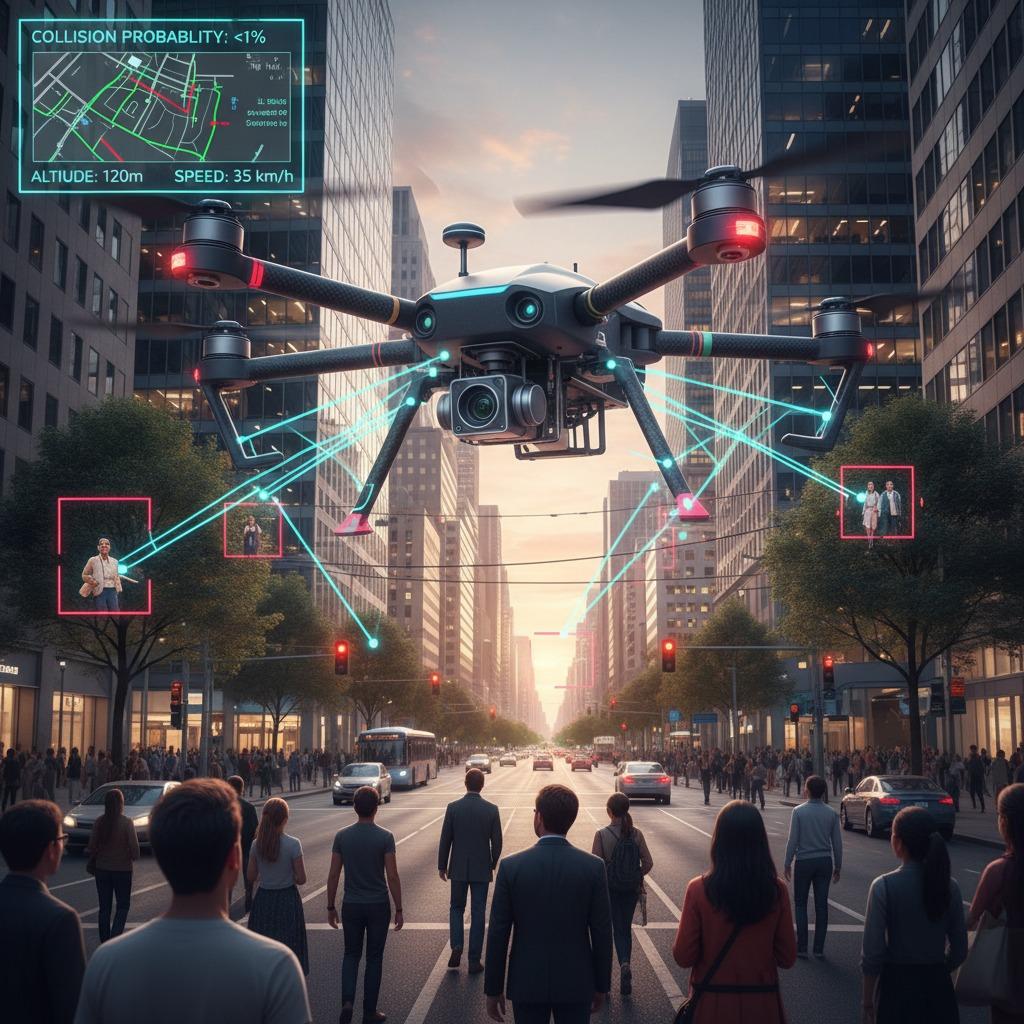
To address this core issue, real-time navigation has emerged as a key solution for building robust collision avoidance systems. By continuously processing environmental data, real-time navigation enables drones to adjust their flight paths in real time, avoiding static objects such as buildings and moving objects such as birds and other aircraft. This technology combines GPS with an inertial measurement unit (IMU) to provide precise positioning, allowing drones to make decisions instantaneously. For example, if a sudden gust of wind pushes a drone towards power lines, real-time navigation will immediately recalculate its flight path to avoid a collision. Combined with advanced algorithms, real-time navigation ensures smooth and stable flight, transforming potential hazards into seamless flight operations and improving overall operational reliability.
Autonomous flight control: Giving UAVs independent decision-making capabilities
Leveraging real-time control capabilities, the autonomous flight control system elevates collision avoidance systems to a new level, enabling drones to operate without continuous human intervention. In manual control, pilots must react instantly to various threats, leading to excessive workloads. The AI-driven system addresses this issue by autonomously interpreting sensor data and executing evasive maneuvers. Utilizing machine learning models trained on massive flight scenario datasets, the autonomous flight control system predicts and avoids collisions, reducing human error rates by up to 90% in simulation tests. This not only ensures drone safety but also extends mission duration, making it ideal for applications with extremely high reliability requirements, such as delivery services or surveillance.
SLAM and Sensor Fusion: Precise Mapping and Integrated Sensing for Unparalleled Accuracy
A major challenge in collision avoidance lies in accurately mapping unknown environments, and Simultaneous Localization and Mapping (SLAM) technology was developed to address this challenge. SLAM enables drones to track their own position within a 3D map of their surroundings, overcoming the inaccurate localization issues of traditional systems in unmapped areas. SLAM utilizes cameras, LiDAR, and ultrasonic sensors to create a dynamically updated model in real time, allowing collision avoidance systems to warn of obstacles before they become potential threats. Sensor fusion further enhances this advantage by combining data from multiple sources to form a unified and reliable environmental perception. Sensor fusion improves accuracy by cross-validating input data, overcoming the limitations of single sensors—such as poor LiDAR performance in fog or camera performance in low light. For example, fusing visual data from cameras with depth information from LiDAR provides a more comprehensive view of the environment, enabling drones to navigate confidently in complex environments. These technologies combined form a collaborative solution that can significantly reduce collisions and open the door to more ambitious autonomous operation.
In practice, integrating collision avoidance systems powered by real-time navigation, autonomous flight control, SLAM, and sensor fusion technologies can transform drones from fragile tools into robust and durable machines. This problem-solving approach not only minimizes risk but also improves efficiency, paving the way for safer airspace and innovative applications across industries.