






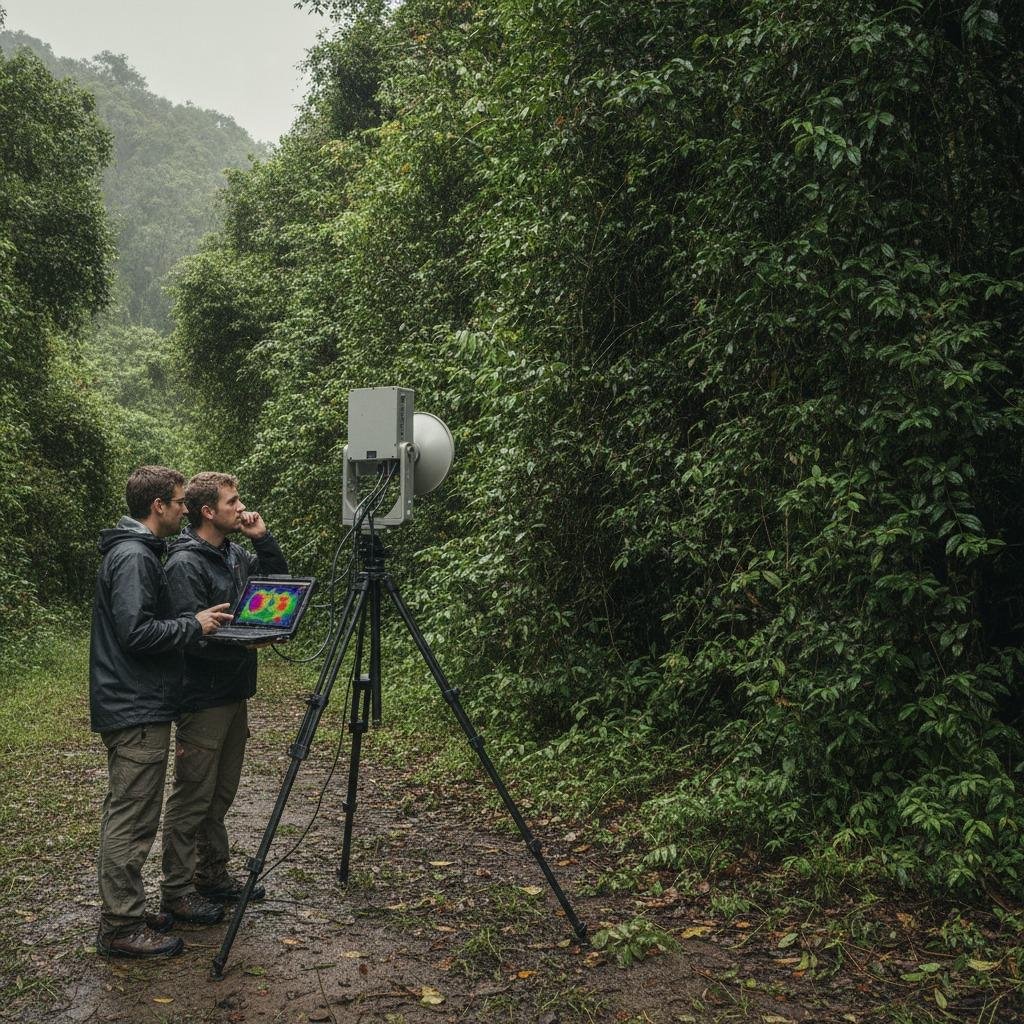
Why foliage penetration sensing matters in real deployments
Foliage penetration sensing sits in a very practical corner of the sensing world: it is about finding useful signals when leaves, branches, brush, and irregular terrain get in the way. For engineers and sourcing teams, the question is rarely whether a sensor can collect data in clean lab conditions. It is whether the system still gives a dependable picture when the scene is messy, wet, moving, or partially hidden. That is the real decision point, because many field applications fail not from a lack of nominal range, but from loss of visibility once the environment becomes cluttered.
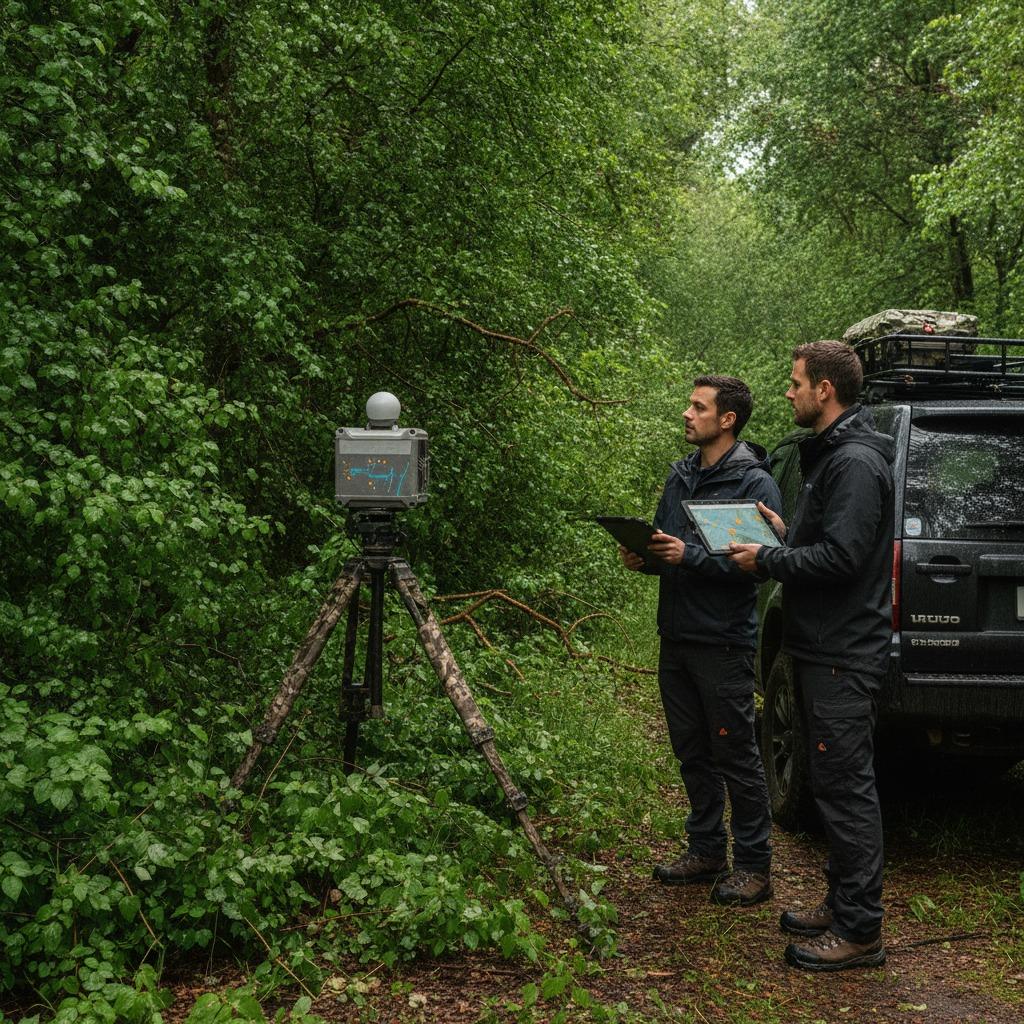
This matters in search and rescue, perimeter awareness, environmental monitoring, and mapping tasks where line-of-sight cannot be assumed. It also overlaps with other difficult-detection use cases such as wall-penetrating radar, smoke-obscured target detection, underground structure detection, and through-wall human activity recognition. The technologies are not identical, but the buying logic is similar: the sensor must preserve usable contrast, resist false alarms, and continue working when the scene no longer looks like the test range.
What the technology is trying to solve
Dense vegetation scatters, absorbs, and distorts signals. Leaves change with moisture. Branches create multipath clutter. Ground reflections complicate interpretation. In practice, that means a system may detect “something” but not describe it cleanly enough for a field operator to trust. The goal of foliage penetration sensing is therefore not magic visibility. It is improved probability of detection and better target discrimination under partial occlusion.
Buyers should keep that distinction in mind. A product that performs well in open terrain may look impressive in a brochure but deliver little value in wooded areas, ravines, orchards, or overgrown industrial sites. The useful question is not simply “does it detect?” but “how stable is the detection when the foliage density changes, the viewing angle shifts, or the target moves behind clutter?”
Quick reference: where different approaches tend to fit
Different sensing approaches can support foliage-facing tasks in different ways. Radar-based methods are often attractive because they can tolerate obscurants better than optical systems. That does not mean they eliminate all problems. They still face clutter suppression, resolution tradeoffs, and interpretation challenges. Optical and infrared systems can add context, but they are usually more vulnerable to obstruction. In many real systems, the practical answer is sensor fusion rather than a single sensor type.
For teams comparing options, the decision often comes down to the balance between penetration, resolution, size, power budget, and how much downstream processing the platform can handle. A compact device with modest compute may be better for simple alerting, while a richer processing chain may be justified if operators need classification or activity recognition rather than just presence/absence detection.
Selection criteria that matter more than headline range
1. Scene variability
Ask how the sensor behaves across different canopy densities, wet versus dry foliage, and sloped ground. Field conditions change quickly, and a sensor optimized for one terrain can become unreliable elsewhere.
2. Clutter handling
In vegetated environments, clutter is the enemy. Buyers should look for systems with credible filtering or signal-processing approaches that separate likely targets from background returns. Without that, operators spend too much time sorting noise from signal.
3. Output usefulness
Raw detection is only part of the story. Does the system produce a map, a track, an alert, or an interpretable activity cue? For engineering teams, downstream integration is often where the real cost appears.
4. Deployment constraints
Power, mounting, environmental sealing, and communications all matter. A technically strong sensor that is awkward to install or expensive to maintain can lose out to a simpler option that fits the platform better.
Common mistakes buyers make
One common mistake is treating foliage penetration sensing as if it were a single performance metric. It is not. Another is comparing systems only by maximum distance under ideal conditions. That can hide weaker behavior in partial occlusion, where many field failures actually happen. A third mistake is ignoring the processing burden. If the sensor needs heavy manual interpretation, the system may be technically impressive but operationally awkward.
There is also a procurement trap on the specification sheet side. Vague language can make two products sound similar when they are not. For that reason, sourcing managers should ask for application-relevant demonstrations rather than broad claims. If the vendor cannot explain what happens when foliage thickens or moisture changes, that is a warning sign worth noting early.
How to evaluate a supplier or system concept
Start with the environment, not the sensor catalog. Define canopy density, target type, movement profile, and whether the system needs simple detection or more advanced interpretation. Then ask for evidence that matches that use case. Field data is more useful than a polished spec sheet, though even then you should read it carefully and avoid overgeneralizing from a single scenario.
For engineering and product teams, a good internal test plan should include multiple clutter levels, changing angles, and at least one adverse condition such as moisture or ground reflection. That does not require a laboratory-grade campaign every time, but it does require honesty about the operating envelope. If your application also touches wall-penetrating radar or underground structure detection, note that the signal-processing priorities will differ, even if the procurement logic feels similar.
Practical buyer advice
If your team is early in the selection process, define the operational question first: locate, track, classify, or monitor. Then match the sensing approach to that question. For example, smoke-obscured target detection may push a team toward different sensor combinations than a forestry mapping task, even though both involve obscurants. The more specific the mission, the easier it is to evaluate tradeoffs without drifting into marketing language.
It is usually smarter to buy for robustness than for theoretical peak performance. In the field, consistency often beats a flashy maximum figure. That is especially true when the sensor has to work alongside other systems or feed decisions that affect safety, security, or expensive equipment movement.
FAQ: short answers buyers usually need
Is foliage penetration sensing always radar-based? No. Radar is common because it can perform better through obstructions, but practical systems may combine multiple sensing modes.
Does better penetration automatically mean better results? Not necessarily. A system also needs enough resolution, clutter rejection, and processing quality to be operationally useful.
Can one system handle foliage and through-wall use cases? Sometimes the underlying techniques overlap, but the deployment requirements are different. Treat them as related, not interchangeable.
What should a buyer request before purchase? Application-specific evidence, clear operating limits, and a realistic explanation of what the system can and cannot distinguish in cluttered scenes.
What to do next
If your project depends on seeing through vegetation rather than around it, build the shortlist around field behavior, not brochure language. Ask vendors to show how the system performs in the kind of clutter you actually face, and compare outputs based on how quickly your team can trust and act on them. That is usually where the most expensive mistakes are avoided.