






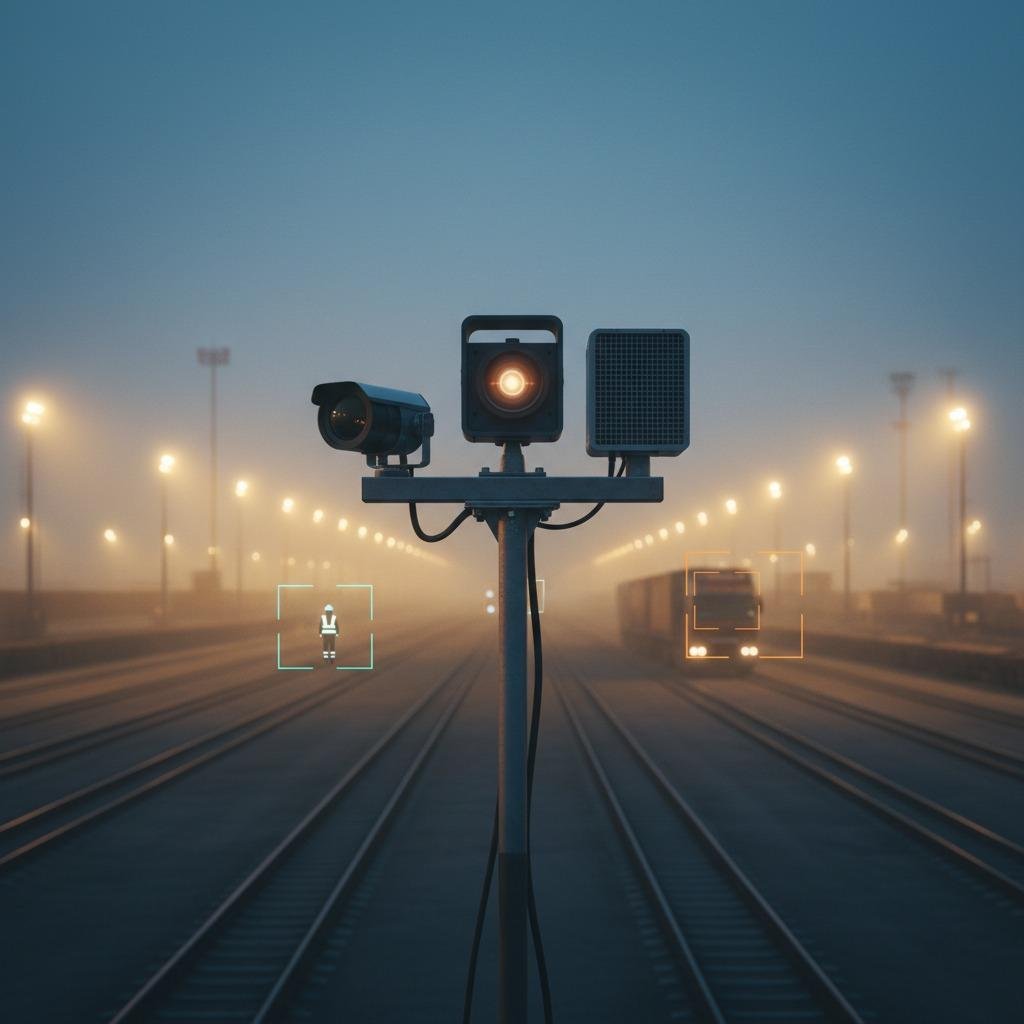
The Breakdown of Optical Re-Identification in Field Environments
Industrial perimeters, maritime yards, and autonomous logistics hubs face a persistent perception bottleneck: standard vision pipelines lose tracking locks the moment physical operating conditions deviate from standard factory test parameters. When heavy dust kicks up in a rail yard or backlighting washes out a high-bay sensor array, appearance-based models collapse. This operational vulnerability has accelerated the transition toward fusion-based object re-identification, shifting the problem from purely vision-centric feature extraction to multi-modal perception pipelines capable of sustaining identity over long baselines and varied weather.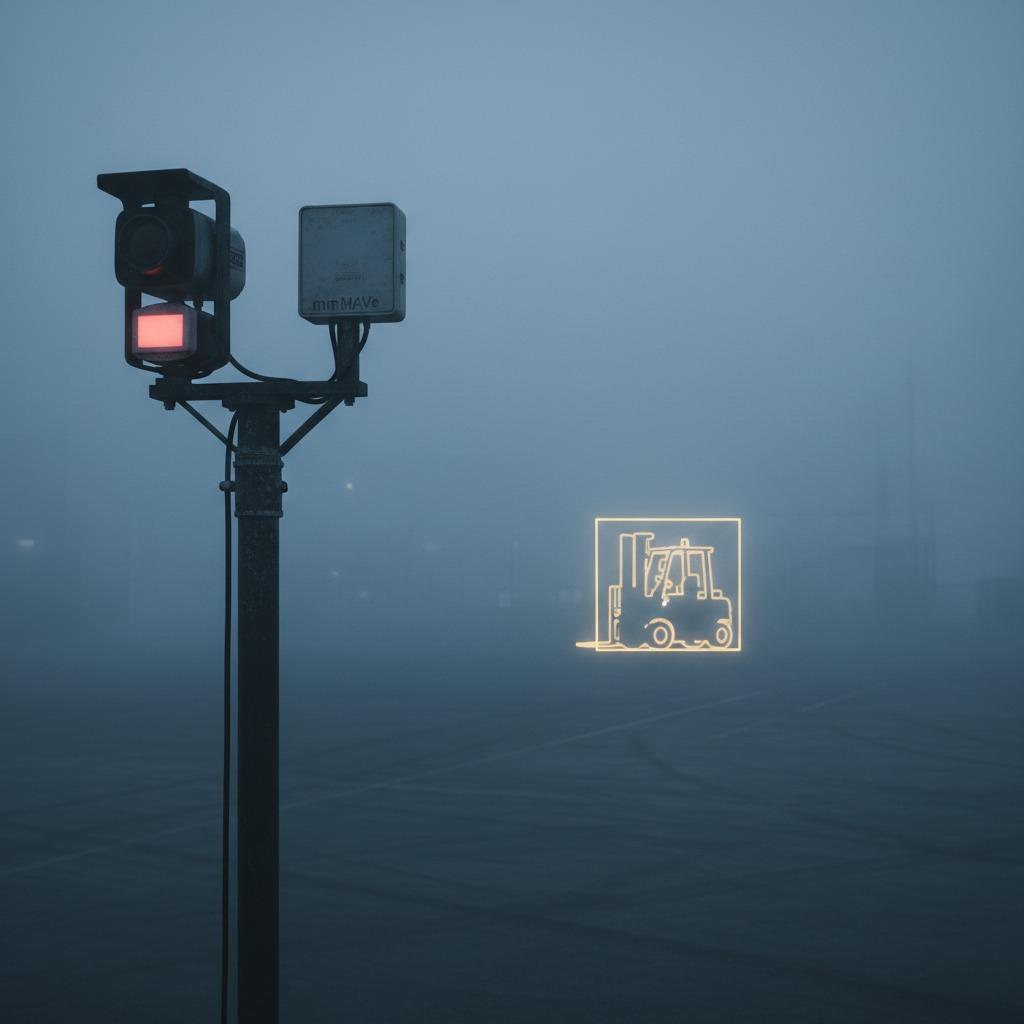
For systems integrators and edge perception leads, the challenge is rarely about whether multi-modal sensing is conceptually superior. It clearly is. The friction lies in the deployment details: data synchronization, asymmetric sensor degradation, and the real-world compute penalties incurred when processing disparate data streams on constrained edge platforms.
The Architecture: Bridging Visible, Thermal, and Radar Streams
Single-spectrum tracking relies heavily on color histograms, edge profiles, and visual texture. These representations fail when ambient illumination drops or when clothing and container liveries alter apparent features across camera views. Solving this requires layering distinct sensing modalities so that one sensor's blind spot is covered by another's physical baseline.
Cross-Spectral Target Association
Pairing standard RGB feeds with long-wave infrared (LWIR) provides immediate resilience against shadowing and total darkness. However, cross-spectral target association introduces non-trivial algorithmic friction: thermal imagery lacks chromatic information, while visible sensors lose target boundaries in zero-lux environments. High-performance pipelines bypass raw pixel mapping by translating visual and thermal features into a modality-invariant latent space. The network correlates thermal signatures—such as engine heat signatures, human thermal silhouettes, or cooling gradients—with optical bounding boxes, maintaining global identity tags even when targets transition across radically different lighting zones.
Radar-Thermal Infrared Fusion
Where high-particulate air, steam, or sea spray degrades both optical and thermal wavelengths, radar-thermal infrared fusion serves as the resilient backbone. Millimeter-wave (mmWave) radar excels at micro-Doppler signature extraction and radial velocity estimation, ignoring atmospheric scatter entirely. By mapping radar point clusters against thermal contours, the system creates a spatial-temporal anchor that survives dense fog or visual obscuration. The radar provides range and velocity certainty; the thermal sensor establishes bounding contours and structural context.
For mobile autonomous assets—such as automated guided vehicles (AGVs) operating between indoor warehouses and outdoor staging yards—sensor ego-motion complicates cross-camera handoffs. In these configurations, incorporating radar-assisted visual odometry prevents tracking drift by decoupling vehicle ego-motion from the dynamic trajectories of external targets, ensuring the coordinate system remains stable during handoffs.
The Calibration Debt: Where Most Deployments Stumble
Software engineering teams frequently assume that spatial transforms between sensors remain static once initialized on a calibration rig. In manufacturing yards and outdoor gantries, this assumption fails quickly.
Reliable multi-sensor calibration is an operational operational requirement, not a one-time setup step. Heavy equipment vibrations, thermal expansion of aluminum mounting brackets across seasonal temperature swings, and mechanical wind load all induce micro-rotations. A misalignment of just 0.5 degrees between a narrow-beam radar and a long-focal-length optical camera introduces several meters of projection error at an eighty-meter detection range. At that distance, the projection window is wide enough to misassign track IDs entirely.
Successful field implementations treat multi-sensor calibration as a continuous background task. Rather than depending exclusively on static checkerboard targets, systems must run online extrinsic calibration routines that dynamically adjust transform matrices using environmental tie-points and track histories.
Evaluating Edge Compute Against Latency Budgets
When designing a deployment stack for fusion-based object re-identification, hardware architects generally face a direct trade-off between association fidelity and pipeline latency:
Early-stage feature fusion yields the highest re-identification accuracy across occlusions, but it demands massive memory bandwidth. Transferring raw radar point clouds, high-resolution thermal matrices, and multi-camera optical frames simultaneously onto an edge compute module introduces severe bus contention.
Late-stage decision fusion, conversely, processes detections independently within each sensor module and only correlates tracklet metadata at the edge server. While this drastically cuts compute overhead, it fails whenever individual sensors lack the signal-to-noise ratio to generate a local tracklet on their own.
For high-security or fast-moving logistics operations, mid-level fusion—where intermediate feature representations from deep layers are aligned and concatenated—offers the practical middle ground. It maintains enough cross-modal correlation to resolve identity swaps without saturating the edge hardware.
Practical Recommendations for Engineering Leads
Before locking in bill-of-materials selections or issuing procurement tenders for multi-sensor hardware, consider three baseline practices:
Audit temporal synchronization mechanisms at the hardware layer. Software-based NTP or general OS timestamps introduce jitter that ruins multi-modal track association on fast-moving targets. Use hardware-level PTP (IEEE 1588) triggers to align radar chirps with camera shutter exposure windows.
Account for mounting bracket rigidity under thermal extremes. Using mismatched alloys for shared sensor mounts introduces mechanical deflection under direct sunlight, invalidating calibration matrices without any software-side failure alerts.
Profile your compute budget on worst-case weather scenarios. Rain and snow introduce significant clutter into radar point clouds and wash out thermal scene contrast, driving up inference latency just when tracking accuracy is most critical.
Frequently Asked Questions
Why not rely purely on higher-resolution 4K optical cameras for Re-ID?
Resolution does not overcome physical contrast loss. In low-contrast scenarios, glare, or heavy precipitation, additional pixels merely increase data transmission bottlenecks without providing distinct feature embeddings. Multi-modal inputs solve tracking drops by capturing fundamentally different physical properties rather than adding more pixel density.
How sensitive is cross-spectral association to target distance?
It is highly sensitive to spatial resolution degradation. At extended ranges, thermal sensors lose target interior details and degrade into basic hot-spot centroids. Effective cross-spectral target association models typically define a maximum operational range where minimum pixel counts across the target silhouette are guaranteed, falling back to radar-assisted kinematic tracking beyond that boundary.
Next Steps for Deployment Teams
If persistent identity drops are compromising your tracking reliability across shift transitions or weather changes, review our perception architecture benchmarks. Reach out to our application engineering team to evaluate sensor interface configurations and hardware-level synchronization solutions tailored to your operational environment.