






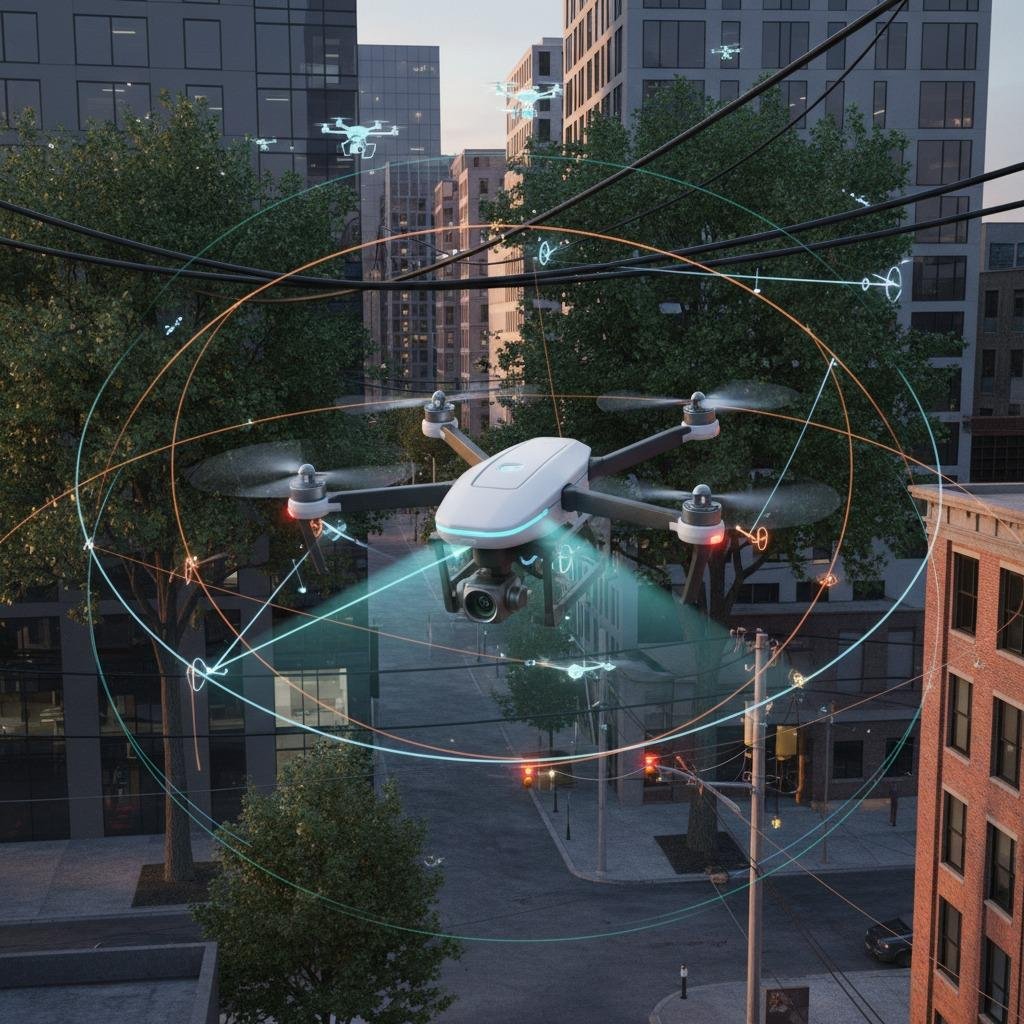
Mastering Drone Collision Avoidance: Navigating the Skies Safely
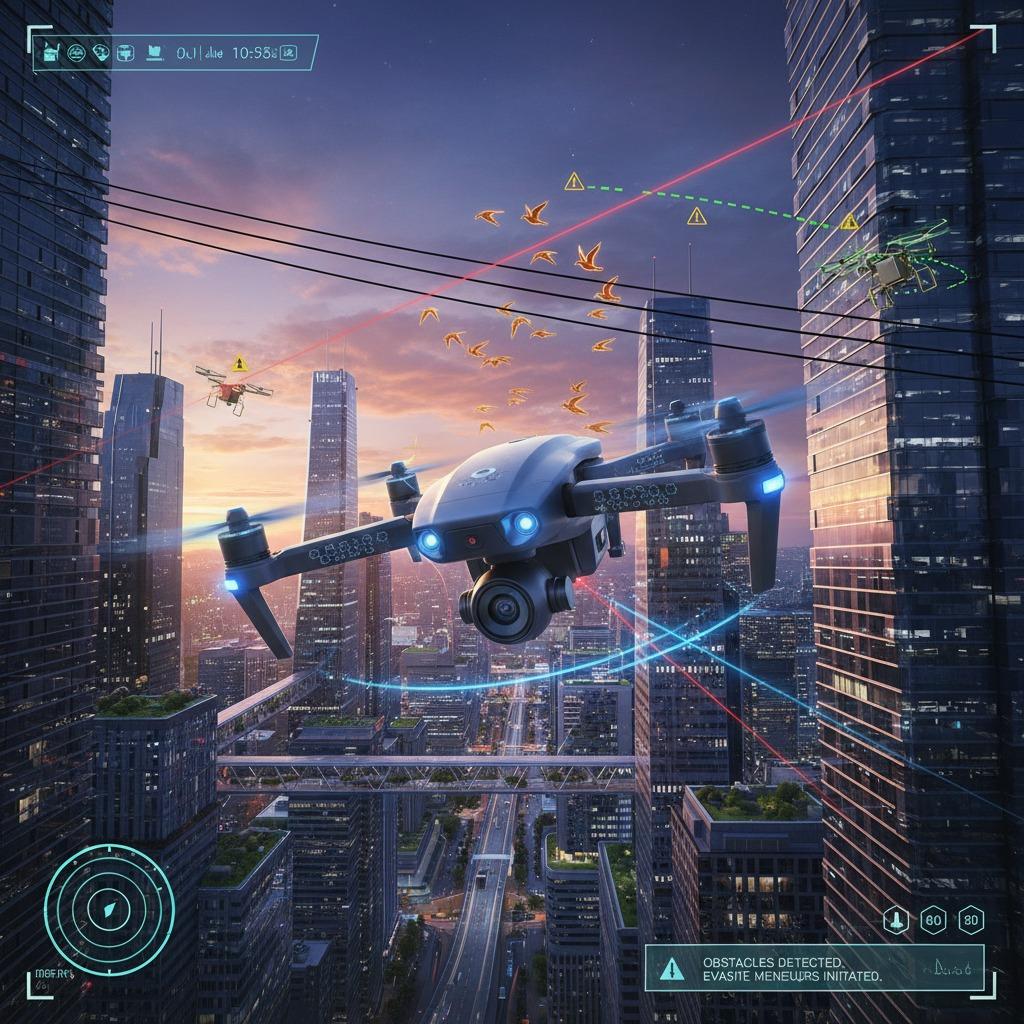
In the rapidly evolving world of aerial robotics, drone collision avoidance stands as a critical challenge for operators and developers alike. Imagine a drone soaring through urban environments or dense forests, only to face unexpected obstacles like power lines, birds, or other aircraft. Without robust systems, these encounters can lead to costly damages, safety hazards, or mission failures. The core problem lies in the limitations of traditional sensors, which often struggle in adverse conditions such as fog, rain, or low light, making reliable navigation a persistent headache for industries like delivery services, agriculture, and surveillance.
Understanding the Problem: Why Current Drone Navigation Falls Short
The primary issue with drone collision avoidance is the vulnerability of conventional technologies like cameras or ultrasonic sensors. Cameras, for instance, falter in poor visibility, while ultrasonic methods lack precision over longer ranges. This results in drones that are either overly cautious, slowing down excessively, or dangerously aggressive, risking collisions. In complex scenarios, such as flying through cluttered warehouses or monitoring wildlife in varying weather, these shortcomings amplify, leading to operational inefficiencies and increased accident rates. For commercial drone fleets, this translates to higher insurance costs and regulatory hurdles, underscoring the urgent need for advanced solutions that ensure seamless, autonomous flight paths.
Key Solutions: Integrating Obstacle Detection and Advanced Sensors
To tackle drone collision avoidance effectively, integrating sophisticated obstacle detection mechanisms is essential. Modern systems employ AI-driven algorithms that process real-time data to identify and classify potential threats, allowing drones to make split-second decisions like evasive maneuvers or path replanning. A standout solution involves the use of lightweight sensors, which minimize payload weight without compromising performance—crucial for extending flight times in resource-constrained drones. These sensors, often compact and energy-efficient, enable continuous monitoring without draining batteries, providing a practical fix for the weight-sensitivity problem in smaller UAVs.
Leveraging mmWave Radar and Range-Doppler Mapping for Precision
Taking obstacle detection to the next level, mmWave radar emerges as a game-changer in drone collision avoidance. Unlike optical systems, mmWave radar penetrates weather conditions and operates effectively day or night, detecting objects up to hundreds of meters away with high accuracy. By incorporating range-Doppler mapping, this technology creates detailed velocity and distance profiles of the environment, distinguishing moving obstacles from static ones. For example, a delivery drone equipped with mmWave radar can map out a dynamic urban airspace, avoiding cyclists or vehicles while optimizing routes. This solution not only enhances safety but also boosts efficiency, reducing flight times by up to 30% in tested scenarios. Pairing it with lightweight sensors ensures the system remains viable for consumer-grade drones, democratizing advanced avoidance capabilities.
Implementing Robust Strategies for Future-Proof Drones
Beyond hardware, effective drone collision avoidance requires a holistic strategy, including software fusion of multiple sensor inputs for redundancy. Developers can start by calibrating mmWave radar with range-Doppler mapping to generate 3D environmental models, then layer on machine learning for predictive avoidance—anticipating collisions before they occur. For industries facing regulatory pressures, adopting these solutions means compliance with standards like FAA guidelines, while minimizing downtime. Real-world applications, such as agricultural drones surveying crops without hitting poles or search-and-rescue units navigating disaster zones, demonstrate how these technologies transform problems into opportunities. By prioritizing lightweight sensors and advanced radar, operators can achieve safer, more reliable operations, paving the way for widespread drone adoption in everyday logistics and beyond.
In summary, addressing drone collision avoidance through innovative obstacle detection, range-Doppler mapping, lightweight sensors, and mmWave radar not only solves immediate safety concerns but also unlocks the full potential of autonomous aerial systems. As technology advances, these integrated solutions will redefine what's possible in the skies.