






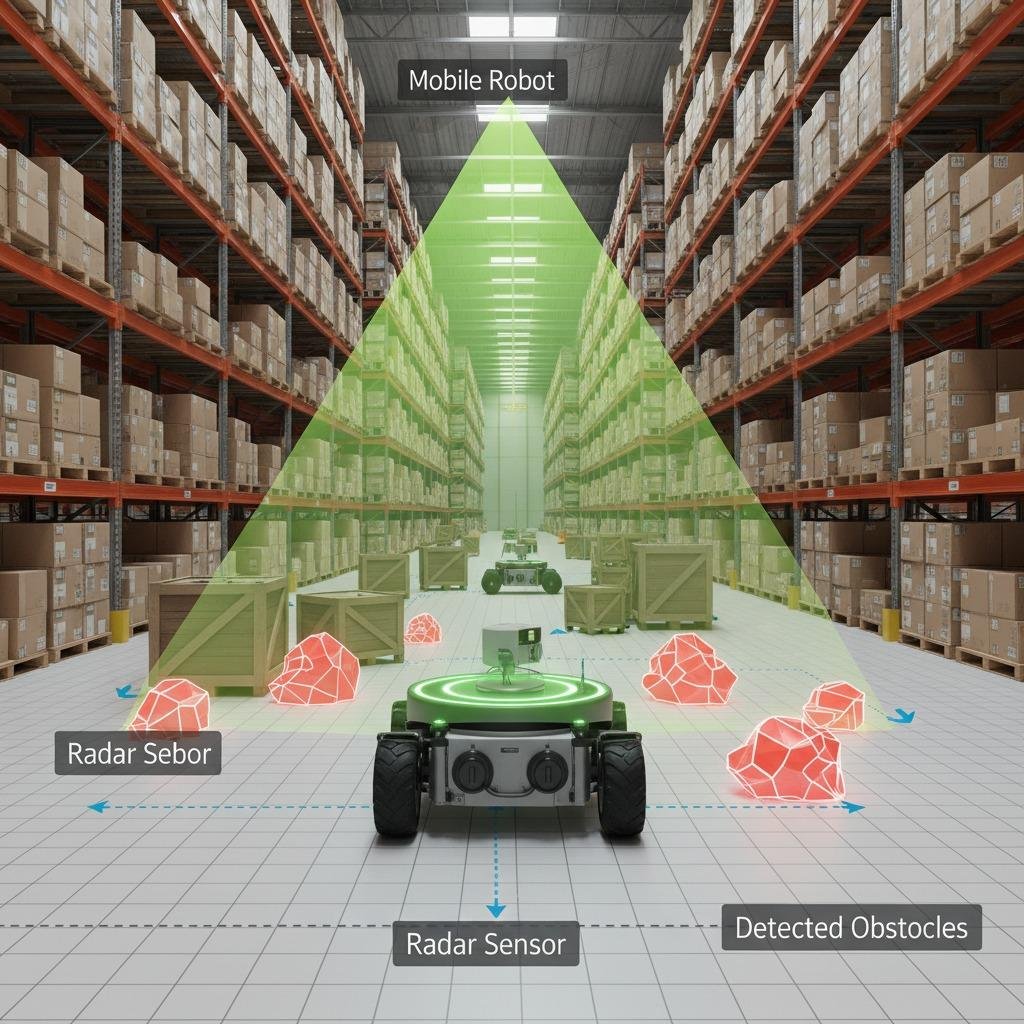
What is Robot Navigation Radar?
Robot Navigation Radar is a cutting-edge technology that enables robots to navigate complex environments with precision and reliability. This radar system uses radio waves to detect obstacles, map surroundings, and determine the robot's position in real-time. Often integrated into autonomous systems, it plays a crucial role in applications like warehouse automation, delivery drones, and exploration rovers. By emitting and receiving electromagnetic signals, Robot Navigation Radar helps robots avoid collisions and plan efficient paths, making it indispensable in dynamic settings where visibility is limited.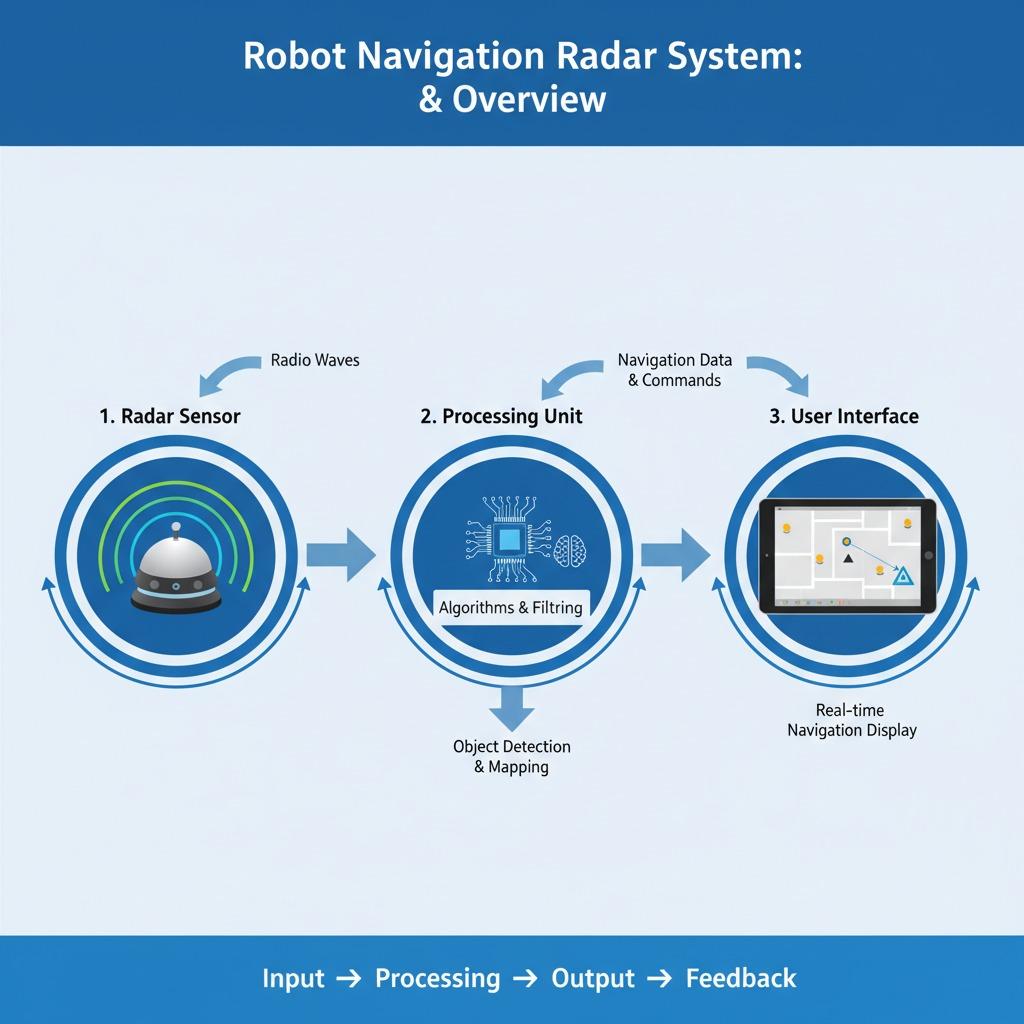
How Does mmWave Radar for Robot Navigation Work?
mmWave radar for robot navigation operates in the millimeter-wave frequency band, typically between 30 GHz and 300 GHz, allowing for high-resolution detection over short to medium ranges. This technology sends out short pulses of radio waves that bounce off objects and return to the sensor, providing detailed information about distance, velocity, and shape. Unlike cameras or LiDAR, mmWave Radar for Robot Navigation performs exceptionally well in adverse conditions such as fog, dust, or darkness, ensuring uninterrupted operation. It's particularly valued in robotics for its low power consumption and compact size, enabling seamless integration into mobile platforms without compromising performance.
What Are the Benefits of Using Robot Environmental Perception Radar?
Robot Environmental Perception Radar enhances a robot's ability to understand and interact with its surroundings by providing 360-degree awareness. This type of radar detects not only static obstacles but also moving entities like people or other robots, allowing for proactive adjustments in navigation strategies. Key benefits include improved safety, as it reduces the risk of accidents in crowded or unpredictable environments, and enhanced efficiency through accurate mapping of spaces. Robot Environmental Perception Radar is also robust against environmental interferences, making it ideal for outdoor or industrial applications where traditional sensors might fail.
How Does a Mobile Robot Radar Sensor Improve Autonomy?
A mobile robot radar sensor is designed for portability and quick deployment in various robotic systems, from service bots to autonomous vehicles. It processes radar data to create real-time environmental models, enabling the robot to make informed decisions independently. This sensor excels in providing continuous updates on the robot's orientation and proximity to hazards, which is vital for smooth mobility. Users often praise its durability and minimal maintenance needs, ensuring long-term reliability in demanding scenarios like search-and-rescue operations or agricultural monitoring.
What Role Does Radar-Based Robot Localization Play in Modern Robotics?
Radar-based robot localization uses radar signals to pinpoint a robot's exact position relative to known landmarks or through simultaneous localization and mapping (SLAM) techniques. This method combines radar data with algorithms to correct drifts in positioning, achieving centimeter-level accuracy even in GPS-denied areas. It's especially useful in indoor settings or underground environments where other localization tools struggle. By fusing radar inputs with other sensors, radar-based robot localization boosts overall system intelligence, allowing robots to adapt to changes dynamically and execute tasks with greater precision.
Common Challenges and Solutions in Implementing Robot Navigation Radar
Implementing Robot Navigation Radar can face challenges like signal interference in cluttered spaces or the need for computational power to process data quickly. Solutions include advanced signal processing algorithms that filter noise and multi-radar arrays for comprehensive coverage. For mmWave radar for robot navigation, calibration techniques ensure optimal sensitivity, while software updates address evolving environmental demands. Mobile robot radar sensor integration often requires compatibility checks with existing robot architectures, but modular designs make this straightforward. Overall, these technologies continue to evolve, offering scalable solutions for diverse robotic needs.
Future Trends in Radar Technologies for Robotics
Looking ahead, advancements in robot environmental perception radar and radar-based robot localization promise even smaller, more efficient sensors with AI-driven enhancements. Integration with 5G networks could enable swarm robotics, where multiple units share radar data for collective navigation. As costs decrease, these robots will become standard in consumer robots, revolutionizing home automation and personal assistants. Staying informed about these trends helps developers and users leverage the full potential of radar in creating smarter, safer robotic ecosystems.