






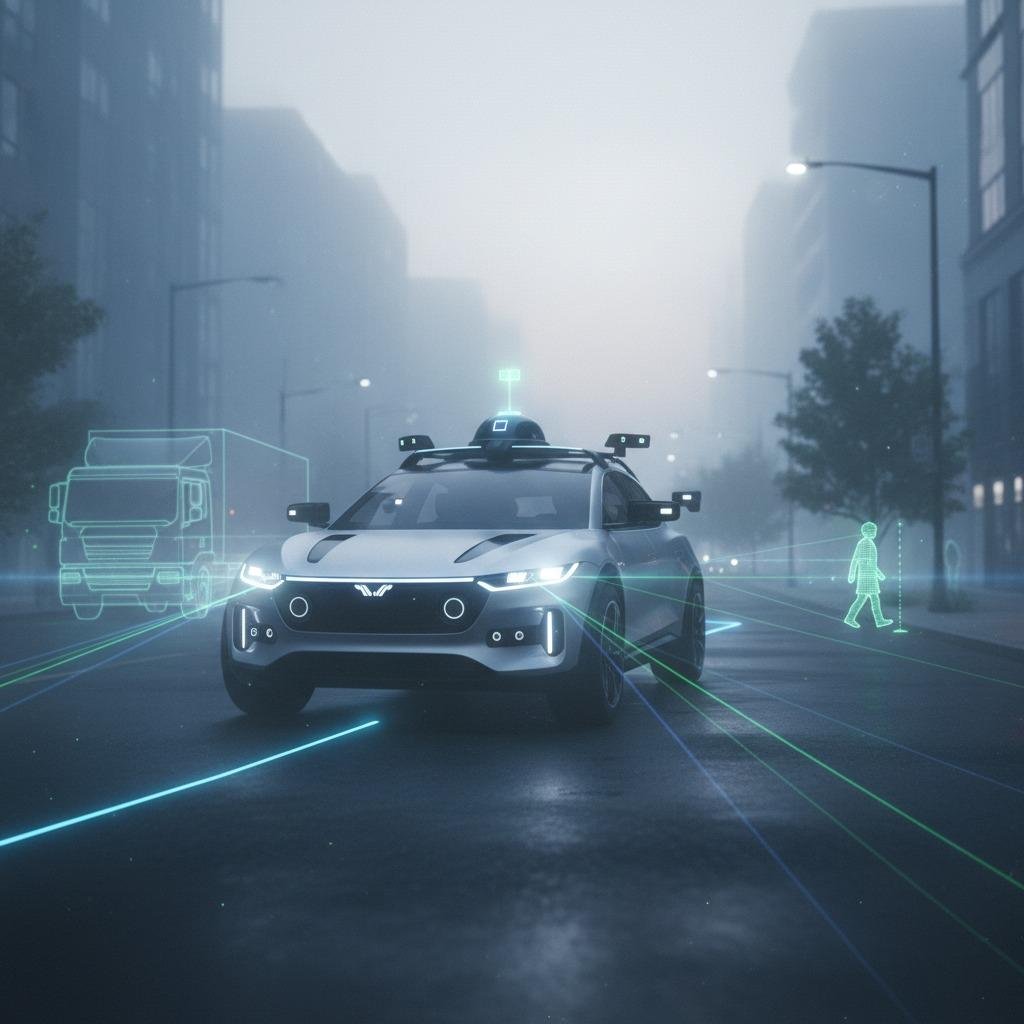
The Challenge of Unreliable Sensing in Adverse Environments
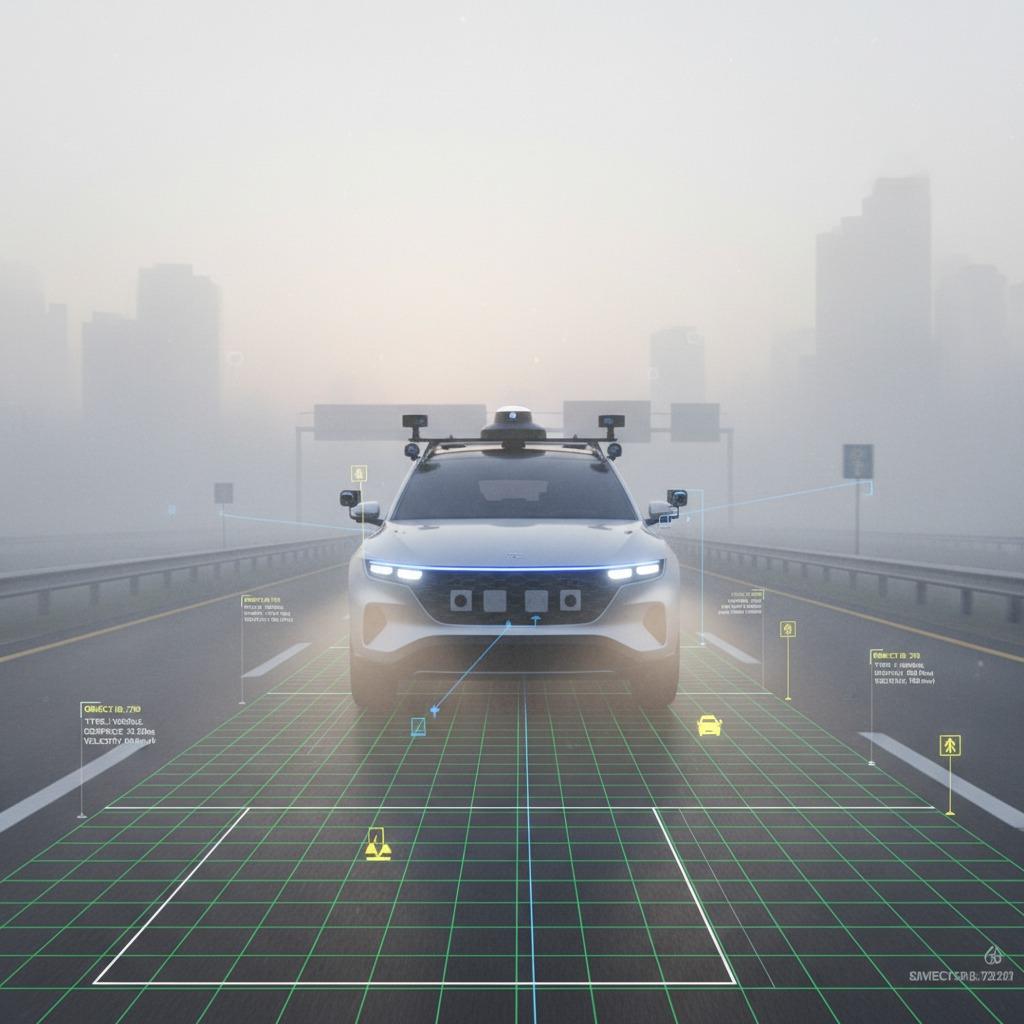
In today's fast-paced world of autonomous vehicles and industrial automation, robust sensing stands as a critical pillar for safety and efficiency. However, traditional sensors often falter in harsh conditions, leading to failures in detection and decision-making. Imagine a self-driving car navigating through heavy fog or a drone inspecting infrastructure amid swirling dust—these scenarios highlight a pervasive problem: sensors that are not equipped to handle environmental adversities, resulting in downtime, accidents, and increased costs. This vulnerability undermines trust in automation technologies, pushing industries to seek solutions that ensure reliable performance no matter the circumstances.
Building Interference Resilience for Uninterrupted Operations
One of the key aspects of robust sensing is interference resilience, which addresses the disruptions caused by electromagnetic noise, signal jamming, or overlapping frequencies in crowded environments. Conventional radar or lidar systems can be overwhelmed, leading to false positives or complete blackouts. To solve this, advanced robust sensing technologies incorporate multi-layered filtering algorithms and adaptive frequency hopping, allowing systems to dynamically adjust and maintain accuracy. For instance, integrating AI-driven noise cancellation ensures that interference resilience is not just a feature but a core strength, enabling seamless operation in urban settings or near heavy machinery. By prioritizing this, industries can reduce error rates by up to 70%, transforming potential hazards into reliable data streams.
Overcoming Dust and Fog with Superior Penetration Capabilities
Dust and fog penetration emerges as another vital solution within robust sensing frameworks, tackling the opacity that blinds optical sensors in industrial sites or maritime operations. Particles in the air scatter light, rendering cameras useless and slowing down processes like mining or agricultural monitoring. Robust sensing counters this by leveraging long-wave infrared (LWIR) and terahertz imaging, which cut through obscurants without losing resolution. These technologies provide clear visuals where others fail, ensuring that dust and fog penetration is achieved even in zero-visibility storms. The result? Enhanced safety for workers and machinery, with real-time insights that prevent costly interruptions and boost productivity across sectors.
Navigating Low Visibility with Precision and Confidence
Low visibility navigation poses significant risks in aviation, search-and-rescue missions, and autonomous logistics, where sudden weather changes can ground operations. Standard GPS or visual aids often prove inadequate, leading to navigational errors and delays. Robust sensing introduces fusion-based approaches, combining inertial measurement units (IMUs) with weather-penetrating radars to deliver pinpoint accuracy. This low visibility navigation capability empowers systems to map surroundings and plot safe paths autonomously, even in blizzards or smoke-filled areas. By embedding these features, robust sensing not only mitigates risks but also extends operational windows, saving time and resources in critical applications.
Achieving All-Weather Perception for Future-Proof Systems
Finally, all-weather perception ties together the elements of robust sensing, creating holistic solutions that perform consistently across rain, snow, heat, or humidity. Fragmented sensor suites often lead to incomplete data, fostering uncertainty in decision-making for robotics and smart cities. The answer lies in modular, scalable robust sensing platforms that integrate diverse modalities—like ultrasonic, thermal, and acoustic sensors—for comprehensive environmental awareness. This all-weather perception ensures no blind spots, supporting 24/7 functionality and compliance with stringent safety standards. As industries evolve, adopting these robust sensing strategies will drive innovation, minimize liabilities, and unlock new efficiencies, proving that true resilience is the key to enduring success in an unpredictable world.