







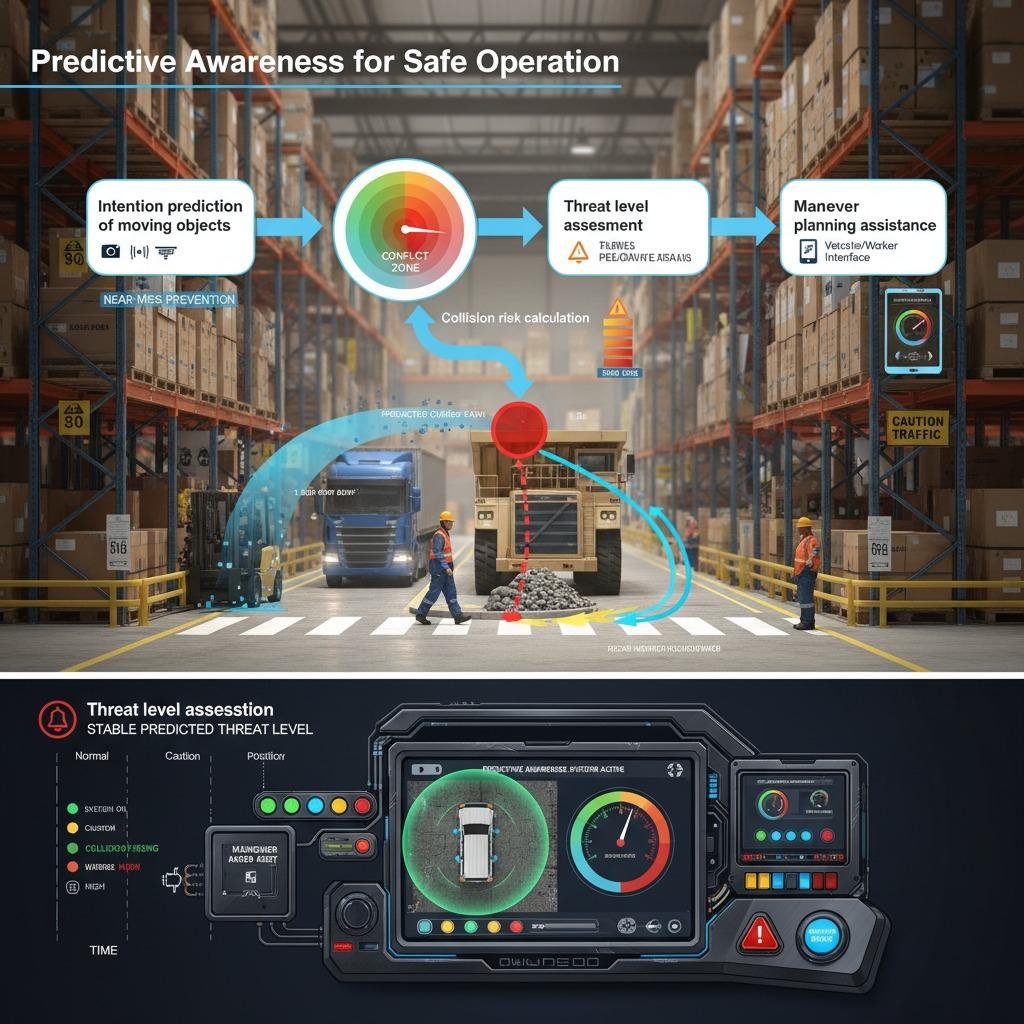
Why predictive awareness is becoming a safety requirement, not a nice-to-have
Predictive awareness for safe operation is getting attention because many incidents do not begin with a sudden failure; they begin with a small, missed cue. In busy industrial yards, warehouses, ports, mines, and mobile equipment zones, operators rarely have the luxury of perfect visibility. A forklift appears from behind a rack. A vehicle changes speed without warning. A pedestrian steps into a blind area. By the time a person reacts, the window for prevention may already be closing.
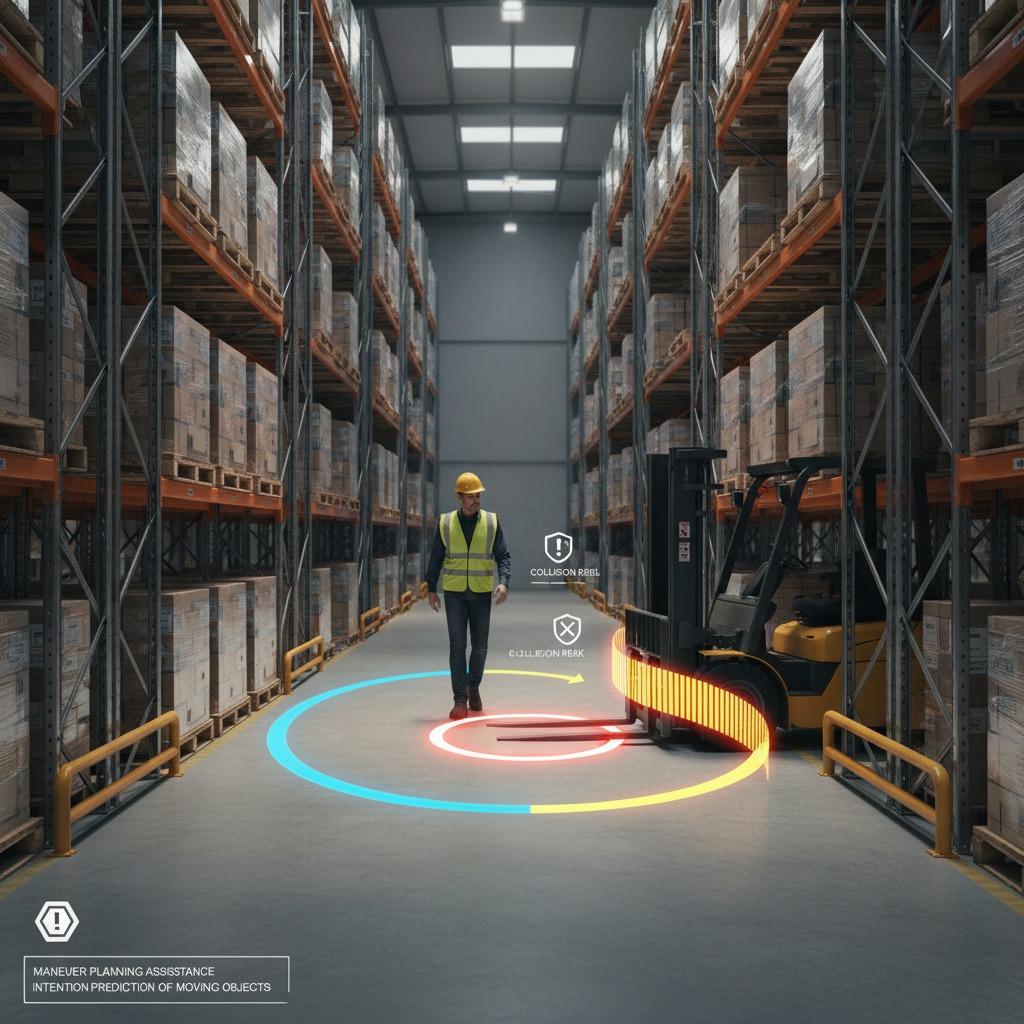
That is why more teams are treating predictive awareness as part of the safety architecture itself. It is not just about seeing what is in front of you. It is about anticipating where moving objects are likely to go, how fast they may get there, and whether the current path creates a meaningful hazard. For sourcing managers and engineers, the practical question is not whether the concept sounds advanced. It is how to translate it into a system that improves safety without creating false confidence, maintenance headaches, or an operator interface nobody trusts.
What predictive awareness actually helps a site decide
At its core, predictive awareness supports better decisions in the seconds before contact becomes likely. It combines real-time detection with forward-looking interpretation. Instead of only saying “something is nearby,” the system tries to answer a more useful set of questions: Where is it moving? Is it accelerating, slowing, or crossing a path? Does its current trajectory suggest a conflict point? That is where maneuver planning assistance, collision risk calculation, and threat level assessment start to matter in practical terms.
This matters because most industrial accidents are not caused by one dramatic mistake. They are caused by several ordinary conditions lining up at once: limited sight lines, noise, distraction, congestion, and mixed traffic. A tool that helps with intention prediction of moving objects can give operators and control systems a small but meaningful edge. In safety work, a small edge is often the difference between a near miss and a reportable event.
Where the concept fits in a real operation
Different sites use predictive awareness in different ways, but the underlying need is similar. The system should help people or machines respond earlier than they would by visual observation alone. In practice, that may support autonomous functions, driver assistance, alarm logic, or zone management around fixed and mobile equipment.
Common operational situations
In warehouse traffic, it may help forklifts slow before entering an intersection. In outdoor logistics areas, it may flag a crossing path between trucks and pedestrians. On production floors, it may reduce the chance that a cart or AGV turns into an occupied aisle. In each case, the goal is not perfect prediction. That is unrealistic. The goal is earlier and more useful warning.
How to think about system quality before you buy
Buyers often focus first on the sensing hardware, but a better starting point is the decision logic. A system can detect movement and still be poor at safety if it overreacts, delays too long, or loses reliability in crowded scenes. The real test is whether it produces actionable output under ordinary plant conditions, not just in a clean demo environment.
Several factors deserve attention:
First, the quality of trajectory tracking. If the system cannot hold onto a moving object long enough to understand its motion pattern, prediction will be weak. Second, the clarity of alert thresholds. Operators need warning levels that make sense, not a stream of alarms that all sound equally urgent. Third, the integration path. A useful system should fit with existing vehicle controls, warning lights, HMI logic, or site safety rules without turning every installation into a one-off engineering project.
There is also the issue of environment. Dust, glare, occlusion, vibration, and weather can all reduce performance. A solution that performs well in one aisle may struggle near a loading dock at dusk. That is not a reason to dismiss the technology; it is a reason to validate it against the actual site, not a brochure version of the site.
Practical mistakes buyers should avoid
One common mistake is assuming predictive tools eliminate the need for training. They do not. Operators still need to understand site rules, right-of-way, and response behavior. Another mistake is overestimating how much data the system can read from ambiguous motion. Human behavior is messy. A person may pause, turn, or change direction suddenly, and a vehicle may drift in ways that are hard to classify from a distance.
A second error is designing only for ideal movement patterns. Real sites are full of partial occlusions, awkward angles, and mixed traffic speeds. If the system cannot handle that variability, it may look impressive in test conditions and weak on Monday morning. A cautious buyer should ask for examples of performance in cluttered or high-traffic settings, even if the answer is somewhat less polished than a sales presentation.
What good deployment usually looks like
Successful deployment tends to be phased. Teams start by identifying the highest-risk interaction points, then define what “early enough” warning means for those locations. From there, they decide whether the tool supports operator guidance, automated slowdown, zone restriction, or incident logging. That sequence matters. Too many projects begin with hardware selection and only later ask what decision the hardware is supposed to improve.
For engineering teams, the better question is simple: does the system help us make safer decisions before the hazard becomes immediate? If the answer is yes, then predictive awareness can play a real role in risk reduction. If the answer is vague, the project may need more process work than software work.
Buyer-facing checklist for the next step
When reviewing options, ask how the system supports maneuver planning assistance, how it estimates collision risk calculation, how it communicates threat level assessment, and how it handles intention prediction of moving objects in real traffic. Then test whether those functions still hold up when the site is busy, noisy, and partially obstructed. That is where the value is proven.
If your operation is trying to reduce near misses, improve traffic control, or add a smarter layer to machine safety, predictive awareness is worth a serious look. The most useful systems are not the ones that promise certainty. They are the ones that help people and machines react earlier, with enough context to make the next move safer.