






Overcoming Challenges in Scene Segmentation for Advanced Radar Applications
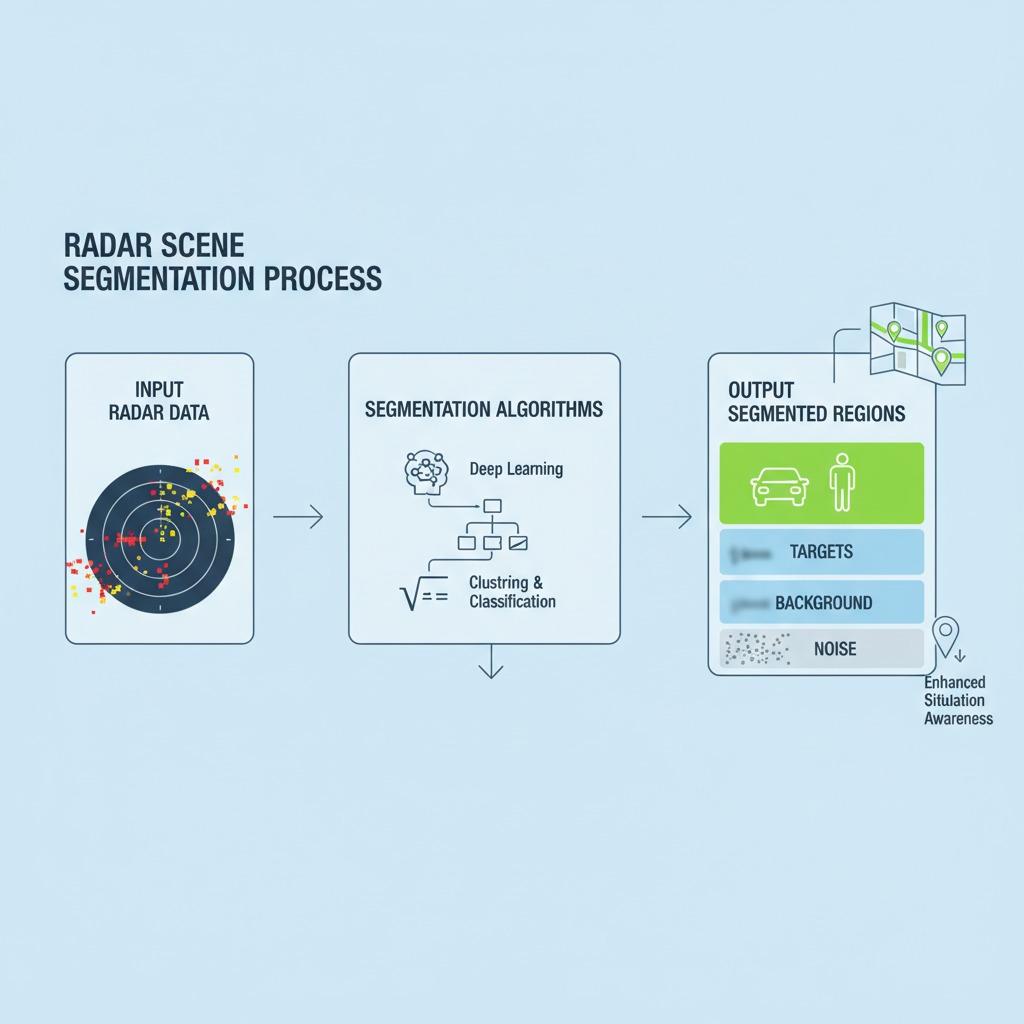
In the field of radar signal processing, scene segmentation emerges as a critical technique for accurately dividing a radar scene into meaningful regions, such as distinguishing between targets, background, and noise. However, professionals often face significant hurdles, including low spatial resolution that blurs object boundaries, interference from micro-Doppler signatures that complicate motion analysis, persistent clutter that masks weak signals, and difficulties in multi-target tracking when multiple objects overlap or move unpredictably. These problems can lead to inaccurate interpretations, reduced system reliability, and inefficiencies in applications like autonomous driving, surveillance, and defense systems. Addressing scene segmentation effectively requires innovative approaches to enhance precision and robustness.
Enhancing Spatial Resolution for Clearer Scene Segmentation
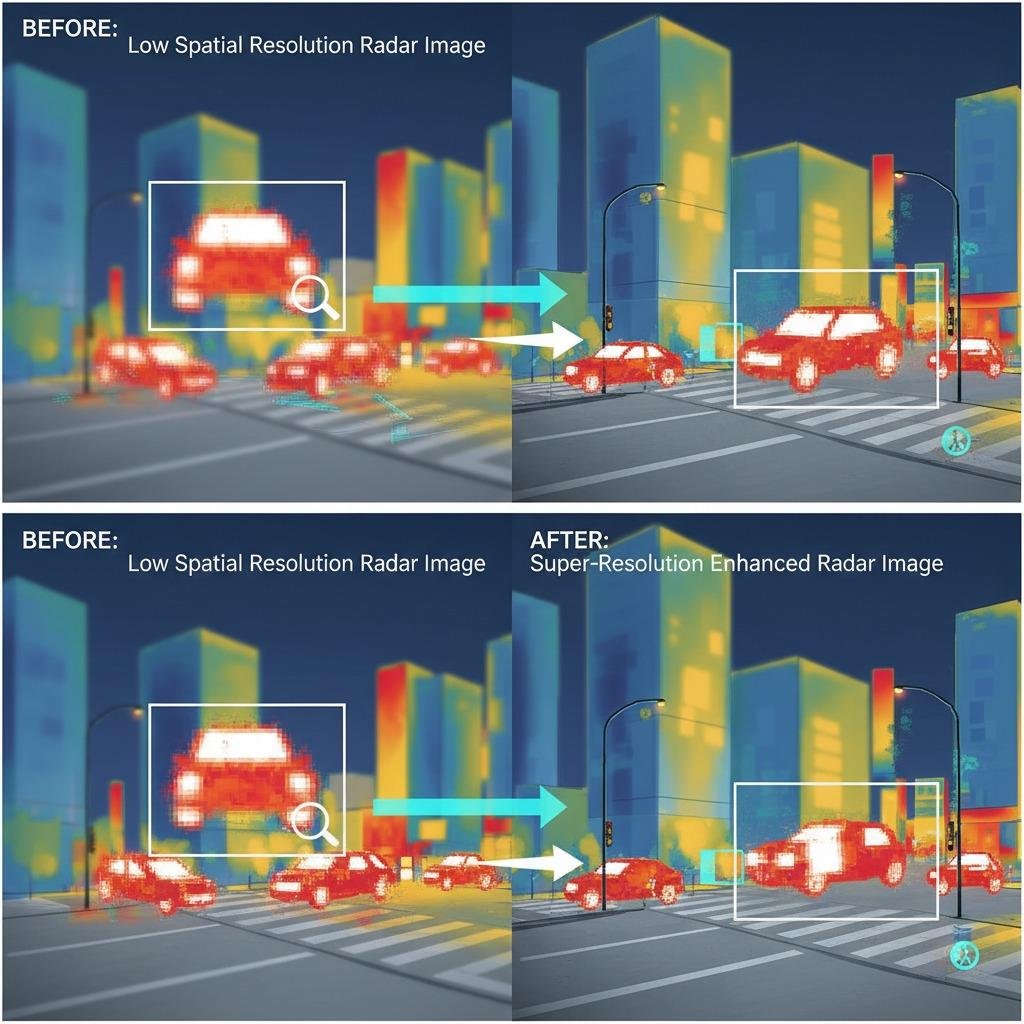
One primary challenge in scene segmentation is the limited spatial resolution in radar systems, which often results in merged or indistinct features within the scene. This issue hampers the ability to isolate individual elements accurately. To solve this, advanced super-resolution algorithms, such as those leveraging deep learning neural networks, can be employed to reconstruct finer details from coarse radar data. By interpolating missing information and sharpening edges, these methods improve spatial resolution without requiring hardware upgrades. For instance, integrating sparse signal processing techniques allows for better delineation of scene components, making scene segmentation more reliable. Additionally, hybrid approaches combining radar with complementary sensors like LiDAR can further boost resolution, ensuring that even in dense environments, segmentation yields precise spatial maps that support downstream tasks like object detection.
Mitigating Micro-Doppler Signatures and Clutter in Dynamic Scenes
Micro-Doppler signatures, which arise from the subtle vibrations or rotations of moving objects, introduce variability that disrupts traditional scene segmentation by creating spectral artifacts. Coupled with clutter suppression challenges—where environmental echoes overwhelm target signals—this leads to false positives and segmentation errors. A practical solution involves adaptive filtering techniques tailored for micro-Doppler signature extraction, such as time-frequency analysis using wavelet transforms to separate these signatures from the main Doppler shifts. For clutter suppression, space-time adaptive processing (STAP) algorithms excel by dynamically estimating and subtracting clutter covariance, preserving target integrity. These methods not only refine scene segmentation by isolating dynamic elements but also enhance overall signal-to-noise ratios, allowing systems to perform robustly in cluttered urban or forested settings.
Streamlining Multi-Target Tracking Through Improved Segmentation
Multi-target tracking poses a formidable problem for scene segmentation, as overlapping trajectories and similar radar returns often cause association errors, leading to lost tracks or misidentifications. This is exacerbated by the aforementioned issues of spatial resolution and clutter. Effective solutions include probabilistic data association filters integrated with segmentation pipelines, which assign likelihoods to potential target-scene matches, thereby resolving ambiguities in real-time. Moreover, employing graph-based models for scene segmentation can model interactions between targets, using nodes for detected objects and edges for relational constraints derived from motion predictions. By incorporating feedback loops from tracking outputs to refine segmentation boundaries, these techniques achieve higher accuracy in multi-target scenarios. In practice, machine learning frameworks trained on diverse datasets can learn to handle occlusions and non-linear motions, ensuring seamless tracking even in high-density environments.
By tackling these core challenges—spatial resolution limitations, micro-Doppler signature interferences, clutter suppression needs, and multi-target tracking complexities—through targeted algorithmic solutions, scene segmentation transforms from a bottleneck into a powerful enabler for next-generation radar technologies. Implementing these strategies not only boosts performance but also opens doors to safer, more efficient applications across industries.