






Solving Signal Integrity Issues in Modern Radar Systems with Advanced RF Front-End Technology
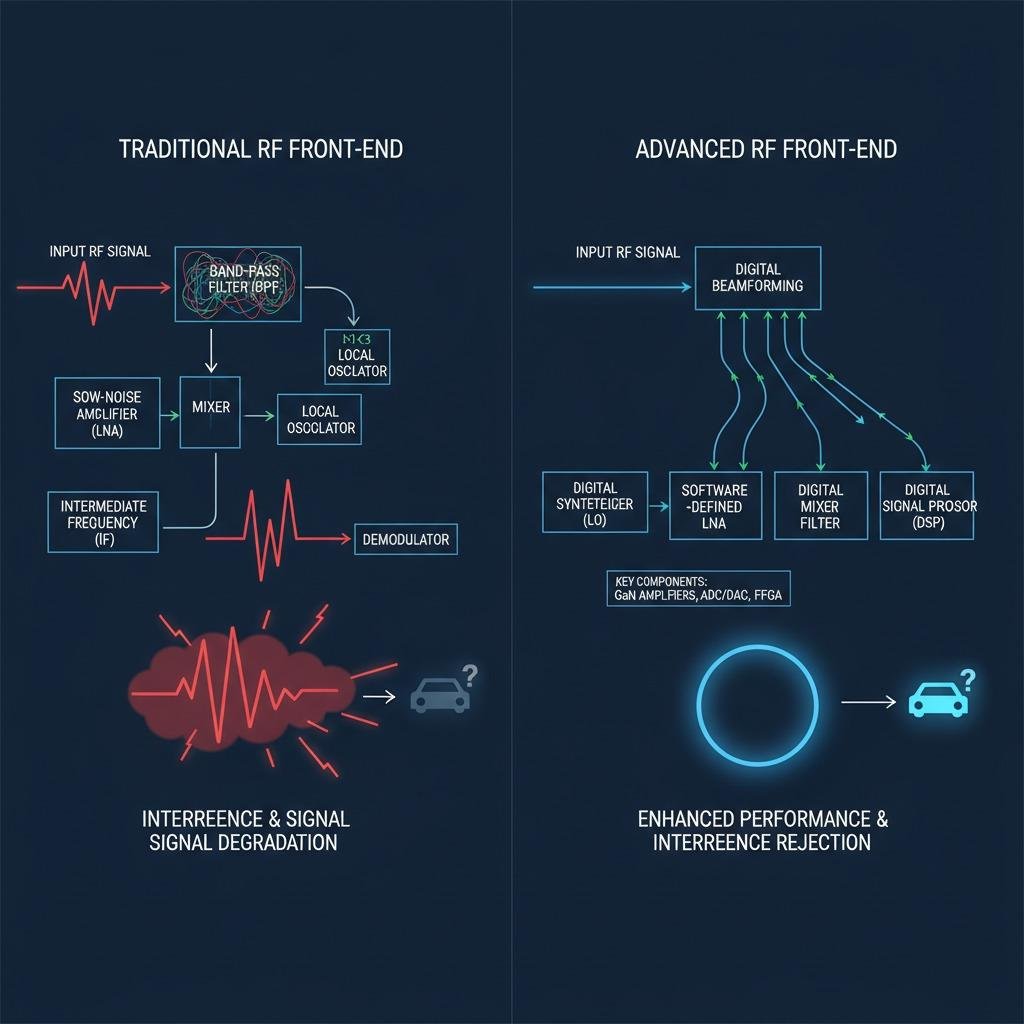
In the rapidly evolving world of radar technology, one of the most pressing challenges is maintaining signal integrity amid increasing demands for higher resolution and longer range detection. The RF front-end serves as the critical interface between antennas and processing units, handling amplification, filtering, and frequency conversion to ensure clean signal transmission and reception. However, in complex applications like automotive safety systems and aerospace surveillance, traditional RF front-end designs often struggle with interference, power efficiency, and miniaturization, leading to degraded performance and reliability issues.
Understanding the Core Problem in RF Front-End Design
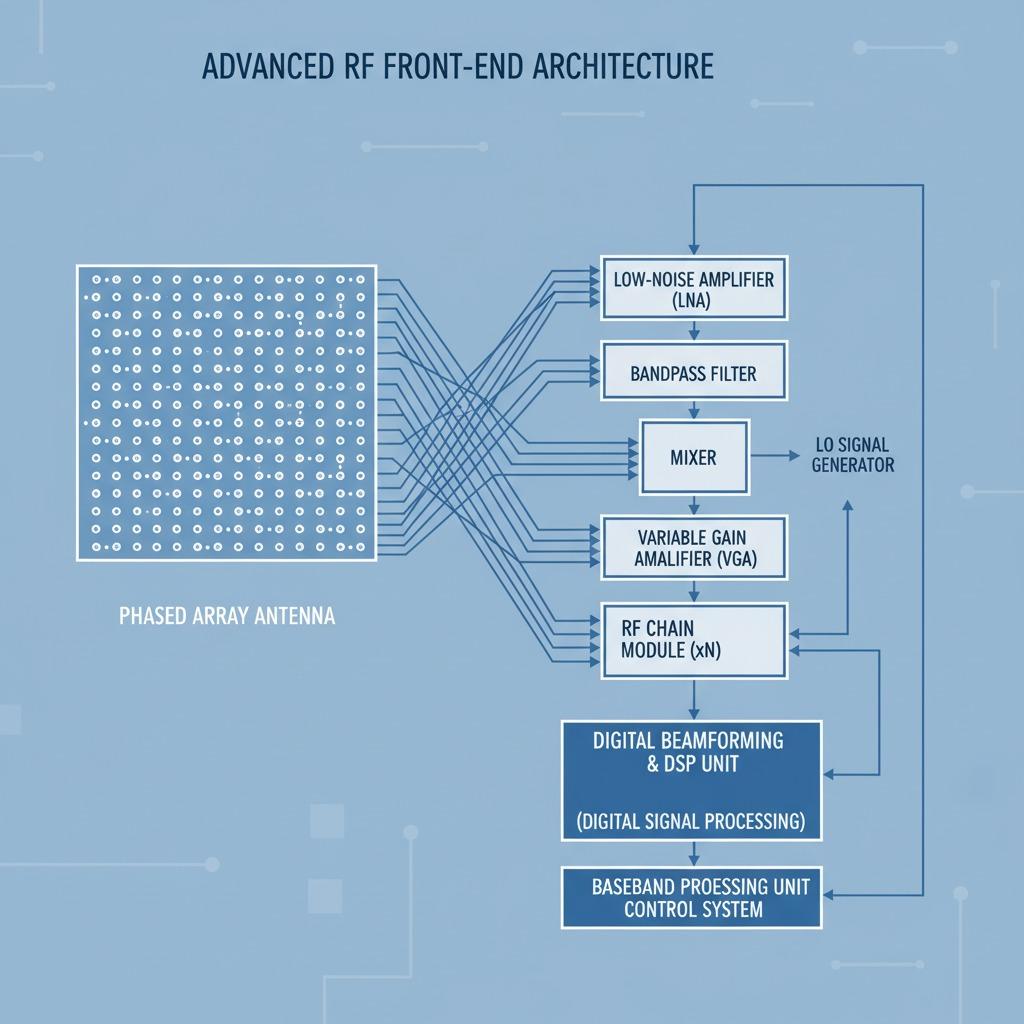
The primary issue with conventional RF front-end architectures is their inability to cope with the high-frequency demands and multi-path signal environments encountered in real-world scenarios. For instance, in phased array systems, where multiple antenna elements steer beams electronically, mismatches in phase and amplitude can cause beam squinting or nulls in the radiation pattern, severely impacting accuracy. Similarly, MIMO radar, which leverages multiple input multiple output configurations for enhanced spatial resolution, requires the RF front-end to manage simultaneous transmit and receive operations without cross-talk. These problems are exacerbated in frequency-modulated continuous wave (FMCW) setups, where precise chirp generation is essential for distance measurement, but noise from the front-end can distort the beat frequency signals. Moreover, as systems push towards millimeter-wave (mmWave) radar for compact, high-bandwidth applications, thermal management and signal loss become even more daunting, often resulting in systems that underperform or consume excessive power.
Proposed Solutions: Integrating Cutting-Edge RF Front-End Innovations
To address these challenges, modern RF front-end solutions focus on modular, highly integrated designs that incorporate advanced materials and digital signal processing. For phased array systems, beamforming ICs with built-in calibration algorithms can dynamically adjust phases, ensuring robust beam steering even under varying environmental conditions. In MIMO radar implementations, software-defined RF front-ends allow for adaptive nulling of interferers, improving signal-to-noise ratios and enabling multi-target tracking. For FMCW radars, low-noise amplifiers (LNAs) and mixers optimized for linear operation minimize phase noise, preserving the integrity of the modulation scheme and allowing for finer resolution in velocity and range detection. Transitioning to mmWave radar benefits from GaN-based power amplifiers in the RF front-end, which offer higher efficiency and output power density, reducing overall system size while mitigating heat dissipation issues. These solutions not only enhance performance but also facilitate scalability, making them ideal for integration into diverse platforms from drones to self-driving vehicles.
Real-World Applications and Future Outlook
Implementing these RF front-end advancements has transformative effects across industries. In autonomous driving, a well-designed RF front-end paired with mmWave radar enables 360-degree sensing with sub-millimeter accuracy, solving blind-spot detection problems that plague legacy systems. Defense applications benefit from phased array and MIMO radar configurations where the front-end's low latency supports real-time threat assessment. As 5G and beyond integrate radar functionalities, FMCW techniques will rely on versatile RF front-ends to handle hybrid communication-radar roles. Looking ahead, ongoing research into silicon photonics and AI-driven tuning promises even more efficient RF front-ends, potentially reducing costs and power by another order of magnitude. By adopting these problem-solving approaches, engineers can unlock the full potential of radar systems, ensuring safer, smarter, and more connected environments. This evolution underscores the RF front-end's pivotal role in bridging today's challenges with tomorrow's innovations.