






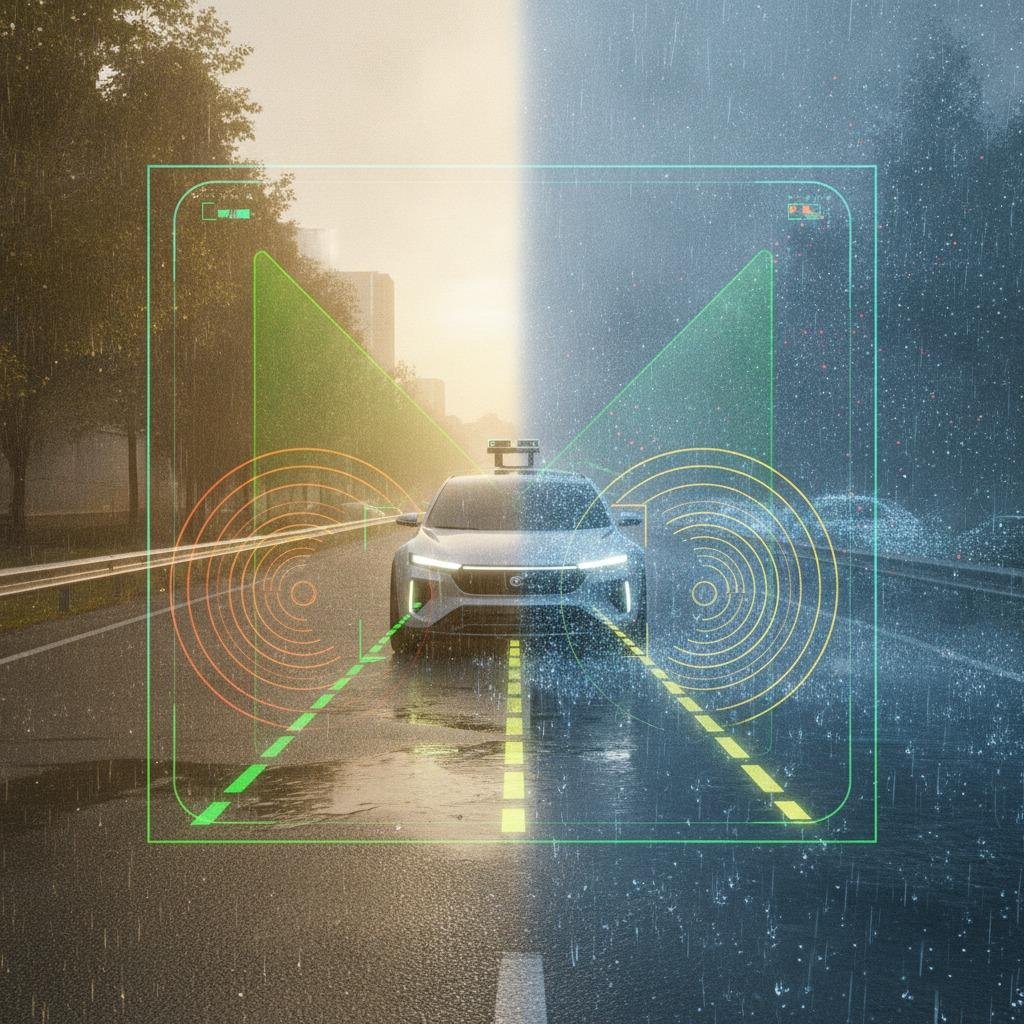
Why all-weather perception is now a purchasing issue, not just an engineering term
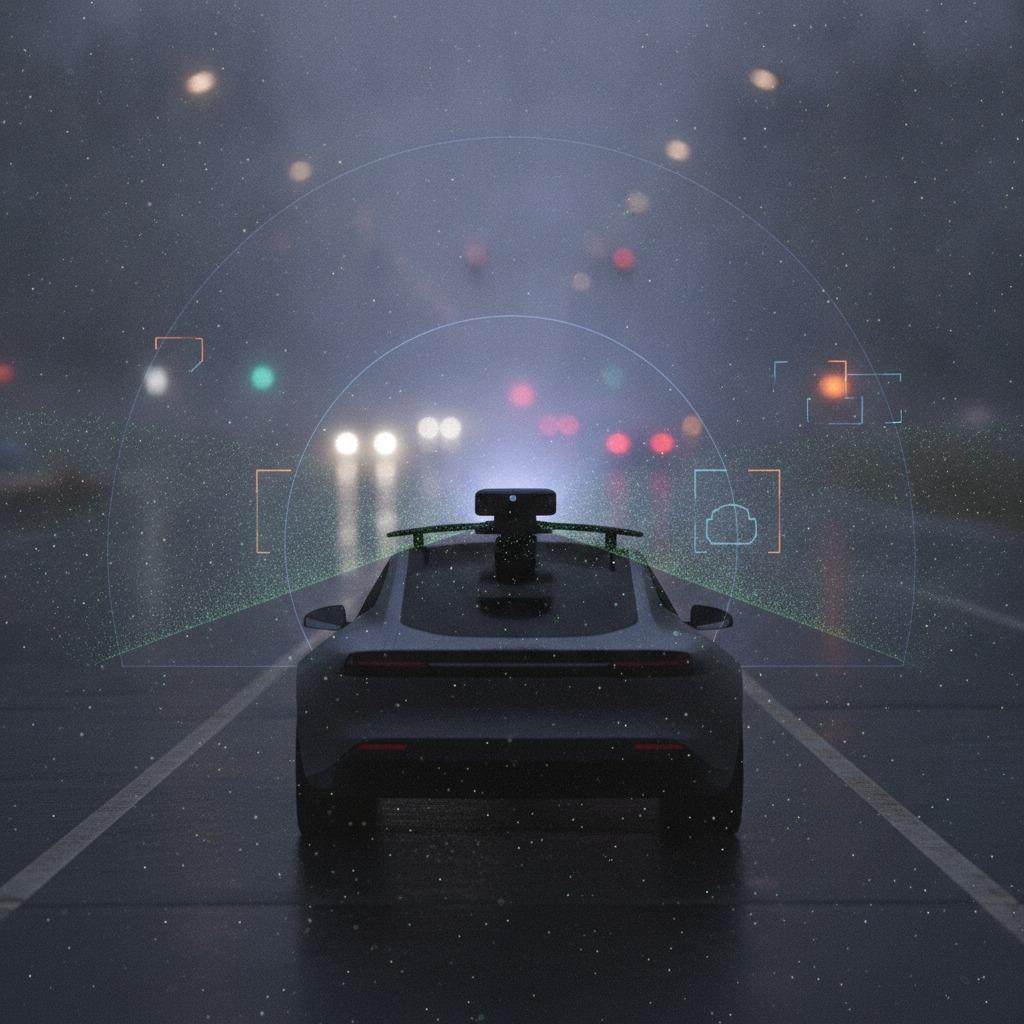
All-weather perception has moved from a promising capability to a practical requirement for teams building autonomous vehicles, industrial machines, outdoor robots, and advanced driver-assistance systems. The reason is simple: a machine that performs well on a clear test track can become unreliable the moment rain, haze, spray, dust, or low sun changes the scene. For engineers and sourcing managers, the real question is no longer whether a perception stack works in ideal conditions, but how it behaves when the environment stops cooperating.
That matters because field failures are expensive in more than one way. They interrupt operations, force manual intervention, and can expose a program to safety reviews or costly redesigns. Buyers need to decide whether a given sensing approach can support low visibility navigation, whether it has enough dust and fog penetration for the operating site, and whether the platform offers robust sensing without becoming overly complex or brittle.
What all-weather perception is trying to solve
At its core, all-weather perception is about keeping a machine aware of its surroundings when visibility drops or sensor signals get noisy. In practice, that usually means combining multiple sensing methods, careful signal processing, and a system architecture that can tolerate partial sensor degradation.
A camera may still see color and texture in clear weather, but heavy glare or fog can flatten the image. Radar can often remain useful through rain and mist, though it brings its own interpretation challenges. LiDAR, thermal sensing, ultrasonic devices, and inertial data each contribute differently. The strongest systems are not always the most sensor-rich; they are the ones that use the right mix for the operating environment.
That distinction is important for buyers. More sensors do not automatically mean more reliability. Redundancy helps only when the platform can fuse the inputs well and continue operating gracefully if one channel becomes less trustworthy.
Quick takeaway: what to look for in a platform
If you are comparing perception solutions, start with the environment, not the brochure.
A useful evaluation usually asks:
Operating conditions
Will the machine face rain, snow, fog, road spray, dust, smoke, or harsh backlighting?
Failure behavior
Does the system degrade smoothly, or does it become blind in certain edge cases?
Sensor complement
Is there meaningful overlap between modalities, or just more hardware on the bill of materials?
Software maturity
Can the perception stack distinguish true obstacles from weather artifacts, reflective surfaces, or airborne particles?
Integration burden
Will the solution demand major mechanical redesigns, thermal management changes, or frequent recalibration?
Why dust, fog, and signal interference are such stubborn problems
Dust and fog penetration is a useful phrase, but the engineering reality is more complicated. Particles in the air scatter light, absorb energy, and create false returns. Water droplets can obscure edges or introduce ghost objects. On top of that, interference resilience matters in dense industrial settings, where radios, motors, welding equipment, and other electronic systems may all be operating nearby.
In other words, the environment is not just visually messy. It can also be electrically noisy. A perception system that looks strong in simulation may still struggle when multiple sources of interference overlap with reduced visibility. This is why field testing in representative conditions is so valuable, even if it is inconvenient and slow.
Common system approaches and where they fit
No single sensing method solves every problem. Cameras are strong for texture and classification, but fragile in glare and poor weather. Radar is often more stable in adverse weather and offers useful range information, though its spatial resolution may not match optical sensors. LiDAR can provide high-detail geometry, but its performance can be affected by heavy precipitation or airborne particles depending on the implementation. Thermal sensors can help in some low-light conditions, yet they are not a universal answer either.
That is why robust sensing usually means a layered strategy:
- Primary detection from one modality
- Confirmation or tracking from another
- Software logic that detects confidence loss
- A fallback mode for controlled slowdown, rerouting, or operator handoff
For product teams, that last point is easy to overlook. A platform with fallback behavior may be more valuable than a slightly sharper system that offers no graceful degradation.
Selection criteria buyers should not skip
When evaluating suppliers or internal architectures, ask for evidence of performance under realistic conditions, not just clean laboratory demos. Pay attention to whether the provider can explain how the system behaves in rain, dust, fog, and mixed visibility. Ask how perception confidence is estimated, how sensor disagreements are handled, and what happens when one channel becomes unreliable.
A practical warning: some solutions are optimized for a narrow operating window and are presented as broadly capable. That is not necessarily bad engineering, but it should be understood before a purchase decision is made. If your application includes outdoor logistics, mining, agriculture, ports, or highway operation, the gap between controlled tests and field reality can be wide.
Where this leaves engineering and sourcing teams
The best all-weather perception strategy is usually the one matched to the actual operating environment, maintenance model, and risk tolerance. For some programs that means an integrated multi-sensor stack. For others it means choosing a simpler perception layer and designing the vehicle or machine to slow down, pause, or request help when confidence drops.
Either way, the buyer’s job is to separate graceful robustness from marketing language. A system can be advanced without being durable in bad weather, and a modest platform can still be the right answer if it is honest about its limits.
FAQ
Is all-weather perception the same as full autonomy?
No. It supports perception in difficult conditions, but autonomy still depends on planning, control, validation, and safety logic.
Does more sensor redundancy always improve performance?
Not automatically. Redundancy helps when the system can fuse inputs well and manage conflict between sensors.
Should buyers prioritize one sensor type?
Usually no. The better question is which combination best fits the site conditions and operational risk.
Next step for buyers
If you are comparing platforms, write down the worst weather and visibility conditions your machine must handle, then ask each supplier how their system behaves in those exact cases. That one exercise will usually reveal whether a solution is built for real-world deployment or only for favorable demos.