






Beyond Visual Line of Sight Drone Operations: Overcoming Visibility Challenges

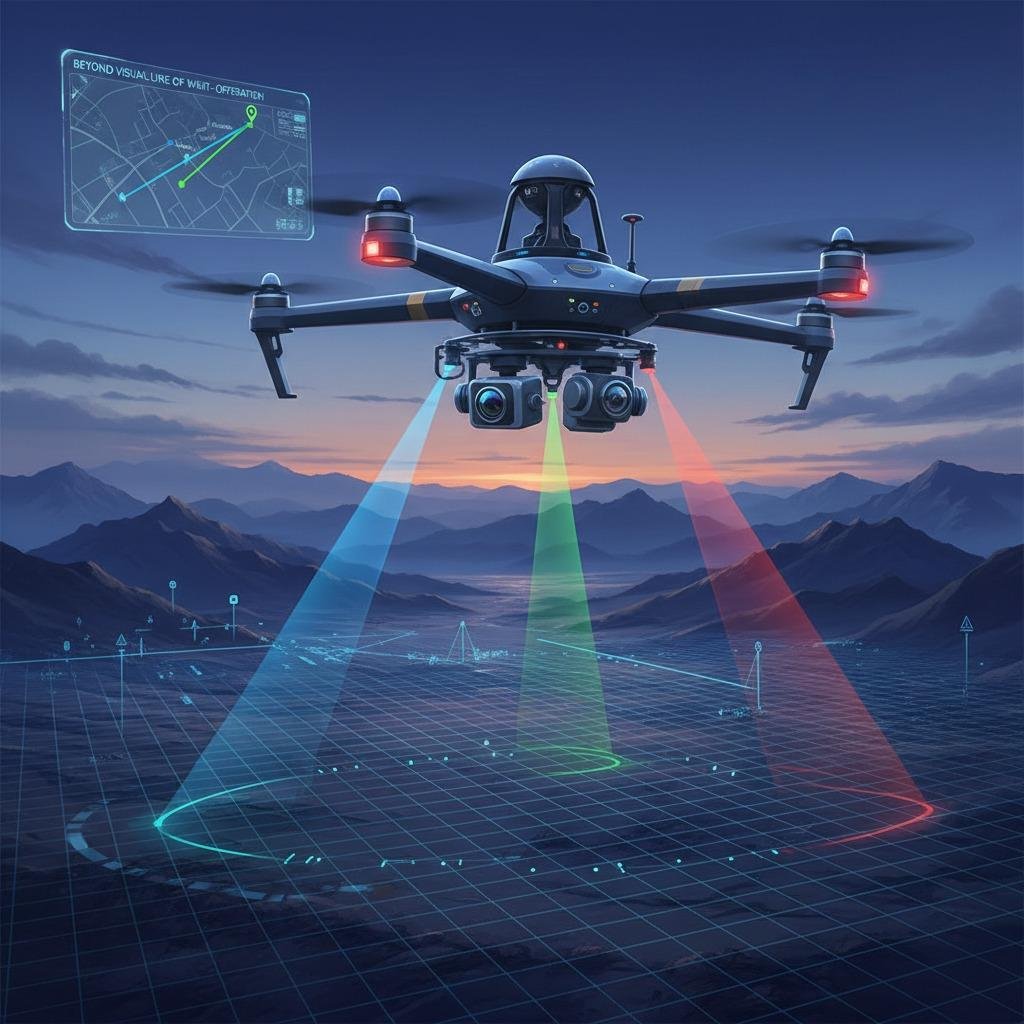
In the evolving world of drone technology, one of the most pressing limitations is operating within visual line of sight, where pilots must keep the aircraft in direct view. This restriction hampers efficiency for applications like infrastructure inspections, agricultural monitoring, and delivery services, especially in remote or expansive areas. Beyond Visual Line of Sight (BVLOS) emerges as a transformative solution, enabling drones to fly farther and more autonomously without constant human oversight. However, implementing BVLOS introduces significant safety and reliability concerns, such as navigating obstacles, ensuring secure communication, and maintaining situational awareness in unseen environments.
The Core Problems of Traditional Visual Line of Sight Operations
The primary issue with visual line of sight constraints is the limited operational range, often capping flights at a few kilometers and restricting scalability. Pilots face fatigue from constant monitoring, and environmental factors like weather or terrain can further complicate visibility. For industries requiring broad coverage, such as search and rescue or pipeline surveillance, these limitations result in higher costs, slower data collection, and increased risk of human error. Without BVLOS capabilities, drones cannot fully leverage their potential for 24/7 operations or integration into larger networks, leaving untapped opportunities in logistics and environmental monitoring.
Real-Time Processing: The Foundation for Safe BVLOS Flights
To address these challenges, real-time processing stands out as a critical enabler for BVLOS operations. By equipping drones with onboard computing systems that analyze data instantaneously, they can detect and respond to hazards without relying on human input. Real-time processing involves advanced algorithms that handle video feeds, GPS data, and telemetry at high speeds, ensuring low-latency decisions. For instance, during a long-distance survey, the system can process incoming sensor information to avoid collisions or adjust flight paths dynamically. This technology not only enhances safety but also boosts efficiency, allowing drones to cover vast areas quickly and reliably.
Sensor Fusion and Payload Integration for Enhanced Awareness
Another key solution lies in sensor fusion, which combines data from multiple sources like LiDAR, cameras, and radar to create a comprehensive environmental map. In BVLOS scenarios, where visual cues are absent, sensor fusion provides a 360-degree awareness, fusing inputs to predict obstacles and optimize routes. Complementing this is payload integration, where specialized equipment such as high-resolution cameras or thermal imagers is seamlessly incorporated into the drone's design. This integration ensures that payloads operate in harmony with the flight systems, delivering accurate data even over extended ranges. Together, these approaches mitigate risks by enabling precise navigation and data capture, turning potential blind spots into strengths.
Autonomous Flight: Empowering Drones for Independent Operations
Autonomous flight represents the pinnacle of BVLOS solutions, allowing drones to execute missions with minimal intervention through AI-driven path planning and decision-making. By incorporating machine learning models trained on diverse datasets, drones can adapt to changing conditions, such as sudden weather shifts or no-fly zones. Autonomous flight integrates with real-time processing and sensor fusion to create self-sustaining systems that prioritize safety protocols, like automatic return-to-home functions. For businesses, this means deploying fleets for tasks like border patrol or disaster assessment, where human presence is impractical. Regulatory bodies are increasingly supportive, with frameworks evolving to certify these technologies, paving the way for widespread adoption.
By tackling the visibility barriers of traditional drone use through innovations like real-time processing, sensor fusion, payload integration, and autonomous flight, BVLOS operations unlock a new era of efficiency and capability. Industries can now scale their applications, reduce operational costs, and achieve unprecedented levels of precision and safety. As technology advances, embracing BVLOS will be essential for staying competitive in an aerial innovation-driven landscape.