






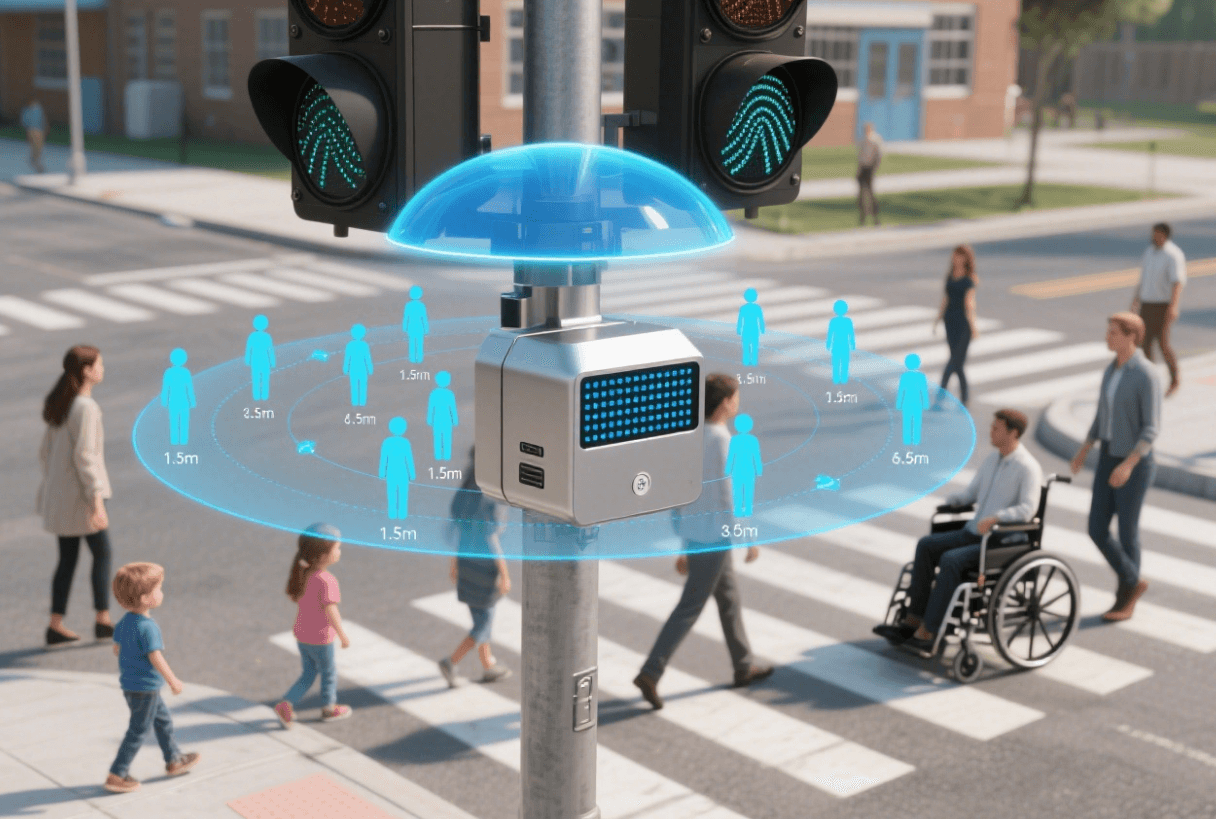
Smart Crosswalk Safety with Radar at Schools and Hospitals
Crosswalks near schools and hospitals are among the most critical urban traffic zones. These areas feature high pedestrian density, vulnerable populations such as children and patients, and frequent vehicle activity. Traditional safety measures—traffic lights, painted lines, and signage—help guide traffic, but they cannot react dynamically to unpredictable pedestrian or vehicle movements.
Linpowave’s millimeter-wave (mmWave) radar technology provides a real-time, proactive solution for enhancing crosswalk safety. By accurately detecting pedestrians and vehicles regardless of lighting or weather conditions, radar enables cities to prevent accidents, optimize traffic flow, and protect vulnerable road users.
Challenges at School and Hospital Crosswalks
Several factors make these zones particularly hazardous:
-
High pedestrian density: Children, elderly, and patients often cross simultaneously.
-
Unpredictable behavior: Pedestrians may run or cross outside designated times.
-
Limited visibility: Vehicles may encounter glare, shadows, or obstructions from parked cars and roadside structures.
-
Vehicle speed: Drivers may fail to slow down in school or hospital zones, increasing collision risk.
Studies indicate that a significant portion of urban pedestrian accidents occurs near schools and healthcare facilities, underscoring the need for intelligent monitoring systems.
How Linpowave Radar Enhances Safety
Millimeter-wave radar offers reliable, all-weather detection that complements existing traffic infrastructure:
-
Real-time multi-target tracking: Monitors pedestrians, cyclists, and approaching vehicles simultaneously.
-
All-weather operation: Functions effectively in rain, fog, snow, or low-light conditions.
-
Low latency alerts: Provides instant feedback to traffic signals, connected vehicles, or roadside warning systems.
-
Integration with smart city systems: Enables adaptive traffic lights and dynamic crosswalk signage for safer pedestrian crossings.
For example, Linpowave’s urban radar solutions can detect children crossing school streets and adjust traffic light timing, reducing waiting time while preventing unsafe crossings.
Real-World Application
Imagine a busy hospital crosswalk during morning hours. An elderly patient begins to cross while a car approaches at moderate speed. Conventional traffic lights may not react in time, and visibility may be limited by parked vehicles.
With Linpowave radar, the system detects the pedestrian instantly and communicates with connected traffic lights, instructing the approaching vehicle to slow down or stop. Simultaneously, roadside alert signs notify both drivers and pedestrians. This proactive approach reduces reaction time and prevents accidents before they occur.
For further insight on urban pedestrian safety, see World Health Organization: Road Traffic Injuries.
Benefits Beyond Safety
Deploying radar in school and hospital zones also improves traffic efficiency:
-
Smooth traffic flow: Dynamic signals prevent unnecessary vehicle stops while protecting pedestrians.
-
Data-driven planning: Radar data provides insights into pedestrian movement patterns, aiding urban design.
-
Support for autonomous systems: AVs and smart city infrastructure can leverage radar data for enhanced safety.
By combining mmWave radar with intelligent traffic management, cities create safer, more responsive, and adaptive pedestrian zones.
FAQ: Radar for School and Hospital Crosswalks
Q1. Can radar detect multiple pedestrians crossing simultaneously?
Yes. Linpowave mmWave radar tracks multiple targets in real time, including pedestrians, cyclists, and vehicles, even in crowded conditions.
Q2. Does radar work at night or during poor weather?
Absolutely. Radar operates reliably in low-light, rain, fog, or snow, maintaining continuous monitoring where cameras may fail.
Q3. How can radar integrate with existing traffic signals?
Radar systems can communicate with smart traffic lights, connected vehicles, and roadside displays, enabling adaptive signal timing and real-time pedestrian alerts.
Q4. Are there real-world deployments in schools and hospitals?
Yes. Several urban districts utilize Linpowave radar solutions for monitoring high-risk pedestrian zones, improving safety and traffic flow.