






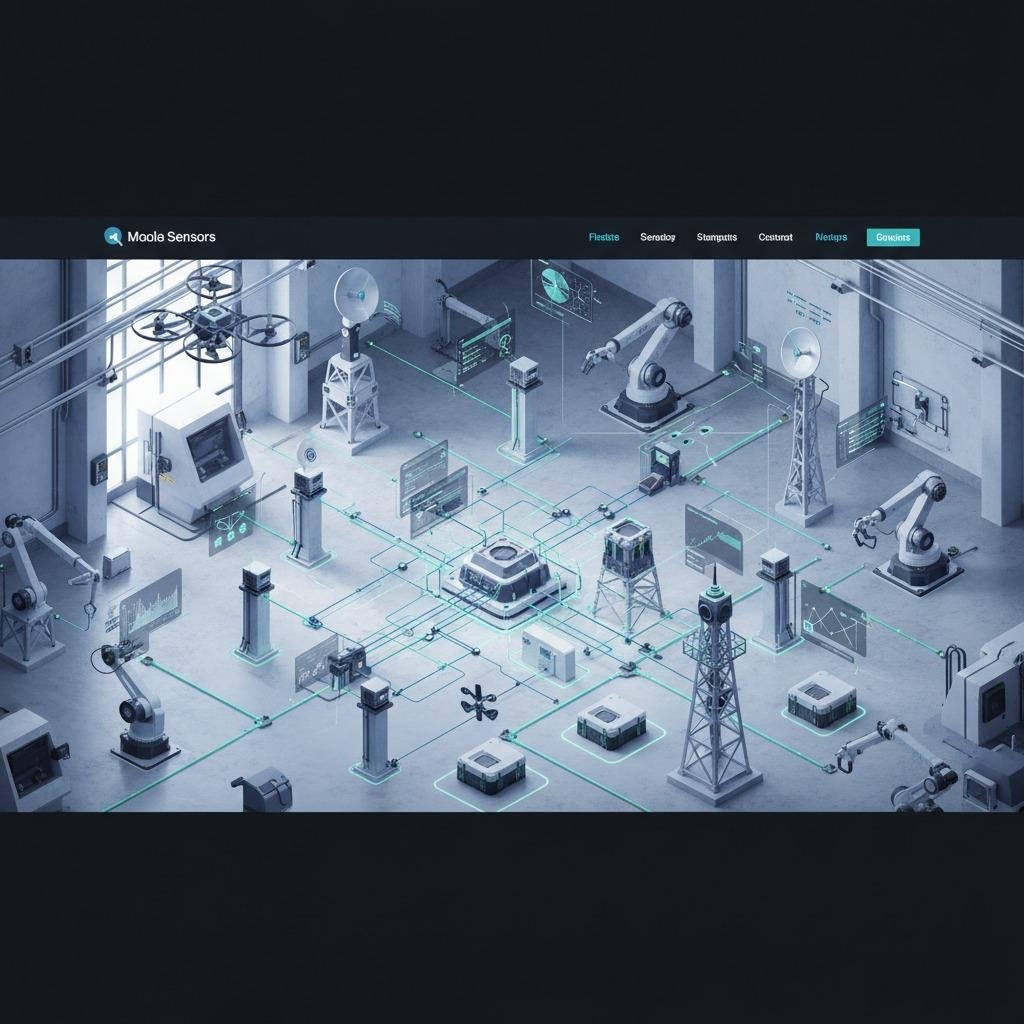
When Centralized Sensing Starts to Fail
Decentralized sensing architecture matters when one sensor, one processor, or one control room is no longer enough to make a reliable decision. That is easy to say and hard to ignore once a system has to cover a larger area, react faster than a human operator can intervene, or keep working when a link drops out. In practical terms, the problem is not just coverage. It is latency, resilience, and the risk of forcing every raw signal through a single bottleneck.
For engineering teams, sourcing managers, and product leads, the decision is usually not whether sensing should be shared, but how much intelligence should live at the edge. A well-designed decentralized sensing architecture lets multiple nodes observe, interpret, and exchange only the information that matters. That can improve response time, reduce network load, and make the system less fragile. It can also create new failure modes if the design is sloppy, so the architecture deserves careful treatment instead of a generic automation pitch.

Why the Architecture Choice Matters
The old model assumes one controller collects every feed, then sorts out what is real. That works in simple environments. It becomes awkward when signals are noisy, targets move quickly, or the sensing area is too large for a single point of view. A central node can become overloaded, and once it is overwhelmed, the whole chain suffers. In a fielded system, that is not a theoretical concern. It shows up as delayed alarms, missed detections, and difficult troubleshooting after the fact.
Decentralized systems are designed to reduce that dependency. Each node can process part of the scene, while the network combines the useful outputs into a shared picture. In drone inspection, for example, that may support data fusion across drone fleet operations where several aircraft contribute observations from different angles. In radar-heavy environments, networked radar sensing can help distribute the workload so one receiver does not have to carry every burden alone. The appeal is straightforward: better survivability, better scale, and often better situational awareness.
What Good Decentralization Actually Looks Like
A strong design does not merely scatter sensors and hope for the best. It creates a clear division between local processing, shared messaging, and final decision logic. Some systems rely on consensus-based perception, where nodes compare observations and settle on a common interpretation. Others assign more weight to the nearest or most reliable sensor. There is no universal answer, and that is part of the point.
The right architecture depends on what must be optimized: speed, robustness, bandwidth, power use, or traceability. If the environment changes quickly, local decision-making may matter more than perfect global completeness. If the stakes are high and false positives are expensive, then the system may need stronger agreement rules before it acts. In either case, the data path should be intentional. Raw data, feature-level data, and decision-level data are not interchangeable, and a bad choice there can quietly undermine the whole project.
Where Cooperative Logic Helps
Cooperative target localization is one of the clearest examples of why decentralized design has value. A single sensor may detect an object, but multiple nodes can estimate position more accurately by combining their observations. That does not mean every node must see everything. In many deployments, the better move is to let each node contribute a compact estimate, then combine those estimates near the edge. The result is often faster than shipping full-resolution streams back to a central server.
The same logic applies in mobile systems. A fleet of autonomous platforms may each have a partial or obstructed view, but together they can form a more useful picture. In practice, the network becomes part of the sensor, not just a transport layer. That is a useful mental model, and also a warning: if the communications design is weak, the sensing design is weaker than it looks on paper.
Selection Criteria Buyers Should Not Skip
When evaluating a decentralized sensing architecture, it helps to ask a few unglamorous questions. How much processing happens at the node? What happens when the network is degraded? Can the system degrade gracefully, or does it fall back to blind operation? How are time stamps aligned? How much confidence is attached to each local estimate? These questions are not flashy, but they decide whether the system is suitable for real work.
Another practical check is integration burden. Some platforms promise flexibility but require custom work at every interface. Others are simpler, though less adaptable. Engineers usually notice the technical trade-off first; sourcing teams often notice lifecycle support, spare parts, and software maintenance later. Both views matter. A system that is elegant in a demo but hard to maintain in production is usually the expensive choice.
Common Mistakes in Real Projects
One common mistake is treating decentralization as a way to avoid system design. It is not. It still needs a clear trust model, a plan for synchronization, and rules for conflict resolution. Another mistake is over-collecting data just because the network can handle it during a lab test. In the field, bandwidth is rarely as generous as the spec sheet suggests, and latency tends to get worse when the environment gets interesting.
A subtler mistake is ignoring calibration drift across nodes. If sensors disagree for mechanical or environmental reasons, the network may appear to be debating a problem that is really just misalignment. That kind of issue can be especially frustrating in networked radar sensing and multi-platform systems because the error is distributed, not isolated. Teams then spend time tuning the fusion layer when the real issue sits in the hardware stack.
What Decision Makers Should Ask Before They Buy
If you are comparing solutions, start with the operating scenario rather than the brochure language. Is the system supposed to detect, classify, localize, or all three? Must it keep operating during packet loss? Are you buying for a fixed site, a moving fleet, or a mixed environment? Those answers change the architecture choice more than most vendors admit.
It also helps to ask how the platform handles disagreement. A mature decentralized sensing architecture should explain whether it uses voting, weighting, confidence scoring, or another method for combining observations. If the vendor cannot describe that clearly, the system may be more fragile than it looks. And if the answer is vague, that is usually the answer.
FAQ
Is decentralized always better than centralized?
No. Centralized designs are often simpler and easier to manage when the sensing area is small and the timing requirements are modest. Decentralized systems earn their keep when scale, resilience, or latency becomes more important.
Does this only apply to drones?
No. Drones are a useful example because mobility makes the trade-offs obvious, but the same principles apply to mobile robots, distributed inspection systems, industrial monitoring networks, and radar-based sensing installations.
What is the main risk?
The main risk is assuming the network will magically solve coordination problems. In reality, the architecture needs disciplined synchronization, data quality checks, and a clear fusion strategy.
Where the Best Projects Usually End Up
The strongest systems are rarely fully centralized or fully independent. They use local intelligence where speed matters, shared context where agreement matters, and careful fusion only where it adds real value. That balance is what makes decentralized sensing architecture worth the extra design effort. For teams choosing platforms or building one from scratch, the useful question is not whether decentralization sounds modern. It is whether the system can keep sensing, keep deciding, and keep working when the environment stops being polite.
If you are evaluating a new sensing platform, start with the failure modes first and the feature list second. That order is not glamorous, but it tends to save time, budget, and a few uncomfortable surprises later.