







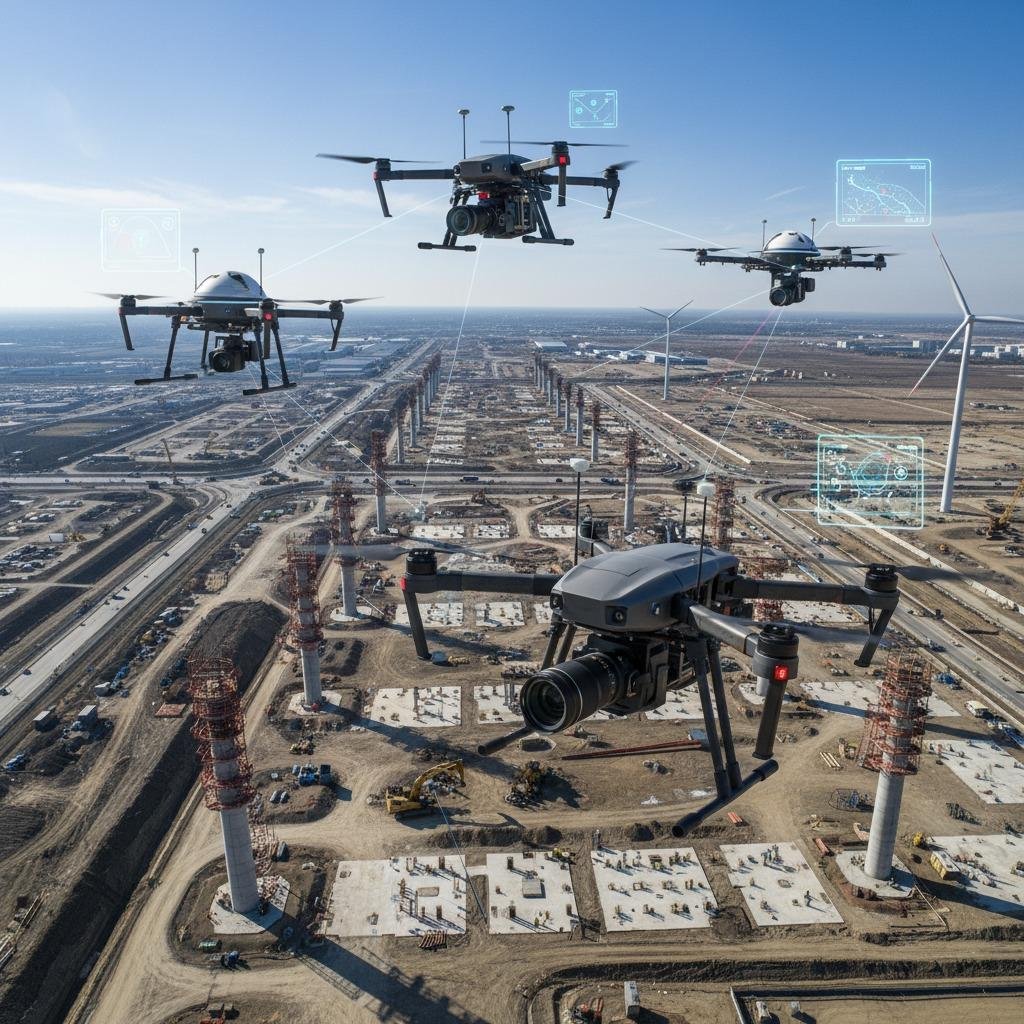
Why a distributed sensing network matters when drones stop behaving like single machines
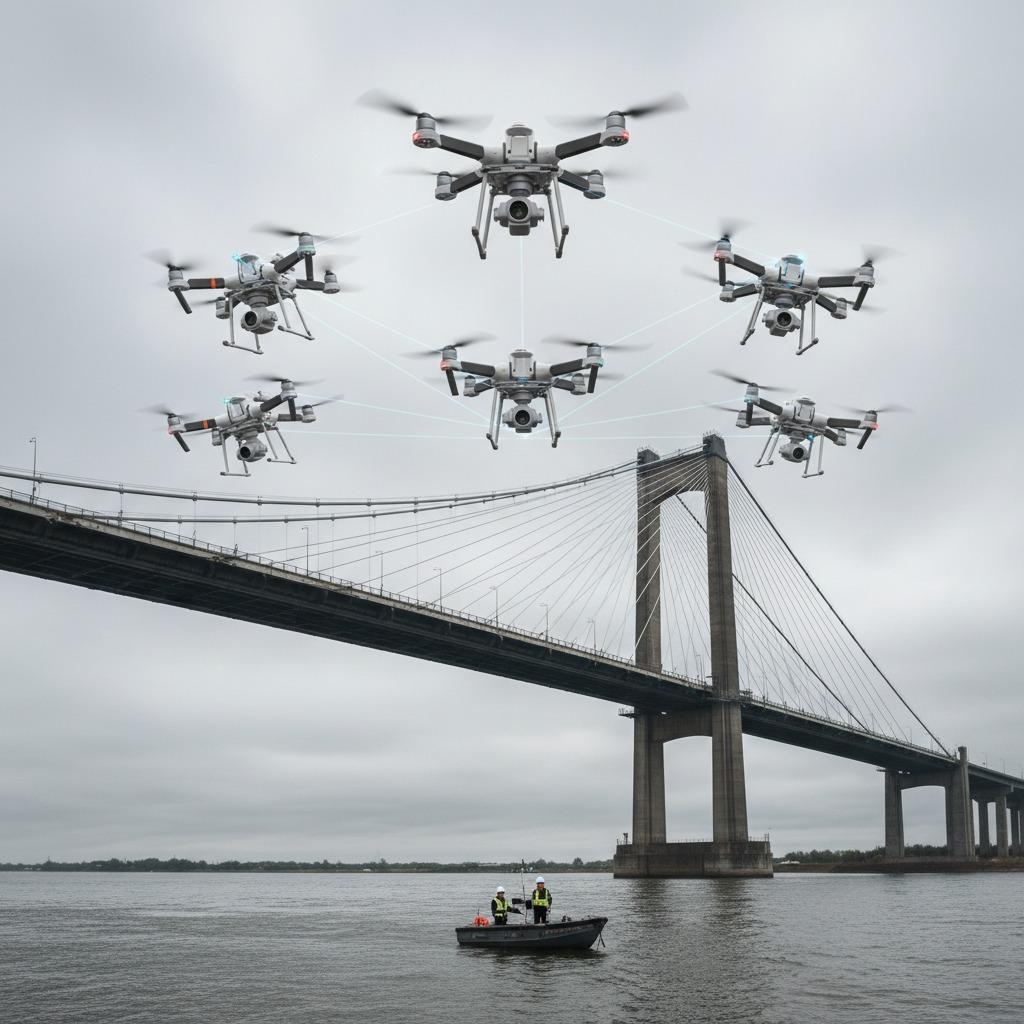
A distributed sensing network is becoming one of the more practical ways to make multi-drone systems usable outside the lab. The basic problem is familiar to anyone who has tried to scale autonomy: one drone can see only part of the scene, one sensor can be blocked, and one onboard processor can only do so much before the system starts making cautious, inefficient decisions. Once you move from a single platform to a coordinated group, the challenge is no longer just flight control. It is information sharing, timing, and trust in what the other vehicles are detecting.
That matters because industrial drone programs are rarely built for novelty. They are built to inspect assets, map terrain, track moving targets, or cover wide areas with fewer passes. In those settings, collaborative perception is not a buzzword. It is the difference between a fleet that behaves like several isolated aircraft and a fleet that actually acts like a system.
What problem the architecture is trying to solve
At a basic level, a distributed sensing network lets multiple drones share sensor data, estimates, or detections so each vehicle can make better local decisions. One drone may carry a camera, another a range sensor, another a different payload optimized for a specific task. By combining those inputs, the group can improve situational awareness without forcing a single drone to carry every instrument.
That approach is especially useful when visibility is poor, the target area is large, or the environment changes quickly. A lone vehicle may miss a partial obstacle, lose track of a moving object, or struggle to maintain stable coverage. A coordinated set of platforms can often fill in those gaps, although the quality of the result depends heavily on synchronization, communication reliability, and data fusion methods. This is where the real engineering work begins.
Quick reference: what buyers usually need to compare
Before selecting a platform or building one in-house, teams usually need to compare four things:
- Sensor complement: what each drone can actually observe.
- Data exchange method: how detections, timestamps, and state estimates move across the network.
- Coordination method: whether the group relies on centralized control, distributed logic, or a hybrid model.
- Operating environment: indoor, outdoor, GPS-denied, cluttered, or high-mobility use cases.
That sounds simple, but the practical tradeoffs are not. A strong link between vehicles may improve swarm coordination, yet it can also add latency or complexity. A lighter payload may extend flight time, but it can reduce the fidelity of inter-drone ranging or local perception. Every improvement in one area tends to create a compromise somewhere else.
How collaborative perception changes the design brief
Collaborative perception shifts the design question from “What can this drone see?” to “What can the group know together?” That change is powerful, but it should not be romanticized. Shared sensing only works well when the system can align measurements in time and space. If timestamps drift or localization is shaky, the shared picture can become misleading very quickly.
Engineers often underestimate how much the network itself influences the result. Bandwidth limits, packet loss, and update rates all affect what the other drones believe. In other words, the sensing layer and the communications layer are inseparable. That is one reason distributed sensing network programs tend to succeed when they are treated as systems projects rather than hardware purchases.
Where formation flying support fits in
Formation flying support is often the first visible benefit. A group of drones that can hold relative positions more accurately can cover corridors, inspect long assets, or maintain geometry for imaging and sensing tasks. But formation control is not just about keeping neat spacing. It is also about preserving useful sensor viewpoints and preventing overlap, blind spots, or interference between vehicles.
For buyers, this means formation capability should be judged by task performance, not by how elegant the demo looks in a test field.
Inter-drone ranging and why it is easy to overvalue
Inter-drone ranging is useful, but it is not magic. Range measurements help vehicles estimate distance to one another, which can support relative positioning and safer coordination. Still, ranging data needs context. If the environment contains multipath reflections, occlusions, or changing motion patterns, the numbers can mislead a controller that assumes too much.
A cautious engineering approach is to treat ranging as one input among several, not as the sole basis for collision avoidance or formation logic. Teams that rely too heavily on a single measurement channel often discover the hard way that the field is less controlled than the test bench.
Selection criteria that usually matter most
For sourcing managers and engineering leads, the decision often comes down to application fit rather than feature count. A useful distributed sensing network should be evaluated for:
- How well it supports the mission geometry
- Whether the data model fits the payload mix
- How gracefully it degrades when a vehicle drops out
- How difficult it is to integrate with existing autonomy stacks
- Whether operators can understand the system behavior during a fault
That last point is easy to ignore, yet it matters in the field. A system that fails transparently is usually better than one that fails elegantly but silently.
Common mistakes teams make
The most common mistake is assuming that more drones automatically mean better performance. Without careful coordination, a larger group can create more congestion, more communication load, and more uncertainty. Another mistake is focusing on payload specs while overlooking timing accuracy and network architecture. A third is failing to define what success looks like before integration begins.
If the goal is collaborative perception for inspection, the network needs different priorities than a system designed for swarm coordination in a dynamic environment. Likewise, formation flying support for indoor work will demand different tolerances than a wide-area outdoor mission. Those distinctions sound obvious, but they are often blurred during procurement.
Practical buyer advice
Start with the mission, not the acronym. If the problem is coverage, map the sensing gaps first. If the problem is relative motion, prioritize inter-drone ranging and stable state exchange. If the problem is group behavior under changing conditions, the control logic and recovery behavior matter as much as the sensors themselves.
Ask vendors or integrators to explain how the system handles degraded communication, partial sensor failure, and vehicle dropout. Ask what data is shared, at what rate, and what happens when the network becomes noisy. Those are not edge cases. They are normal operating conditions in many industrial deployments.
What this decision really helps you make
A distributed sensing network is not just a technical architecture. It is a way to decide whether multi-drone operations will behave like a coordinated tool or a loose collection of assets. The right setup can improve visibility, reduce blind spots, and support more reliable swarm coordination. The wrong one can add complexity without delivering better decisions.
For teams planning a new program, the next step is usually a mission-level review: define the sensing objective, the required formation behavior, and the communication constraints before committing to hardware. That sequence saves time later, and it avoids a common trap in drone projects — buying capability that looks impressive on paper but proves awkward in the field.
FAQ
Is a distributed sensing network only useful for large swarms?
No. Even a small number of drones can benefit if the mission requires shared awareness, coordinated movement, or coverage of obstructed areas.
Does collaborative perception replace onboard autonomy?
Not really. It extends onboard autonomy by giving each vehicle better context. The local controller still has to act safely when data is incomplete.
What is the biggest integration risk?
Usually timing and synchronization, followed closely by communication reliability. If those are weak, the rest of the stack has to work harder than it should.