







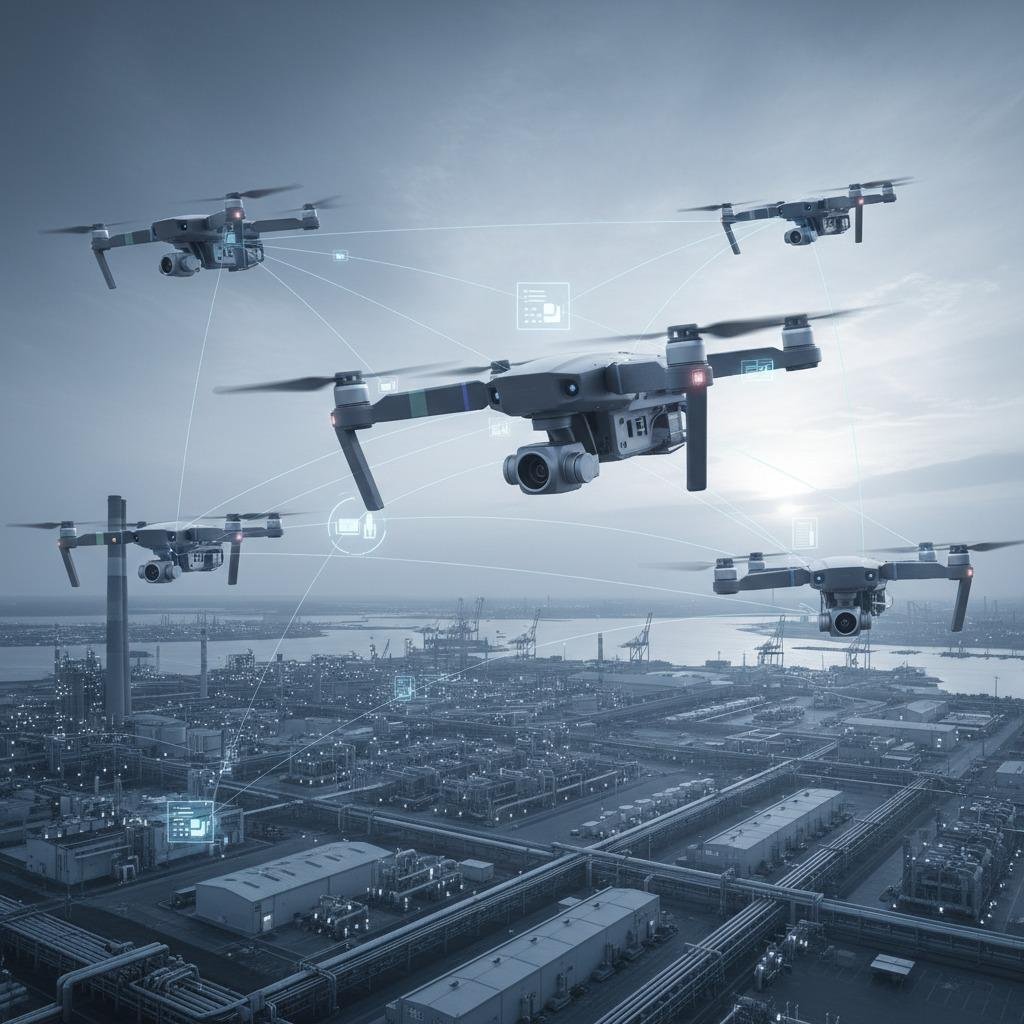
Why a distributed sensing network matters when drones stop working alone
A distributed sensing network is becoming a practical answer to a problem that shows up quickly once fleets of drones move from demo flights to real operations: a single aircraft can see only so much, and a single sensor failure can stall the mission. When operators need better awareness across a wider area, they usually need more than one drone, and they need those drones to share information in a way that is fast, stable, and useful. That is where distributed sensing, not just onboard sensing, changes the picture.
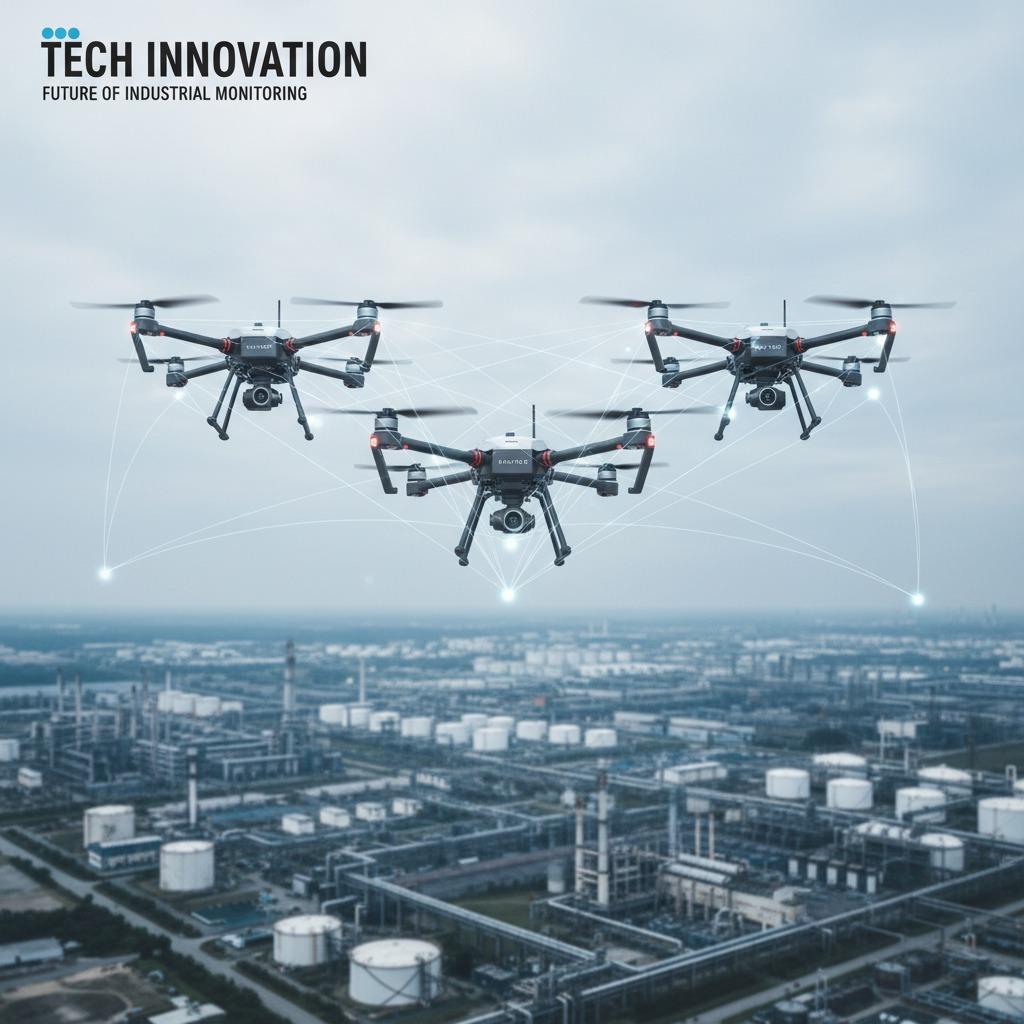
For engineers and sourcing teams, the decision is not simply whether a drone can carry a camera or radar. It is whether the fleet can coordinate detections, maintain spacing, support formation flying, and keep working when conditions are less than ideal. In practice, that means the system has to support collaborative perception, inter-drone ranging, and swarm coordination without adding so much complexity that the operation becomes fragile.
What problem this architecture is trying to solve
Traditional sensing works best when one platform owns the task end to end. That approach starts to break down in distributed missions such as search, inspection, perimeter monitoring, or wide-area mapping. One drone can miss what another drone sees from a different angle. One vehicle can lose line of sight, while another still has a clean view. If the fleet shares sensing data intelligently, the operators get a fuller picture and usually a better chance of maintaining continuity.
This is also where formation flying support becomes more than a control exercise. Formation is not only about keeping units neatly arranged. It helps preserve sensor coverage, reduce blind spots, and keep the network operating as a coordinated system rather than a loose group of airborne devices. That distinction matters when buyers are comparing platforms that may look similar on a spec sheet but behave very differently in the field.
Quick reference: what buyers should look for
A useful distributed sensing network should do a few things well:
It should share position and detection data quickly enough that the information is still relevant when another drone receives it. It should support inter-drone ranging so spacing and relative motion can be managed with less guesswork. It should help the fleet maintain collaborative perception across changing viewpoints, not just collect isolated sensor outputs. And it should do all of this without demanding constant manual correction from the operator.
That sounds straightforward, but it is not always easy in real deployments. Wireless links can be noisy, environments can be cluttered, and the fleet may be operating at the edge of its communication range. Buyers should be cautious about systems that look impressive in a controlled environment but do not specify how the network behaves when link quality changes or when one node drops out.
How distributed sensing changes fleet behavior
At a basic level, the system turns many local measurements into a broader operational picture. One drone may detect motion, another may confirm distance, and a third may provide an alternate angle that reduces ambiguity. In swarm coordination, that shared context helps the fleet move as a unit without every vehicle making decisions in isolation.
Collaborative perception in practice
Collaborative perception is valuable because it reduces the risk of single-sensor blind spots. For example, one drone’s camera may struggle with glare or occlusion, while another drone’s viewpoint may be clear. Combined properly, those signals can improve decision-making. The key word there is properly. Not every system merges data cleanly, and not every onboard processor can handle the load. Integration quality is often what separates a useful platform from a clever one.
Inter-drone ranging and spacing control
Inter-drone ranging supports safer spacing and more reliable formation behavior. This matters in tight maneuvers, inspection corridors, or any mission where proximity affects both safety and data quality. If the distance estimation is unstable, the whole fleet can start to behave cautiously or erratically. That is a buyer-facing warning worth keeping in mind: a network that is theoretically connected is not necessarily operationally dependable.
Selection criteria that deserve more attention than brochures give them
Engineers usually know to compare range, throughput, and power draw. Those are important, but they are not enough on their own. For a distributed sensing network, teams should also ask how the system handles latency, how it prioritizes critical messages, and how it behaves when one drone temporarily goes offline. Those are the moments that expose whether the design was built for a lab or for a jobsite.
Another practical point is data burden. More sensing is not always better if the network cannot process and distribute the outputs fast enough. In some cases, a leaner system with cleaner data handling will outperform a heavier setup that looks stronger on paper. Sourcing managers often appreciate this kind of tradeoff discussion because the cheapest unit price rarely reflects the real cost of poor coordination later.
Common mistakes buyers make
One common mistake is treating the network as an add-on instead of a core system function. If collaborative perception is central to the mission, it should be evaluated as seriously as propulsion or endurance. Another mistake is assuming every drone in a fleet needs identical sensing roles. In many operations, a mixed setup can work better, provided the network architecture supports it.
There is also a tendency to overlook operator workflow. If the system requires too much tuning before every mission, teams will either slow down or work around it. Neither outcome is good. A strong distributed sensing network should reduce friction, not add another layer of complexity for the field crew.
What this means for product and sourcing teams
For product teams, the main decision is whether the fleet is being designed as a group of individual drones or as a coordinated sensing system. Those are not the same thing, and the difference affects sensors, comms, software, and test planning. For sourcing teams, the question is whether suppliers can support the integration level the application really needs. A platform that only supports basic telemetry may be fine for simple missions, but it will not do much for swarm coordination or advanced formation flying support.
If your application depends on shared awareness, choose with the full mission in mind. Ask how the network supports detection sharing, ranging, and behavior under disruption. Ask what happens when conditions move from ideal to messy, because they usually do. That is where a distributed sensing network earns its place, or fails quietly.
Next step
If you are evaluating fleet hardware, write down the mission first: coverage area, spacing needs, sensor sharing, and how much autonomy the drones must carry on their own. Then compare systems against those operational requirements, not just against a spec sheet. A well-matched network will save time in deployment and reduce surprises later, which is often the real measure buyers care about.