






Why drone collision avoidance has become a design issue, not just a feature
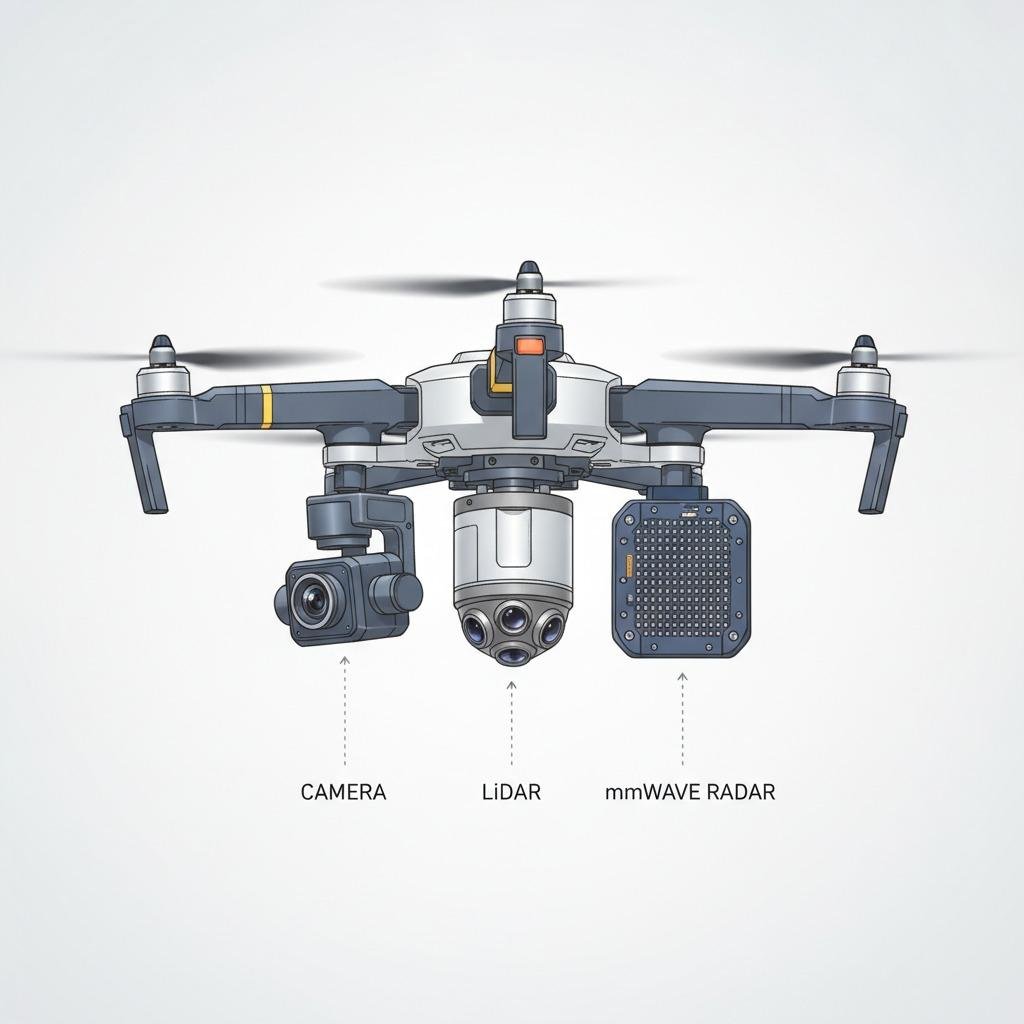
Drone collision avoidance used to sound like a premium add-on. In practice, it has become part of the basic safety conversation for commercial UAVs, inspection platforms, and delivery concepts that have to operate near structures, people, wires, or other aircraft. The moment a drone leaves a wide-open test field and enters a real jobsite, the margin for error drops quickly.
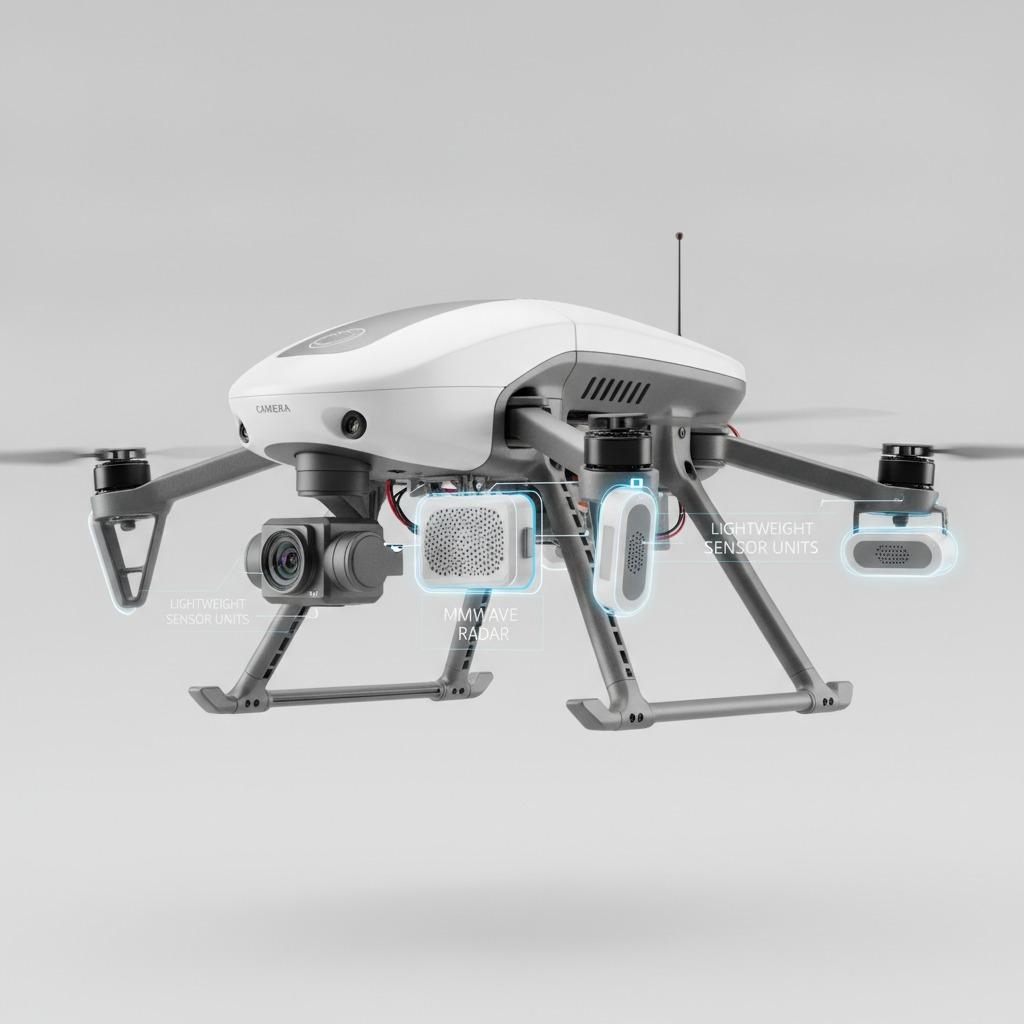
That is why engineers and sourcing teams are paying closer attention to the sensing stack behind the software. A good autonomy algorithm can only work with the data it receives. If the sensor is too heavy, too fragile, too power-hungry, or too weak in poor visibility, the flight stack becomes optimistic in a way that buyers usually regret later.
This article looks at what matters in drone collision avoidance, how common sensing approaches differ, and what to ask before committing to a platform or subsystem.
What buyers really need to solve
The core problem is not simply “seeing obstacles.” A drone needs to detect objects early enough to react, classify enough to avoid false alarms, and do all of that without ruining flight time or payload capacity. That combination is harder than it sounds.
For engineering teams, the tradeoff usually sits in four places:
- range versus size and weight
- performance in fog, dust, glare, or low light
- processing load versus latency
- integration complexity versus system reliability
A lightweight sensor can help preserve endurance, but if it sacrifices detection confidence, the aircraft may still be too risky for close-quarters operation. On the other hand, a powerful sensor suite can become a penalty if it pushes the drone beyond its payload budget or requires a larger power supply than the airframe can comfortably support.
Common sensing approaches and where they fit
Vision-based systems
Cameras are attractive because they are familiar, relatively compact, and useful for both perception and recording. They can support obstacle detection with the help of software, but they are sensitive to lighting and contrast. Shadows, glare, rain on the lens, and feature-poor surfaces can all weaken performance. In a controlled environment, they work well. In harsh field conditions, they can be less forgiving than buyers expect.
LiDAR and active optical sensing
Active optical sensors can provide precise spatial information and are often favored where map-like depth data is needed. They can be very effective, but they also add cost, complexity, and sometimes weight. For compact platforms, that matters. A buyer evaluating this route should ask whether the drone truly needs dense 3D detail or whether a simpler range picture would be enough.
mmWave radar
mmWave radar has gained attention because it is compact, can be built into a lightweight sensor package, and is less dependent on ambient light. For drone collision avoidance, that makes it especially relevant in weather-stressed or low-visibility applications. Radar is not magic; it may not give the same visual context as a camera, and interpretation requires careful tuning. But for detecting objects and maintaining situational awareness when optics struggle, it is a serious option.
Why range-Doppler mapping matters
When radar is part of the design, range-Doppler mapping becomes one of the key processing tools. It helps separate objects by distance and relative motion, which is useful when a drone must distinguish a static barrier from moving clutter. That distinction becomes important in crowded environments, near vehicles, or in mission profiles where the drone itself is already in motion and the background is not simple.
For sourcing managers, the practical question is whether the sensor and processor can handle that workload without inflating the system too much. A clever algorithm on paper does not help if latency creeps up during real flight.
Selection criteria that deserve more attention than they usually get
A lot of product discussions get stuck on headline range numbers. That is a mistake. A longer nominal range is useful only if the system remains reliable across the environments your drone actually sees.
Buyers should look at:
- operating environment: indoor, outdoor, dust, rain, or mixed use
- airframe limits: mass, vibration, and available power
- target obstacles: buildings, trees, cables, moving equipment, or people
- processing architecture: onboard compute versus offboard support
- integration path: software stack, interfaces, and calibration effort
One practical caution: cable detection is often harder than expected, no matter the sensor type. Thin, low-contrast hazards are the sort of thing that separate a polished demo from a dependable system.
Typical mistakes in drone collision avoidance programs
The first mistake is over-specifying the sensor and under-specifying the mission. Teams sometimes buy for the worst theoretical case, then discover the platform can no longer carry the battery needed for useful flight time.
The second mistake is assuming one sensor modality solves every problem. In reality, many robust platforms use a layered approach: vision for context, radar for resilience, and software that fuses the data carefully rather than aggressively.
The third mistake is ignoring integration and validation. Even strong obstacle detection performance in a lab means little if the system behaves differently after vibration, temperature cycling, or field contamination.
Practical buyer advice
If you are evaluating drone collision avoidance for a new platform, start with the mission envelope, not the sensor catalog. Define the obstacles, the expected speeds, the visibility conditions, and the available payload budget. Then compare sensing options against those constraints.
If your use case includes poor lighting, haze, or operations where visual sensors are unreliable, mmWave radar deserves a closer look. If your application needs rich scene understanding, cameras may still be part of the answer. In many systems, the best result is not choosing one technology blindly, but matching the sensor mix to the actual risk profile.
What to ask your engineering or supplier team
Before you freeze a design, ask a few unglamorous questions: How does the system behave in clutter? What happens when the sensor lens is obscured? Does the detection stack degrade gracefully, or does it fail loudly? Can the platform support the added compute load without shortening mission time too much?
Those questions rarely show up in marketing brochures, but they matter when the drone is airborne and something unexpected enters the flight path.
Next step
If you are building or sourcing a drone collision avoidance solution, map the mission first and the sensor second. The right choice is usually the one that stays accurate in the real environment, fits the airframe without strain, and gives the software enough trustworthy data to react before a small problem becomes a wrecked landing gear or a worse day in the field.