






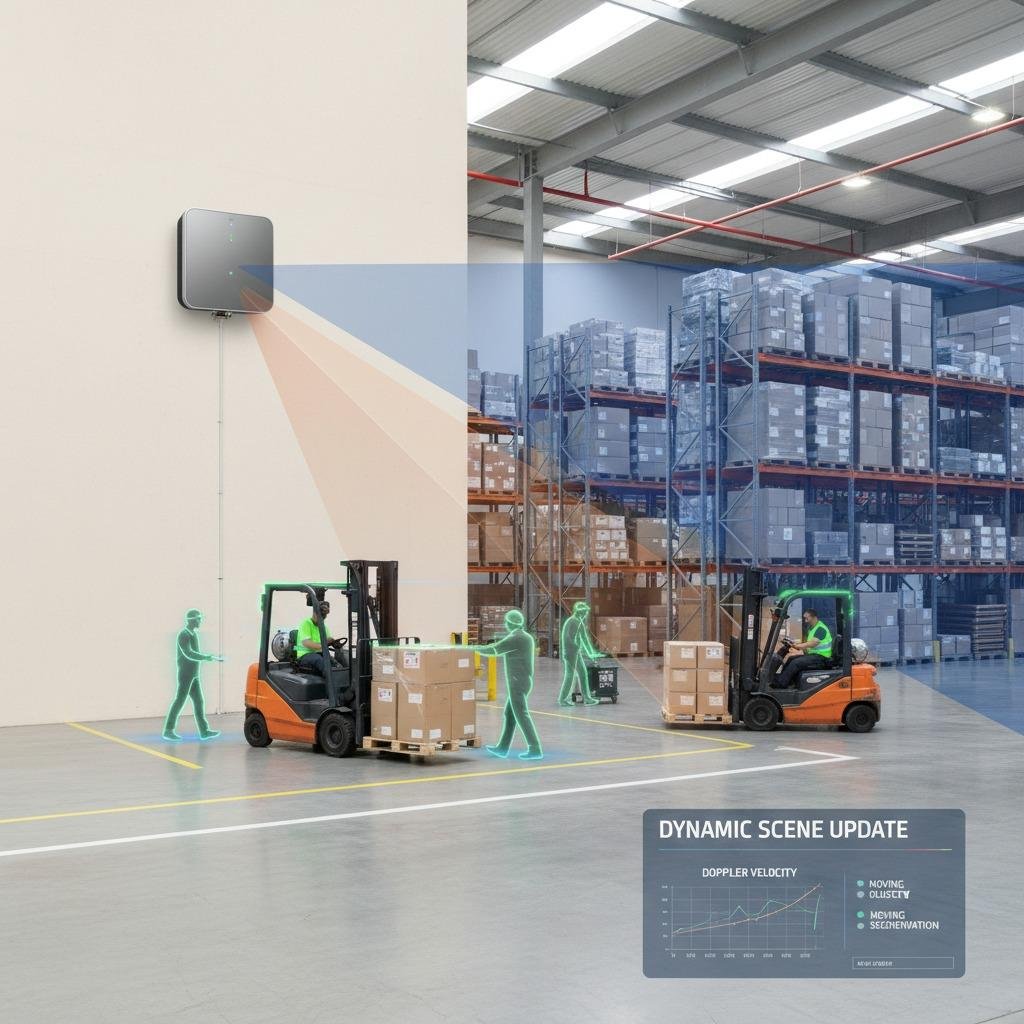
Why dynamic scene updating matters in real systems
Dynamic scene updating is one of those capabilities that sounds abstract until a radar, sensor, or machine vision system starts missing what changed in front of it. In practice, it is the difference between a display that keeps up with the working environment and one that lags behind moving people, vehicles, tools, or process equipment. For engineers and sourcing teams, the question is not whether the scene changes. It always does. The question is whether the system can recognize those changes fast enough to stay useful.
This matters most in environments with motion mixed into clutter: factory floors, perimeter security zones, warehouse aisles, ports, roadways, and autonomous platforms. A system that treats the background as fixed may perform well in a quiet lab and then struggle in the field. Buyers usually end up choosing between higher computational load, more sophisticated signal processing, or a simpler system that is easier to deploy but less selective. That is the real decision dynamic scene updating helps resolve.
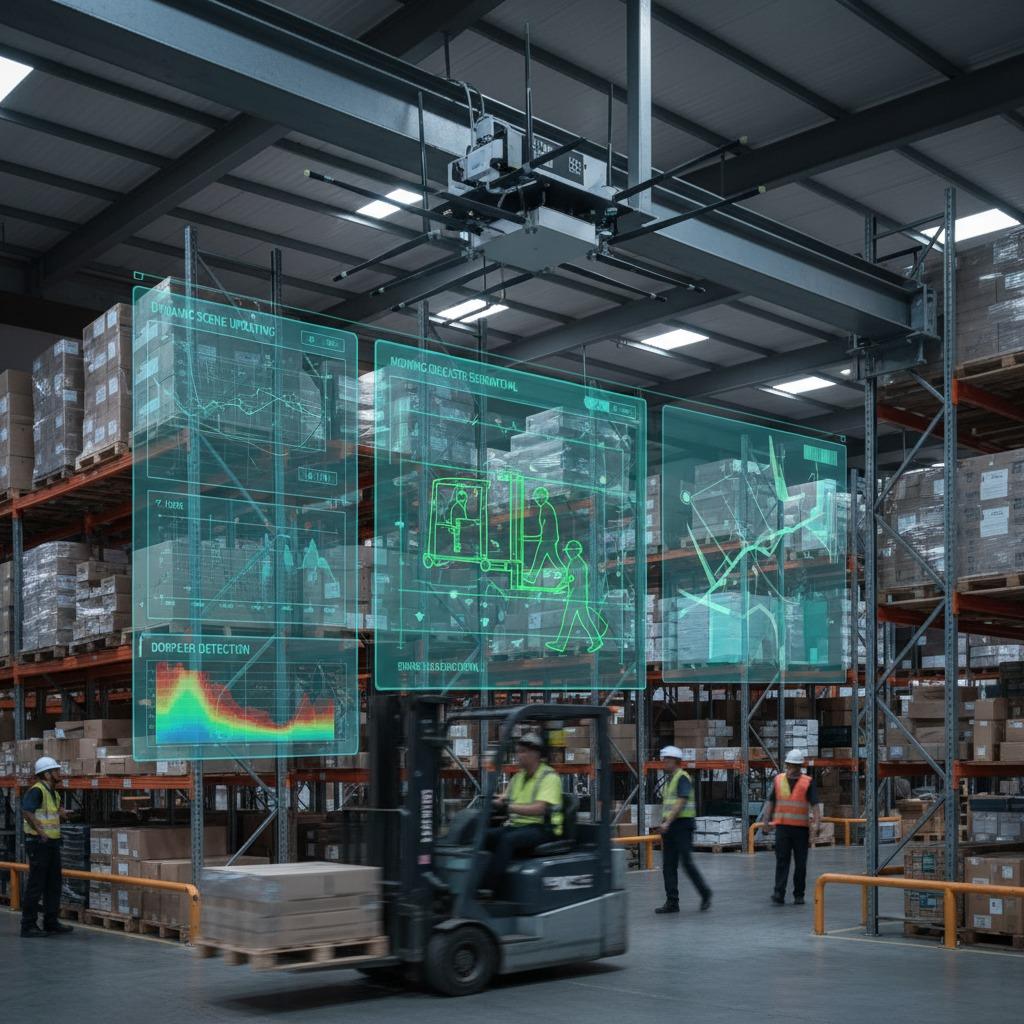
What the feature is really doing
At a practical level, dynamic scene updating means the system continuously revises its internal model of the environment. Rather than assuming the first frame or first sweep is still valid, it adapts as objects move, appear, or disappear. In radar and sensing applications, that often involves filtering out stationary clutter, separating moving targets from background returns, and keeping detection logic aligned with current conditions.
The value is easy to state and harder to implement. If updating is too slow, the system clings to outdated background assumptions. If it is too aggressive, it may absorb a real target into the background. That trade-off shows up in many sensing designs, and it is why the processing stack matters as much as the sensor hardware itself.
Key processing methods that support scene updates
Several techniques are often used together, depending on the application.
Stationary clutter removal
Stationary clutter removal helps suppress returns from fixed objects such as walls, shelving, fencing, or terrain. In a stable environment, this can dramatically clean up the view. The caution is straightforward: “stationary” is a moving target in its own right. Machinery vibration, swaying signage, doors, and even drifting materials can all complicate the picture.
Moving object segmentation
Moving object segmentation separates active targets from the broader scene. For automation and security applications, this is often the layer that turns raw sensor data into a usable alert or track. The engineering challenge is preserving real motion while avoiding false positives from reflections, cross-talk, or intermittent interference.
Adaptive beamforming
Adaptive beamforming is especially relevant where directional control matters. By shaping the receive or transmit pattern in response to the environment, a system can emphasize useful returns and reduce unwanted energy from neighboring directions. It can be powerful, but it is not a cure-all; performance depends on array design, signal quality, and the stability of the operating scene.
Doppler velocity detection
Doppler velocity detection gives the system a way to distinguish movement by shift in frequency, which is a major advantage when static clutter dominates. It is widely used because it offers a reliable physical cue. Still, buyers should ask how the platform handles low-speed movement, overlapping targets, and changing reflection conditions, since those are common failure points in real deployments.
How to evaluate a solution for your application
Engineers typically need to decide whether the system is expected to identify motion, track objects, or maintain situational awareness over time. Those are related tasks, but they do not require the same processing balance. A warehouse safety system may need strong moving object segmentation and fast updates. A traffic monitoring system may care more about Doppler velocity detection and robust clutter suppression. A robotic platform may need all of the above, but in a tighter power and compute envelope.
When comparing options, ask practical questions. How often is the scene model refreshed? Does the update logic adapt to slow structural changes, such as seasonal shifts or equipment layout changes? Can the system distinguish a persistent parked object from a legitimate background element? And what happens when the environment becomes noisy, reflective, or crowded? These details matter more than broad claims about intelligence or autonomy.
Common mistakes buyers make
One common mistake is assuming a high detection rate in a controlled demo will translate directly to a messy operating environment. It often will not. Another is underestimating the cost of false alarms, which can be worse than a missed event in some plants because operators stop trusting the system. There is also a tendency to focus on raw sensor resolution while ignoring the software layer that performs dynamic scene updating. That is a narrow view. In many deployments, the software is what makes the hardware viable.
It is also worth checking whether the solution can be tuned by the integrator or end user. A fixed algorithm may look simple on paper, but field conditions rarely stay fixed for long.
What a good buyer-facing spec should clarify
Even without exact certifications or benchmark numbers, a solid spec sheet should describe the sensing method, the role of clutter suppression, the handling of moving targets, and the compute or integration requirements. If the vendor mentions adaptive beamforming or Doppler velocity detection, it should be clear how those functions are used and what problem they solve. Vague language is not always a red flag, but it is usually a sign that the buyer will need to do more validation work.
Decision takeaway for engineering and sourcing teams
If your environment is stable and objects rarely move through the field of view, dynamic scene updating may be a nice-to-have. If your environment changes throughout the shift, it becomes a core requirement. The best choice is usually the one that can keep pace with real operational change without overreacting to noise. That balance is where the value sits, and it is also where many systems fall short.
If you are evaluating options now, request an application-specific demo using your own clutter, motion patterns, and layout constraints. A system that works on generic test data may still struggle in your plant, yard, or roadway. That is the test that matters.