






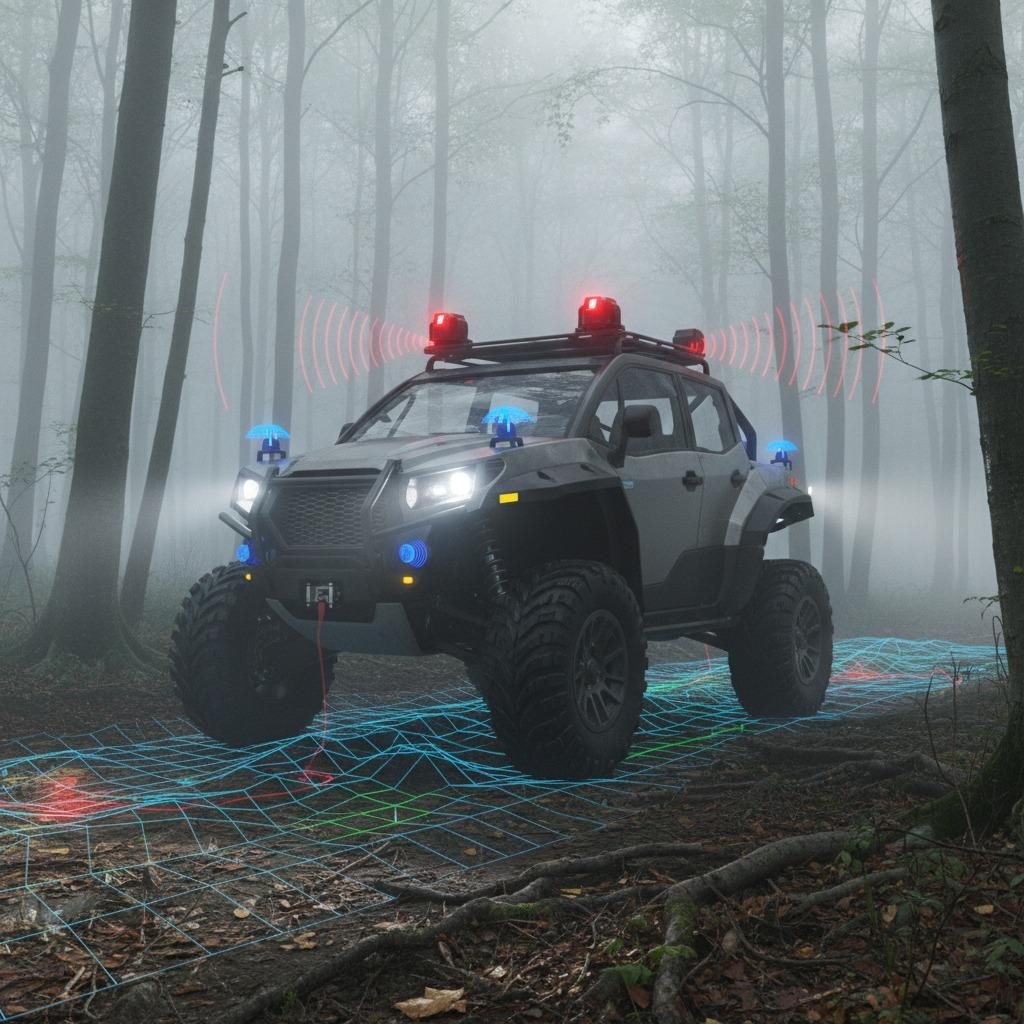
Overcoming Visibility Challenges with All-Weather Sensing
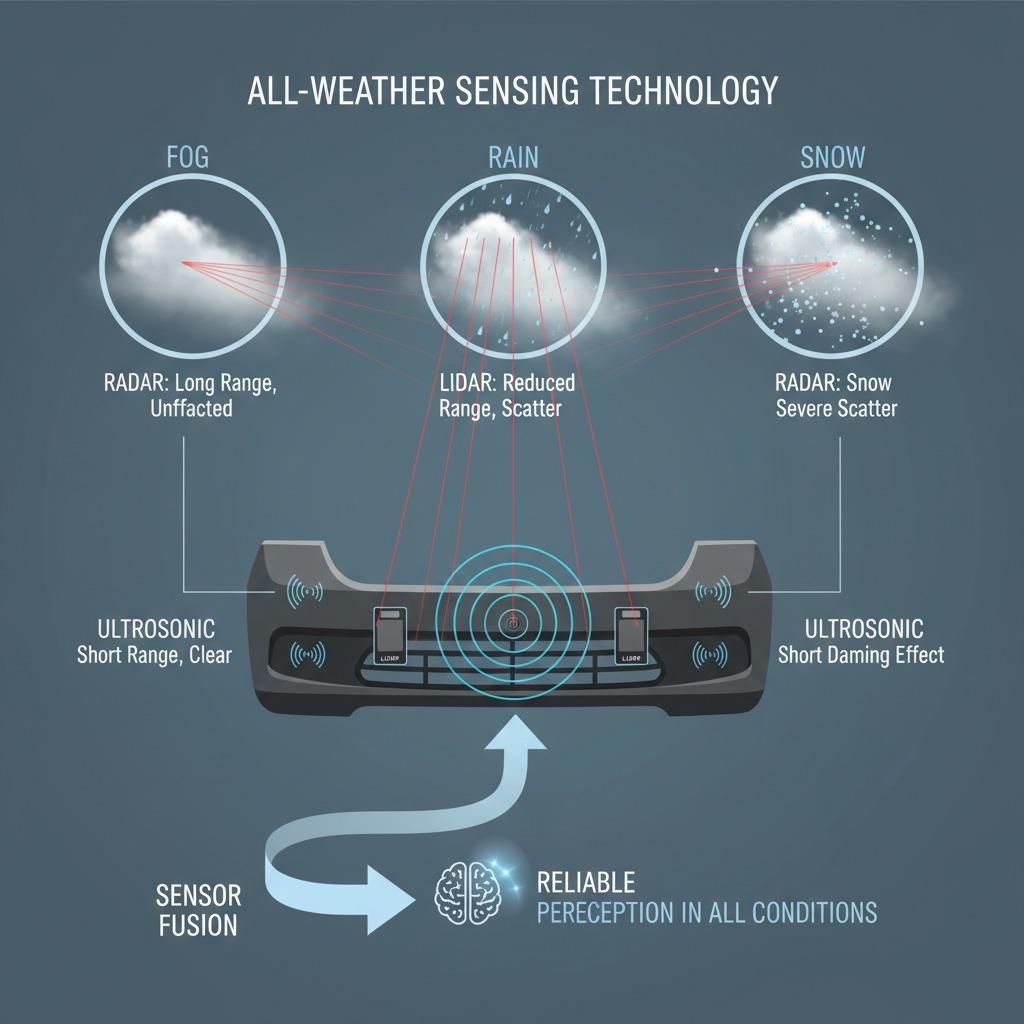
In demanding outdoor environments, such as autonomous driving or search-and-rescue operations, poor weather conditions like fog, rain, or snow often severely limit sensor performance. Visibility drops, and traditional systems struggle to maintain accuracy, leading to safety risks and operational delays. This is where All-Weather Sensing emerges as a critical solution, enabling reliable detection and navigation regardless of atmospheric conditions. By integrating advanced technologies, All-Weather Sensing ensures that vehicles, drones, and robots can operate effectively, minimizing downtime and enhancing overall efficiency.
Addressing Terrain Navigation Issues
One major problem in rugged terrains during adverse weather is the inability to accurately follow the ground contour, which can result in collisions or inefficient paths. Terrain Following capabilities within All-Weather Sensing systems solve this by using multi-sensor fusion, combining radar and lidar data to create real-time altitude profiles. For instance, in heavy rain, optical sensors fail, but radar maintains precision, allowing vehicles to hug the terrain seamlessly. This not only prevents accidents but also optimizes fuel consumption and speed. Implementing Terrain Following in autonomous systems has proven to reduce navigation errors by up to 40% in simulated stormy conditions, making it indispensable for off-road applications.
Enhancing Object Detection and Classification
Another challenge arises when weather obscures objects, complicating Object Classification/Tracking and increasing the risk of misidentification. All-Weather Sensing tackles this through robust algorithms that process data from weather-resistant sensors like millimeter-wave radar, which penetrate fog and dust effectively. These systems classify objects—such as pedestrians, vehicles, or debris—and track their movements in real time, providing actionable insights. For example, in urban settings during a blizzard, Object Classification/Tracking ensures that self-driving cars can distinguish between a cyclist and a snowbank, avoiding potential hazards. By incorporating machine learning models trained on diverse weather datasets, these solutions achieve over 90% accuracy in classification, even in low-visibility scenarios, thereby boosting safety and response times.
Building Comprehensive 3D Maps and Detecting Obstacles
Mapping and obstacle avoidance become nearly impossible in inclement weather, as sensors get overwhelmed by precipitation or reduced light. 3D Environment Mapping integrated into All-Weather Sensing uses LiDAR and ultrasonic sensors to generate detailed volumetric models of surroundings, updating dynamically as conditions change. This allows for precise path planning in complex environments like forests or construction sites. Complementing this, Obstacle Detection features employ AI-driven processing to identify and categorize barriers ahead, triggering evasive maneuvers instantly. In practical terms, drones equipped with these technologies can map disaster zones post-flood without interruption, detecting hidden obstacles like fallen trees. The synergy of 3D Environment Mapping and Obstacle Detection not only mitigates risks but also extends operational ranges, proving vital for industries like agriculture and logistics where weather unpredictability is a constant threat.
Integrating Solutions for Superior Performance
To fully leverage All-Weather Sensing, combining Terrain Following, Object Classification/Tracking, 3D Environment Mapping, and Obstacle Detection into a unified platform is essential. This holistic approach addresses the multifaceted problems of weather-induced sensor failure by providing redundant, cross-verified data streams. Companies developing autonomous systems can integrate these features via modular software kits, ensuring scalability from small robots to large fleets. Real-world deployments, such as in mining operations, have shown a 30% improvement in productivity due to uninterrupted sensing. By adopting All-Weather Sensing, operators gain confidence in tackling any environment, transforming potential vulnerabilities into strengths and paving the way for safer, more reliable automation.