







Why false alarms still cost real money in sensing and inspection workflows
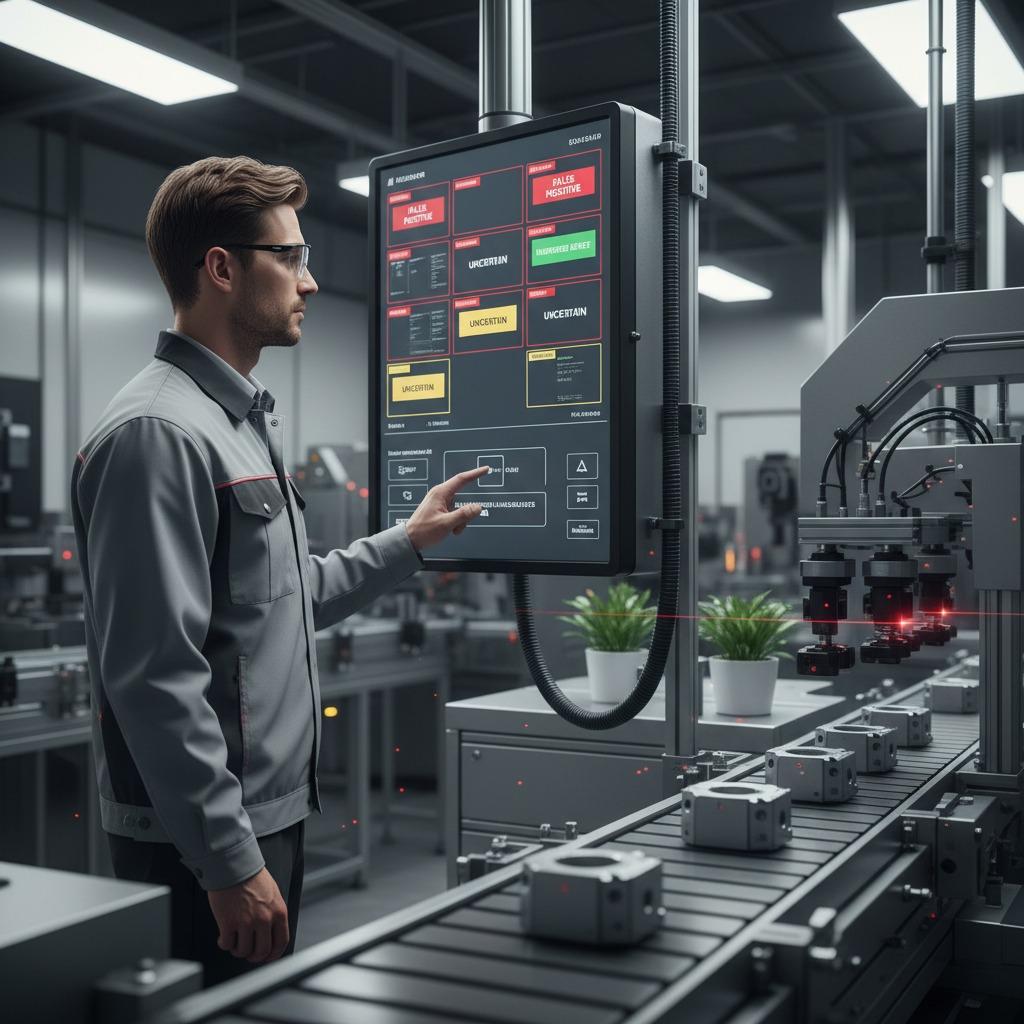
False alarm rate reduction is one of those topics that sounds narrow until you are the person sorting through too many alerts, too many rejected parts, or too many suspicious returns on a screen. In manufacturing, logistics, security screening, and autonomous sensing, false positives do more than irritate operators. They consume labor, slow throughput, and can erode trust in the system itself. Once teams stop believing the alarm, they start ignoring it, and that is where the real risk begins.
The practical question is not whether a detection system can find something. Most can, at least in controlled conditions. The harder decision is how to reduce nuisance detections without missing actual defects, objects, or events. That balance depends on sensor quality, data density, signal processing, and how the system is tuned for the environment it will actually face, not the lab version.
What tends to drive false alarms
False alarms usually come from ambiguity. A sensor sees something that resembles a target, but the signal is too crude to separate real structure from noise, clutter, or overlap. In a factory, that can mean shiny surfaces, vibration, dust, variable lighting, or mixed part geometry. In radar and advanced imaging systems, it can mean reflections from nearby objects, multipath effects, or weak spatial separation.
The underlying pattern is familiar: when the sensor does not have enough detail, the algorithm has to guess. And guessing is expensive.
Signal quality matters before software can help
Teams sometimes expect software to clean up a weak acquisition chain. That works only to a point. If the source data is sparse or poorly resolved, the model is forced to trade sensitivity against specificity. Better algorithms can help, but they cannot invent information that was never captured.
Three terms come up often in that discussion:
Dense point cloud
A dense point cloud gives the system more spatial detail to work with. In inspection and 3D sensing, that extra detail can help distinguish real edges, voids, or object boundaries from random scatter. A sparse cloud may detect a shape; a denser one can often describe it well enough to reject lookalikes.
Angular resolution
Angular resolution controls how well a system separates objects that sit close together in angle. Better angular resolution can reduce false positives caused by nearby clutter or merged targets. If the system cannot distinguish two adjacent sources, it may interpret them as one event or misclassify the scene entirely.
Range resolution
Range resolution affects how clearly the system separates targets by distance. Poor range resolution can make two distinct objects appear as one blurred return. In practical terms, that often creates false triggers in crowded environments or layered materials.
Where synthetic aperture radar imaging fits in
Synthetic aperture radar (SAR) imaging is often discussed in remote sensing, defense, and large-area mapping, but the broader lesson applies elsewhere too: collecting more information from motion and signal processing can improve scene interpretation. SAR systems are valued because they can build finer image detail than a simple snapshot might suggest. That extra fidelity can support false alarm rate reduction when the problem is clutter and ambiguity rather than raw detection threshold.
Still, SAR is not a cure-all. More advanced imaging can increase computational load, introduce new tuning requirements, and create its own artifacts if the input conditions are poor. Buyers should be cautious about assuming that a more complex modality automatically means fewer nuisance alerts.
Practical ways teams reduce false alarms
The most effective programs usually combine hardware, software, and process discipline rather than relying on one fix.
Start with cleaner data capture. If the sensor can be positioned to reduce occlusion, reflections, or overlapping returns, do that first. Mechanical setup often matters more than another round of threshold changes.
Then review calibration and thresholding. A system tuned too aggressively will flag too much. One tuned too loosely will miss real events. The right setting depends on the cost of each error, and that cost is rarely symmetrical.
After that, use multi-criteria validation where possible. Combining shape, distance, motion, or intensity can help confirm whether a signal is real. This is especially useful in complex industrial scenes where a single feature is not enough.
Finally, keep a human feedback loop in place. Operators know which alarms are repeat offenders and which ones deserve attention. Their observations are often the fastest way to expose a poor assumption in the detection logic.
Common buyer mistakes
One common mistake is buying for headline sensitivity and ignoring specificity. Another is comparing systems only on detection range or raw resolution, without asking how they behave in clutter, vibration, or mixed-material environments. A third is assuming the same configuration will work across all sites. It usually will not.
Buyers should ask for evidence of performance in conditions similar to their own, or at least a clear explanation of how the vendor expects the system to be tuned. If that answer is vague, treat it as a warning sign.
What decision this article should help you make
If your team is struggling with too many nuisance alarms, the next step is not simply “turn the sensitivity down.” It is to identify whether the problem is poor acquisition, weak spatial resolution, cluttered scenes, or overconfident software logic. That diagnosis tells you where false alarm rate reduction is actually possible and where a process change is the better fix.
For engineering and sourcing teams, the smartest purchase is usually the one that fits the real environment, produces sufficiently detailed data, and allows disciplined tuning after installation. That may sound less dramatic than a big performance claim, but it is what keeps operators engaged and the system credible over time.
FAQ
Is a lower threshold always better?
No. Lowering the threshold usually increases detections, but it often raises false alarms faster than it improves real capture.
Does higher resolution always mean fewer false alarms?
Not always, but better angular resolution and range resolution often make it easier to separate real targets from clutter. The rest depends on signal quality and algorithm design.
Should we prioritize hardware or software?
Start with the sensor and acquisition setup. Software can refine results, but it is hard to compensate for weak input data.
Next step for buyers and engineers
Before changing platforms, map where the false alarms come from: scene clutter, poor separation, calibration drift, or over-sensitive logic. Then test the system under real operating conditions, not just ideal ones. That is the quickest route to fewer nuisance alerts and a detection process people can trust.