






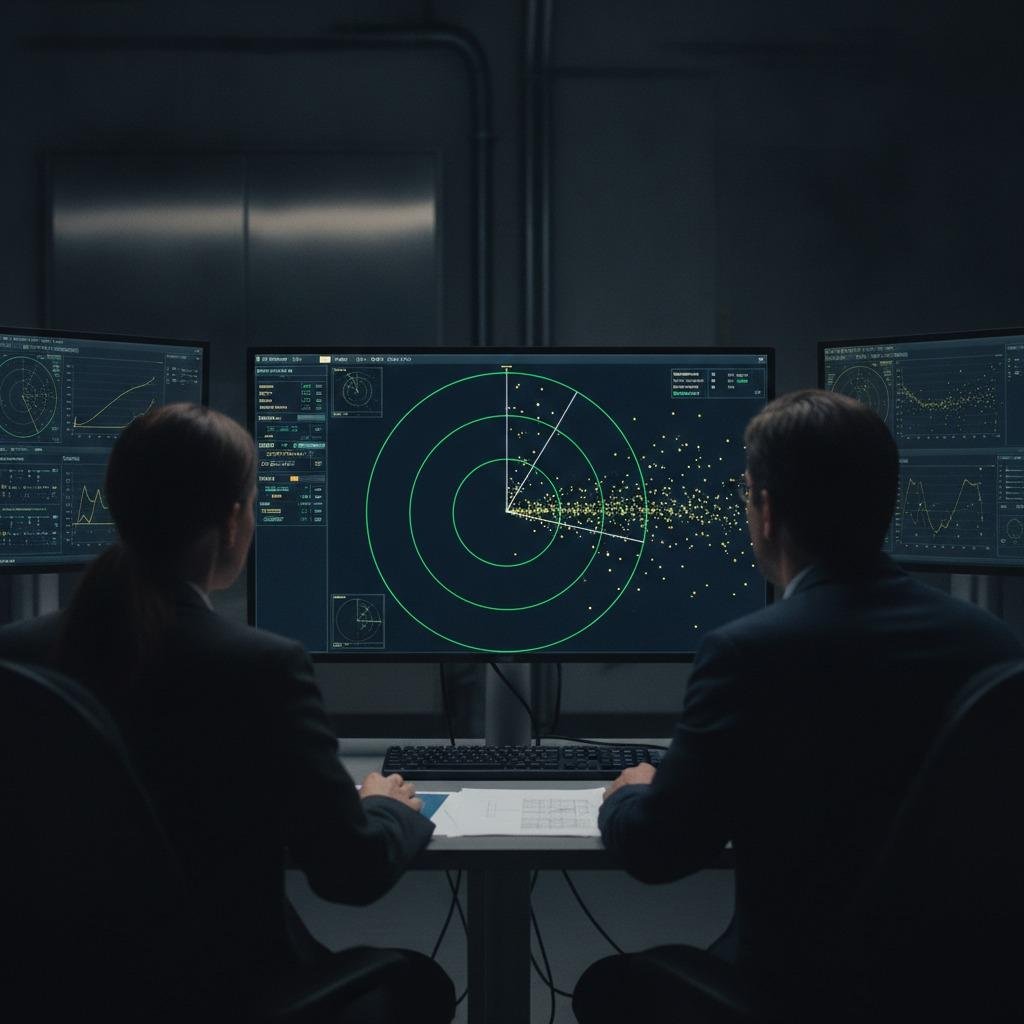
Why false track mitigation matters in real radar and sensor programs
False track mitigation is one of those engineering topics that only gets attention when it fails. On paper, a tracker can look healthy: it is outputting objects, assigning IDs, and filling the screen with orderly plots. In practice, some of those tracks may be ghosts created by clutter, multipath, interference, or unstable detections. For engineering teams, that is not just a display issue. It affects operator trust, system workload, and downstream decisions that rely on clean target data.
The challenge is simple to describe and hard to solve. A system that is too permissive will initiate and maintain tracks on noise. A system that is too conservative will miss real targets, especially in crowded environments where weak returns are common. The buyer’s real question is not whether false tracks exist. It is how much false track risk a system can tolerate without sacrificing useful detection performance.
The practical trade-off: cleaner tracks versus missed opportunities
A tracking chain usually sits between raw detections and the decision layer. That makes it sensitive to the quality of several upstream functions, especially Track initiation, Velocity resolution, Range accuracy, and Detection range. If the radar or sensor front end is generous with detections, the tracker has more data to work with, but it also has more noise to filter out. If the front end is tightly gated, the tracker may look elegant until the scene gets difficult.
This is why false track mitigation cannot be treated as a single feature. It is a system behavior. Sensor design, signal processing, association logic, and operating environment all shape the outcome. Buyers often focus on headline range figures, but a long Detection range is not very useful if the far-end detections are unstable or repeatedly split into false tracks.
What typically causes false tracks
Clutter and multipath
Reflections from structures, water, terrain, or nearby machinery can create returns that mimic moving targets. In some environments, the stronger the signal chain, the more obvious the problem becomes. Better sensitivity does not automatically mean better tracking.
Poor association logic
When a tracker cannot confidently match new detections to existing tracks, it may create duplicate tracks or promote weak detections too quickly. This is where Track initiation policy matters. Aggressive initiation can make a system feel responsive, but it can also flood operators with short-lived objects.
Unstable measurement quality
Range accuracy and velocity estimates are the backbone of tracking stability. If these measurements wander, the tracker may struggle to decide whether a plot belongs to a real target, a merged target, or background clutter. Velocity resolution is especially important in dense scenes because it helps separate targets that overlap in range but differ in motion.
Quick buyer checklist for reducing false tracks
If you are comparing sensor options, ask how the system handles detection confirmation, track gating, and track deletion. Those details matter more than a polished demo.
Look for:
Evidence of controlled track initiation
A good system should not create a track the moment a single plot appears. Some level of persistence or multi-hit confirmation is usually necessary, especially in cluttered spaces.
Stable performance across environments
Ask how the sensor behaves near reflective surfaces, in weather, or in dense traffic. A vendor may quote a strong Detection range, but the useful question is how many of those detections stay credible once the scene gets messy.
Measurement quality that supports tracking
Range accuracy and Velocity resolution should be assessed together. A tracker can sometimes compensate for one weakness, but not forever. When both are weak, false track rates tend to climb quickly.
Transparent filtering behavior
Some systems rely heavily on proprietary filtering and are hard to tune in the field. That can be acceptable if the application is stable, but it is a risk when the operating environment changes often.
Common mistakes buyers make
One frequent mistake is judging a tracker by the number of objects it can output. More tracks are not better if many are unstable. Another is testing only in clean conditions. A system that looks excellent on a quiet day can break down near fences, metal surfaces, moving machinery, or overlapping targets.
A smaller but important mistake is assuming false track mitigation is only a software problem. In reality, the signal quality, antenna or optics behavior, and installation geometry all influence the result. Bad mounting can create chronic clutter issues that no algorithm fully rescues.
What a sensible evaluation process looks like
Start with the operating scene, not the brochure. Define the clutter sources, the likely target speeds, the minimum useful Detection range, and the cost of a missed target versus a false one. Then evaluate whether the tracker keeps its output stable when the scene gets crowded or partially obstructed.
For engineering teams, the best test is usually not a single range number but a set of scenario-based checks: static clutter near the asset, moving targets crossing each other, weak targets at the edge of coverage, and conditions where Velocity resolution is challenged. If the tracker remains coherent through those cases, you are looking at a system that has been designed for real use rather than a clean lab demo.
FAQ
Is false track mitigation always about eliminating every false track?
No. In most practical systems, the goal is to reduce false tracks enough that operators and downstream software can trust the output. Zero false tracks is rarely realistic.
Does better detection always improve tracking?
Not necessarily. Better detection can improve coverage, but it can also increase clutter if the filtering and initiation logic are not strong enough.
What matters most when comparing systems?
Look at the full chain: Track initiation behavior, Range accuracy, Velocity resolution, and how stable the system remains near the edge of its Detection range.
Next step
If you are specifying a sensor or radar platform, build your comparison around the environment it will actually face. Ask for scenario-based behavior, not just headline performance. That is usually where false track mitigation is won or lost.