






Why flight time extension has become a design target, not just a nice-to-have
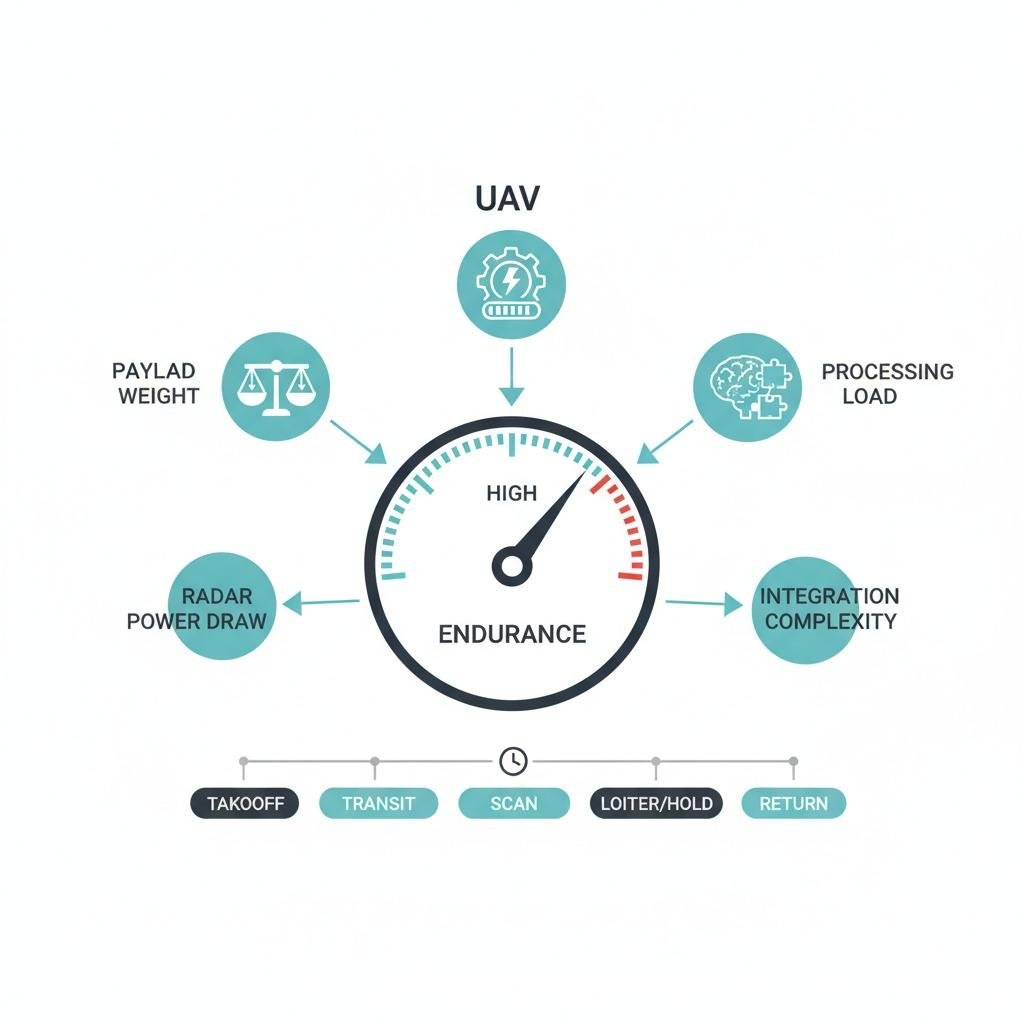
For UAV teams, flight time extension is rarely about chasing a few extra minutes for marketing copy. It is usually about whether the aircraft can finish a survey line, hold station over a jobsite, or return with usable data before the battery margin gets uncomfortably thin. That pressure lands on engineers, sourcing managers, and product teams alike, because endurance is shaped by more than cell capacity. Payload weight, sensor architecture, processing load, and integration complexity all pull in the same direction.
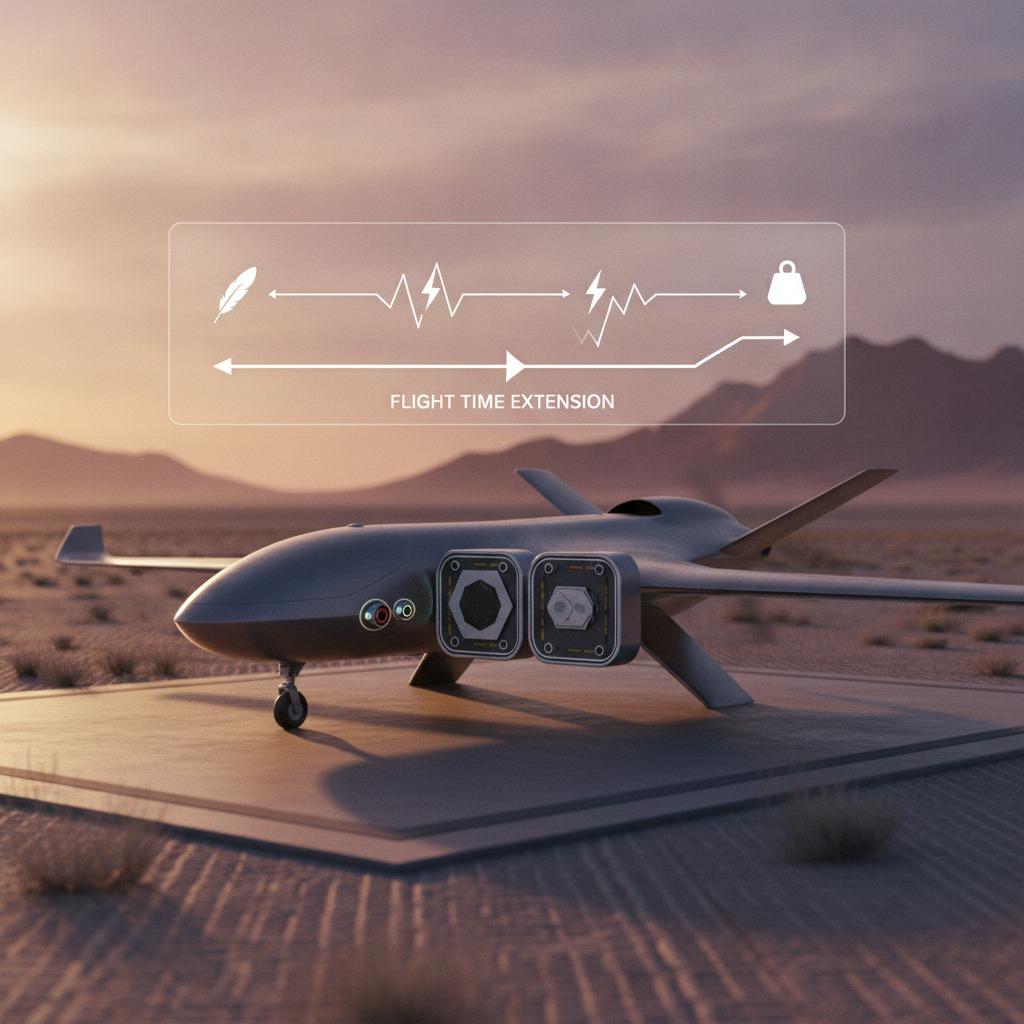
The practical question is not simply “how do we make the drone stay up longer?” It is “which subsystem is costing us endurance, and what can we change without damaging mission quality?” That is where decisions around radar, sensor packaging, and payload design start to matter. A lighter, more efficient sensing stack can unlock more than a larger battery ever will, especially when the platform must remain compact and easy to deploy.
The main levers that affect endurance
In most UAV programs, endurance gains come from a mix of airframe discipline and payload discipline. The airframe side is familiar: aerodynamics, battery chemistry, propulsion efficiency, and mission profile. The payload side is often the easier place to find immediate gains, which is why many teams focus there first.
Reducing mass is the obvious move, but not all mass is equal. A dense payload that also draws steady power can shorten mission time twice over. By contrast, a power-efficient radar or a sensor package built for UAV payload reduction may deliver the needed data without forcing the platform to carry unnecessary weight or consume excess electrical headroom. That can matter more than the headline specs on a brochure.
Quick-reference view: what typically helps most
Lightening the payload usually gives the fastest payoff.
Improving electrical efficiency helps sustain endurance across the whole mission, not just at takeoff.
Reducing integration friction lowers the odds that a good component becomes a messy system problem.
Where sensor architecture makes a difference
Sensor selection is one of the most underrated endurance decisions in UAV development. A modular sensor design can give teams more flexibility than a fixed, monolithic package. If a mission does not need every sensing function all the time, modularity lets the system scale to the task instead of carrying a permanent penalty.
That matters in field operations, where operators want to swap payloads quickly and keep the aircraft available. Plug-and-play integration is valuable here, not because it sounds convenient, but because it reduces the time and risk associated with mechanical and electrical integration. If the team has to custom-wire, retest, and revalidate every payload change, the real cost is not just labor. It is schedule drag and, sometimes, avoidable weight creep from extra brackets, adapters, and protective housings.
Why radar efficiency is part of the endurance conversation
Radar is a good example of a subsystem where performance and endurance have to be weighed together. A power-efficient radar can support longer missions by keeping electrical draw in check, which is especially important on smaller UAVs with limited energy reserves. The same is true of thermal burden. Lower power consumption often means less heat to manage, which can simplify enclosure design and help avoid additional cooling-related weight.
That said, power efficiency should not be read as a stand-in for mission suitability. A radar that saves energy but cannot meet the sensing requirement is not a real win. The better trade is a system that balances useful data capture with manageable energy demand. For many buyers, that is the difference between a platform that technically flies and one that is economically deployable at scale.
Selection criteria buyers should not skip
When evaluating payload or sensor options for flight time extension, teams should look at more than the stated wattage. Integration effort, mounting footprint, cabling, software compatibility, and maintenance access all shape the final outcome. A lighter unit that requires a custom interface can erase its own advantage before it reaches the field.
It also helps to ask whether the payload architecture supports future mission changes. If the platform is likely to evolve, modular sensor design and plug-and-play integration can protect the investment. In practice, this is often where purchasing decisions go sideways: the cheapest component on paper becomes the most expensive to adapt later.
Common mistakes that reduce endurance instead of improving it
One frequent mistake is adding capability without removing anything else. Teams may upgrade sensing performance while keeping the same battery, same mount, and same wiring path, then wonder why endurance barely moves. Another is underestimating integration overhead. A payload that needs a custom interface or extra structural reinforcement may increase UAV payload reduction effort in name only.
There is also a habit of optimizing for static specifications rather than mission behavior. Real flight time extension depends on how the aircraft flies, what data it must gather, and how often the payload runs at full demand. Lab numbers help, but they do not replace field reality.
Practical buyer advice for engineering and sourcing teams
Start by mapping the mission profile in plain language: hover, transit, scan, return, data transfer, repeat. Then identify which onboard systems are active during each phase. That gives a cleaner picture of where energy is actually spent. From there, compare payload options using the same integration assumptions so you are not comparing a bare module against a fully tooled system.
If the application may change, favor architectures that support modular sensor design and plug-and-play integration. Those features may not be flashy, but they reduce downstream friction. For endurance-sensitive programs, that reliability is often worth more than a marginal spec bump.
What teams should ask before committing
Does this payload help reduce overall aircraft mass?
Does it draw power in a way that aligns with the mission profile?
Can it be integrated without custom complexity that adds weight or delays?
Will the design still make sense if the mission changes six months from now?
Next step for buyers and product teams
If flight time extension is becoming a limiting factor in your UAV program, the best next move is usually a system-level review rather than a single-component swap. Look closely at payload weight, electrical demand, and how easily the sensor stack can be integrated and reconfigured. The right combination can turn a marginal platform into a practical one, which is often the real goal.
For teams evaluating new sensing hardware, focus on the trade-off between mission capability and endurance. That is where the best designs tend to separate themselves from the merely adequate ones.