






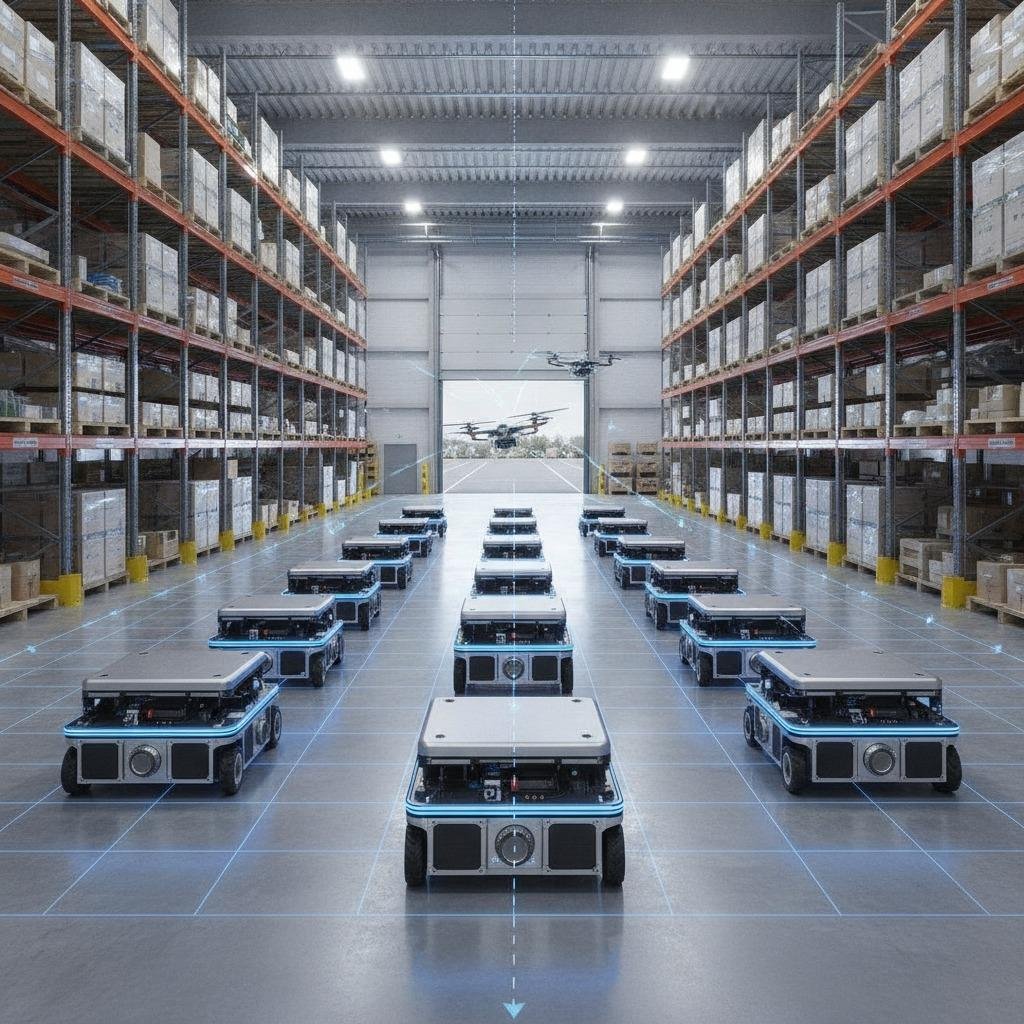
Why flocking behavior monitoring matters
Flocking behavior monitoring is one of those topics that looks academic until a real system starts drifting, bunching up, or losing coordination in the field. In practice, it is the difference between a group of autonomous vehicles behaving like a managed fleet and behaving like a collection of individual units that happen to be moving in the same direction. For engineers and sourcing teams, the question is not whether clustered motion is useful. It is how to observe it early enough to prevent collisions, performance loss, or a failed mission.
That matters in robotics, UAV operations, warehouse automation, and other multi-agent systems where several units share space. A small change in spacing or heading can cascade quickly. One vehicle slows, another compensates, and a third reacts late. The system still looks “organized” from a distance, but the internal behavior is already degrading. That is where monitoring becomes a practical control tool rather than just a research exercise.
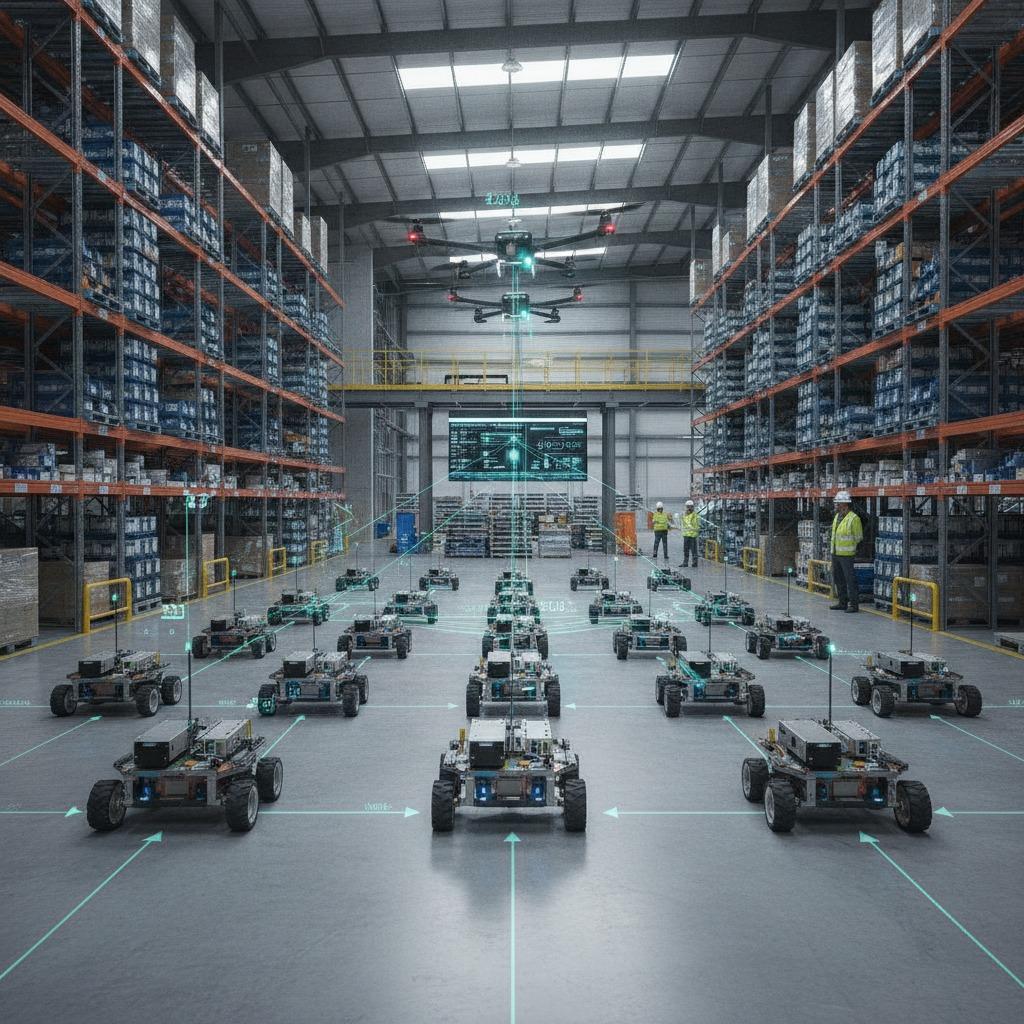
What you are actually watching
At a basic level, flocking behavior monitoring tracks how a group maintains spacing, direction, and cohesion over time. The useful signals are usually simple: relative position, velocity alignment, separation distance, and how quickly the group restores order after a disturbance. In more advanced systems, teams also watch whether one unit is acting as a leader, whether follower units are over-correcting, and whether the formation is drifting toward a boundary or obstacle.
The value is not in collecting every possible data point. It is in identifying the few indicators that show whether the group is stable, fragile, or about to lose coordination. That is especially true when the fleet is large enough that individual behavior is less important than the pattern across the group.
Quick view: what good monitoring should answer
Is the group maintaining a safe operating distance? Is one unit pulling the rest into an inefficient path? Are corrections happening smoothly or in sharp, late bursts? Can the system distinguish normal formation changes from abnormal motion? Those are the questions that guide a useful setup.
Common use cases and why they differ
Not every swarm behaves the same way. A UAV cluster flying outdoors, for example, faces wind, signal variation, and dynamic obstacles. A warehouse robot group may have tighter lanes and more repeatable routes, but more interaction with human workers and fixed infrastructure. Marine or ground robots add their own complications, including delayed sensing and terrain effects. The monitoring approach should reflect the environment, not just the vehicle count.
That is where a swarm sensing protocol becomes more than a technical phrase. It is the set of rules that decides what is measured, how often it is sampled, and how the system treats uncertainty. If the protocol is too loose, you miss early warning signs. If it is too rigid, you may flood the controller with noise and create false alarms. Neither option is attractive when the fleet is supposed to self-organize.
Key metrics buyers and engineers should ask for
When teams evaluate monitoring tools, the first instinct is often to ask about sensors, but the better question is what the system can infer. Good monitoring should help with group threat assessment, meaning it can identify when a cluster is at risk because of an approaching obstacle, a drifting unit, or an unstable subgroup. It should also support collaborative trajectory deconfliction, which is simply the ability to keep planned paths from becoming a mess when several agents need the same space at the same time.
For formations with a clear lead vehicle or lead agent, leader-follower ranging is another useful measure. If followers are too close, the group can become brittle. Too far apart, and the formation starts to lose its shape and efficiency. Range alone is not enough, of course, but it is one of the clearest signs that spacing control is working or slipping.
What usually goes wrong
A common mistake is treating flocking as a visual pattern instead of a control problem. A group can look neat on a dashboard and still be unstable under load. Another mistake is depending on a single sensor layer. Camera-only systems may struggle in poor visibility. Range-only systems can miss context. The stronger approach is to combine signals in a way that gives the control team both the local detail and the group-level picture.
There is also a tendency to overfocus on perfect formation geometry. In real operations, some looseness is normal. The more useful question is whether the group can recover after disturbance. If the recovery takes too long, or if the system oscillates while trying to correct itself, that is a sign the monitoring setup is not giving the controller enough timely information.
How to choose a monitoring approach
Start with the operating environment, then work backward to the sensing method. Outdoor systems usually need more resilience to interference and changing conditions. Indoor systems may need better precision around obstacles and people. In both cases, the buyer should ask how the monitoring layer supports the actual control logic. Data that arrives late is often just expensive noise.
It also helps to define the failure modes before comparing solutions. Are you trying to prevent collisions? Reduce formation drift? Detect a compromised unit? Improve mission efficiency? Each objective pushes the design in a slightly different direction. That is why one-size-fits-all platform claims should be treated cautiously.
Practical buyer advice
If you are sourcing a system, ask for examples of how it handles edge cases, not just ideal conditions. Ask how the platform reacts when one unit loses range, when the group splits, or when the route changes unexpectedly. Ask whether the monitoring logic can be tuned for different fleet sizes. A setup that works for six units may not be reliable for sixty.
For engineering teams, the best implementation often starts small: define the minimum set of signals, validate them in a controlled environment, and then expand. That sounds slow, but it is usually faster than trying to clean up a noisy system after deployment. A careful monitoring design saves time later, even if it feels conservative at the start.
FAQ
Is flocking behavior monitoring only for drones?
No. It applies to any multi-agent system where coordinated motion matters, including warehouse robots, autonomous ground vehicles, and other swarm-like platforms.
Do I need advanced AI to monitor group motion?
Not necessarily. Some systems rely on straightforward spacing and velocity rules. More advanced analytics can help with abnormal pattern detection, but the basic monitoring logic should still be understandable to the control team.
What is the first sign that the system is unstable?
Often it is not a collision. It is repeated over-correction, widening spacing errors, or slow recovery after a disturbance. Those are the early signs worth watching.
Next step
If you are planning a new fleet or improving an existing one, start by mapping the few motion signals that actually affect safety and coordination. From there, compare monitoring methods by how well they support the real operating problem, not by feature count. That is the practical way to turn flocking behavior monitoring into something an engineering team can trust in the field.