






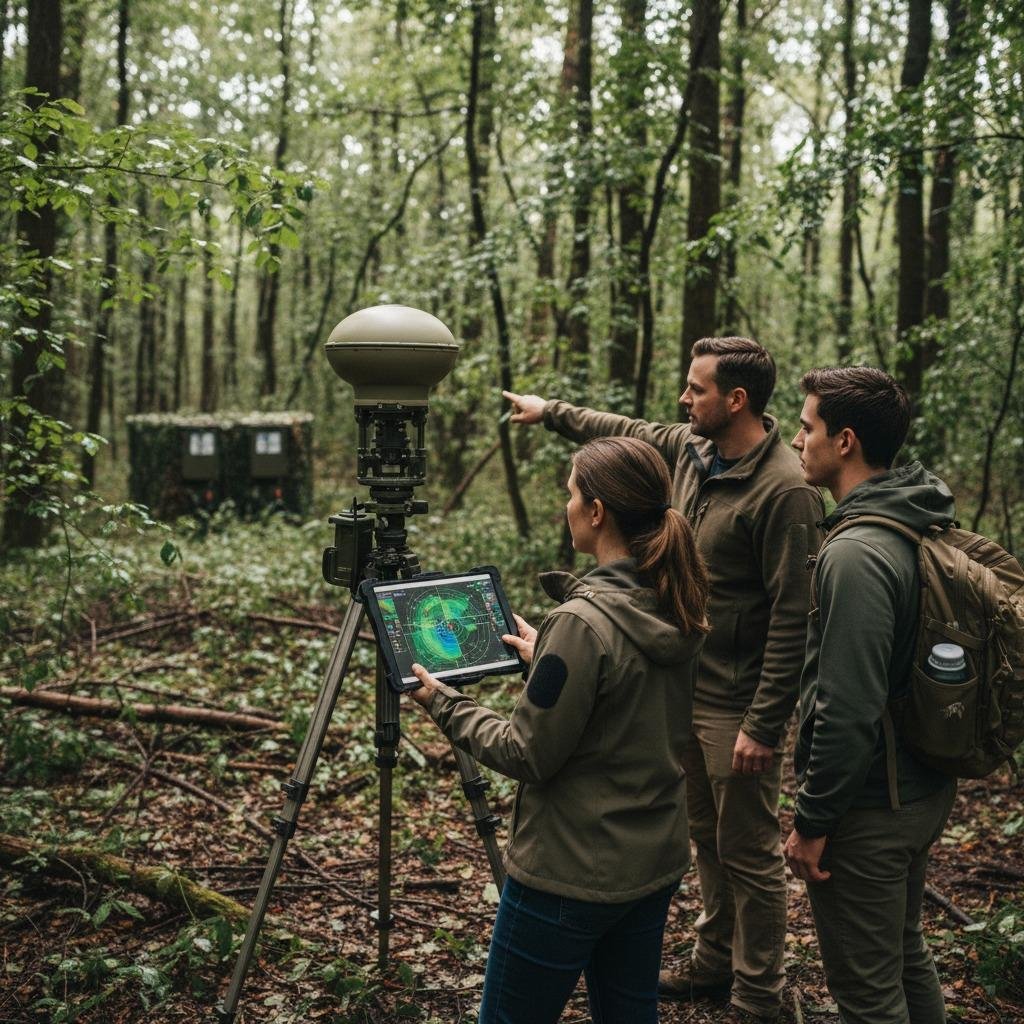
Why foliage penetration sensing matters in real operations
Foliage penetration sensing is one of those capabilities that sounds narrow until you are the one trying to see through a dense treeline, a hedge line, or layered brush that hides movement and equipment. In practice, it sits at the intersection of survivability, search efficiency, and decision speed. For engineers, sourcing teams, and product planners, the question is not whether vegetation creates a problem. It does. The real question is which sensing approach still delivers usable information when leaves, branches, and clutter start breaking up the signal.
This matters in field robotics, border surveillance, disaster response, and defense-adjacent inspection work. A system that performs well in open space can fail badly once line of sight is compromised. Buyers often discover this too late, after a pilot program or a demo in clean conditions. So the useful decision is not simply choosing a sensor; it is choosing a sensing method that matches the amount of obstruction, the required range, and the kind of target information the team actually needs.
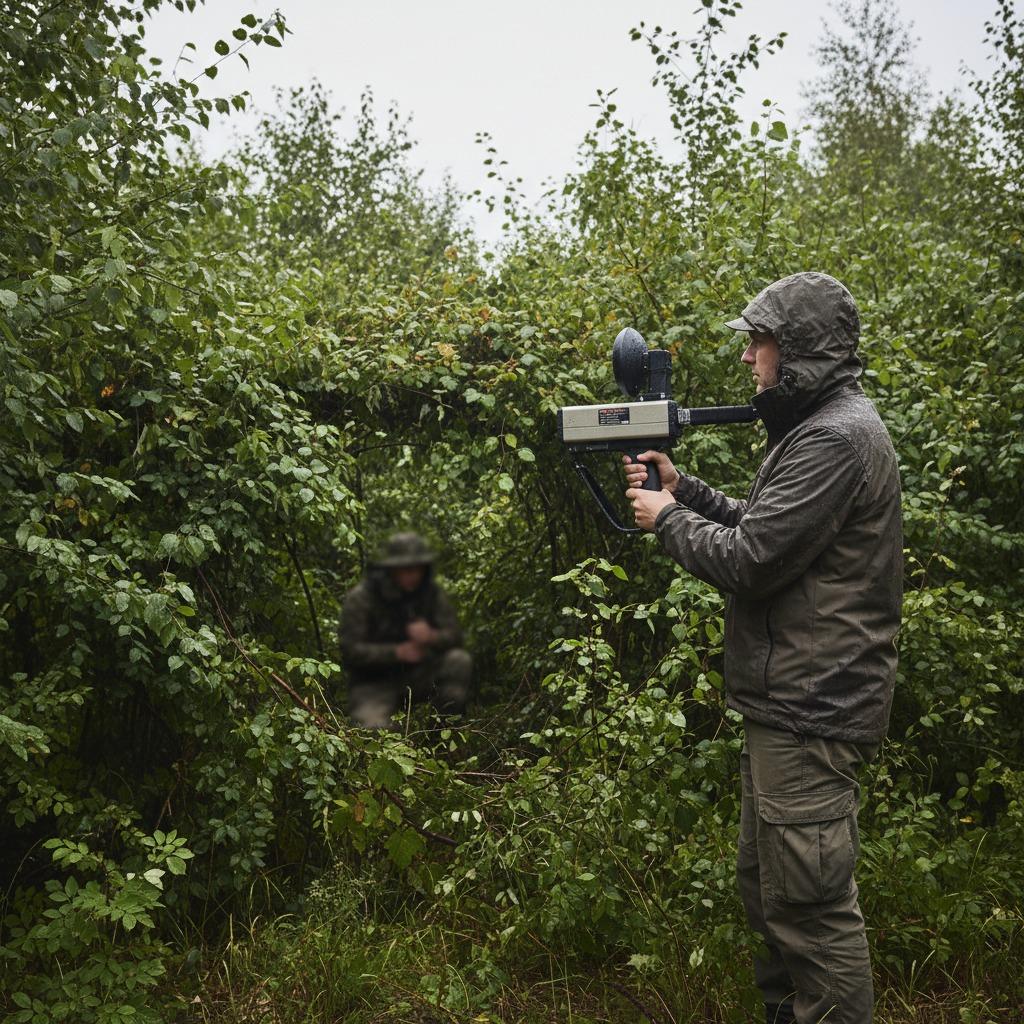
What foliage does to sensing performance
Vegetation complicates almost every sensing modality. Leaves create small, moving reflectors. Branches scatter energy. Wind introduces motion that can look like target movement. Seasonal change alters the scene again, sometimes dramatically. A system tuned for one month can look less convincing the next.
That is why buyers should be cautious about claims that sound universal. Foliage penetration sensing is not a single magic function. It is a design outcome shaped by frequency choice, antenna architecture, signal processing, and target contrast. In some cases, the goal is simply to detect that something is present behind cover. In others, the goal is to classify or track motion. Those are different tasks, and they should be treated that way.
Quick comparison: what the system must do
Detection versus recognition
Detection asks whether an object or person is there at all. Recognition asks what it is doing, or whether it matches a pattern of interest. The second task is harder, especially through clutter. A platform used for Through-wall human activity recognition is solving a different problem than one used only for presence detection in brush.
Static scene versus moving target
Movement can help a sensor separate target from background, but motion in vegetation also adds noise. That tradeoff is common in Smoke-obscured target detection as well, where the environment itself becomes part of the challenge. In both cases, signal processing matters almost as much as the hardware.
Surface clutter versus buried or hidden structure
Some teams come to the topic from Underground structure detection or similar subsurface work and assume the same playbook applies. Not quite. Hidden structures, roots, and soil conditions demand a different approach than leafy obstruction above ground. The lesson is consistent, though: the medium between sensor and target controls the result.
Common sensing approaches and where they fit
Radar is often the first technology discussed because it can operate when optical systems struggle. In some configurations, Wall-penetrating radar capabilities are useful adjacent knowledge for buyers evaluating obstacle-penetration performance more broadly. Still, walls and foliage are not interchangeable barriers. Walls are typically more uniform; vegetation is messy, shifting, and frequency-sensitive.
For foliage work, a buyer should pay attention to three practical points. First, operating frequency affects penetration and resolution. Lower frequencies may tolerate clutter better but can sacrifice detail. Second, antenna design affects beam shape and sensitivity to multipath. Third, the processing chain determines whether the system can suppress moving clutter without deleting the target you care about.
Optical and infrared systems can still be useful, but usually as part of a layered setup rather than the only sensor. They can provide confirmation, context, or visual documentation when the canopy opens up. In a procurement conversation, that layered approach is often more realistic than chasing one sensor to solve every condition.
Selection criteria that actually matter
When evaluating foliage penetration sensing platforms, start with the operational scene. How dense is the vegetation? Is it wet or dry? Is the target stationary, walking, or moving on a vehicle? Is the system meant for handheld inspection, mounted surveillance, or unmanned platforms? A compact sensor that works for short-range mapping may be unsuitable for broader area coverage, even if the marketing material makes it sound versatile.
Also look carefully at how performance is described. Some datasheets emphasize idealized range numbers but say little about clutter, aspect angle, or seasonal change. That omission is a warning sign. Ask what the system does when the target is partially blocked, when branches are swaying, or when multiple reflectors sit in the same field of view. If the vendor cannot answer in plain language, the integration risk rises.
Buyer-facing mistakes to avoid
One common mistake is overestimating what a single sensor can do in dense vegetation. Another is assuming that better range automatically means better field usefulness. Range without usable discrimination is just a larger search area with the same ambiguity.
A second mistake is ignoring the environment during testing. Dry brush, wet leaves, and spring growth do not behave the same way. If your use case changes by season, test by season. That sounds obvious, but many projects skip it because the first demo looked good.
A third mistake is focusing on target appearance instead of target task. If the requirement is to know whether a person is behind a tree line, the system does not need the same output as one intended to estimate posture, motion, or structural layout.
Practical advice for engineering and sourcing teams
For engineering teams, the best early move is to define the obstruction profile before comparing technologies. For sourcing teams, ask for test conditions, not just feature lists. And for product teams, decide whether the end product needs detection, tracking, or richer scene understanding. Those choices drive cost, complexity, and integration burden more than most buyers expect.
If you are shortlisting options, insist on evidence from scenes that resemble your actual deployment. A polished demo in a controlled setting may be useful, but it is not a substitute for testing through realistic foliage density and target motion. In field sensing, the environment has a habit of exposing weak assumptions.
FAQ
Is foliage penetration sensing the same as through-wall sensing?
No. Both involve degraded visibility, but the barrier types are very different. Foliage is uneven and dynamic; walls are more uniform and stable.
Can one sensor handle foliage, smoke, and walls?
Sometimes a platform can support multiple conditions, but performance will not be equal across all of them. Multi-environment claims should be checked carefully.
What is the safest way to choose a system?
Start from the mission scene, not the sensor category. Then verify performance under the actual clutter, weather, and target behavior your team expects.
What to do next
If your project depends on seeing through vegetation rather than around it, the next step is to build a test plan around realistic obstruction, target motion, and operating distance. That will tell you much more than a spec sheet ever will. For procurement, ask vendors for scenario-matched demonstrations and clear explanation of how their signal processing handles clutter. In this category, the difference between a promising prototype and a dependable field system is usually found in the details that do not fit neatly into a brochure.