






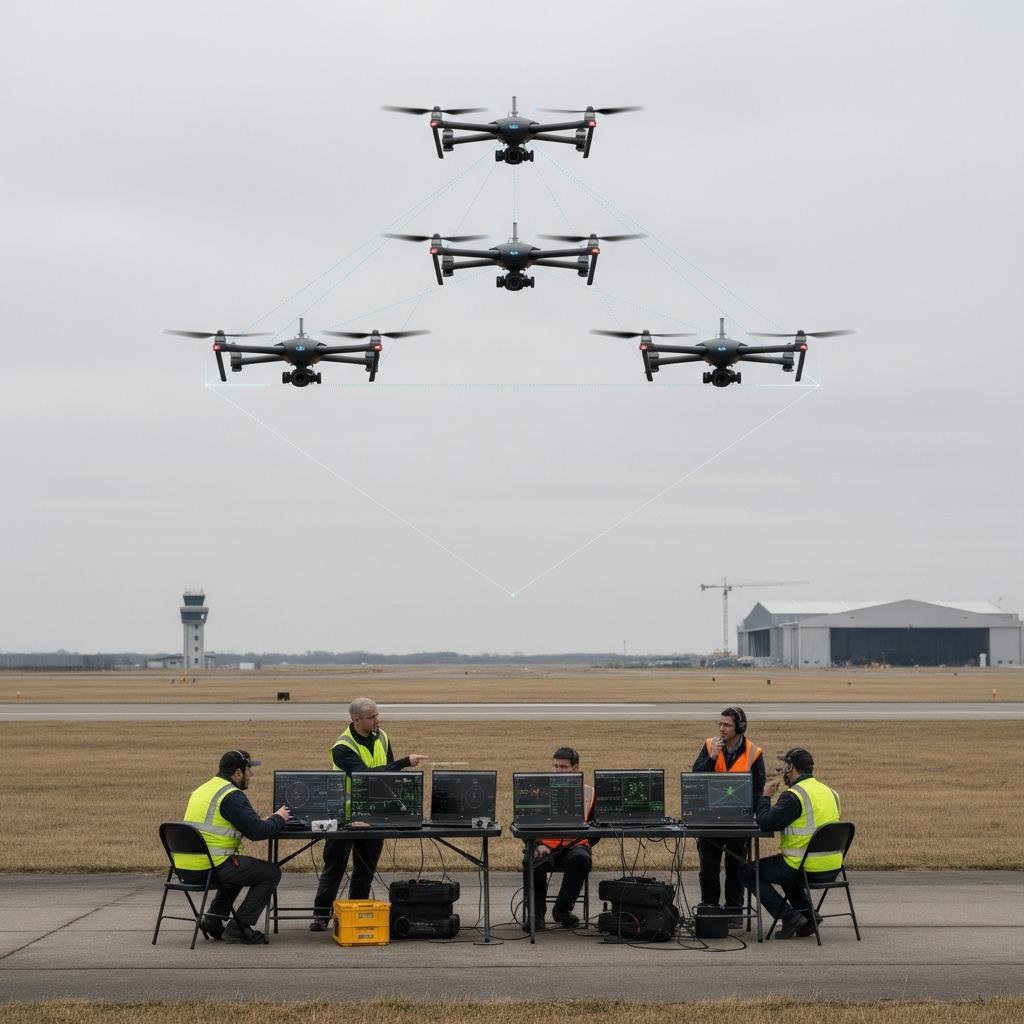
Why formation geometry validation matters before a fleet ever leaves the ground
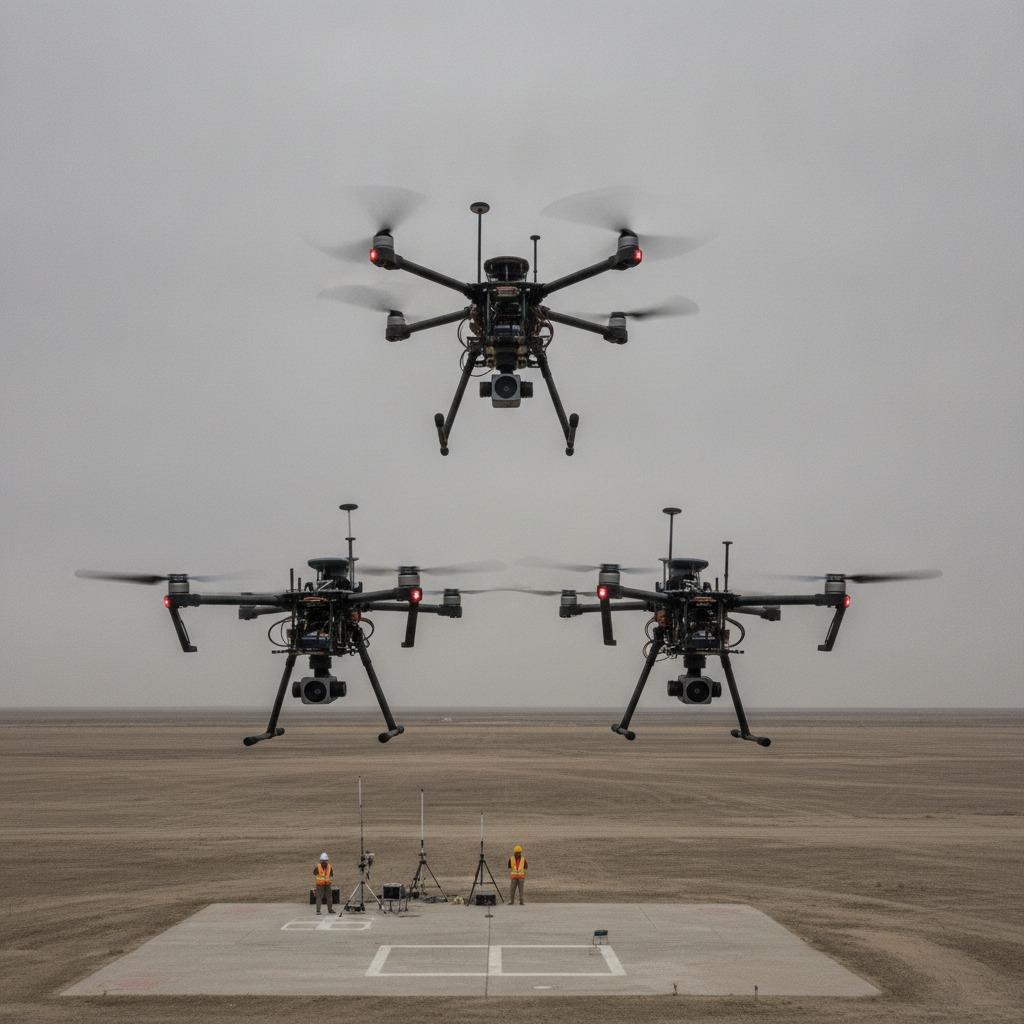
Formation geometry validation is one of those control problems that looks tidy on a whiteboard and becomes far less forgiving in the air. Engineers can sketch a triangle, line, or staggered grid for a drone fleet in minutes; keeping that shape stable through wind shifts, sensor drift, latency, and turn commands is where the work really begins. For teams building inspection systems, mapping platforms, light show fleets, or coordinated delivery concepts, the issue is not just whether the drones can fly together. It is whether they can hold the intended spatial relationship without creating a safety problem or a messy data set.
That is why buyers and engineering teams should treat formation work as more than a navigation feature. The real decision is whether the control architecture can maintain predictable spacing, timing, and heading changes under realistic field conditions. If the answer is weak, the whole system starts to unravel: images overlap poorly, routes become inefficient, and collision risk rises when the group compresses during a turn.
The core problem: maintaining shape while the aircraft are moving for real
In theory, a fleet can hold a formation if each drone simply follows a reference point. In practice, the formation is constantly disturbed. One aircraft may accelerate slightly earlier than the others. Another may see noisier GNSS or vision data. A third may respond more slowly to a command because of communication delay. Even small differences matter when units are flying close together.
This is where inter-drone distance maintenance becomes a practical engineering target rather than a slogan. The system has to preserve the intended separation while accounting for speed changes and directional shifts. If spacing is too loose, the formation loses its utility. If it is too tight, the group has little margin for error.
Relative velocity control matters just as much. Teams often focus on position error alone, but the speed at which drones approach or diverge from each other can tell you more about whether the formation will remain stable over the next few seconds. A fleet that is already drifting in relative speed may still look acceptable in one snapshot, then collapse during a maneuver.
What good validation actually checks
A useful validation process does not stop at “the drones stayed roughly together.” It checks whether the geometry remains usable across the maneuvers the fleet is expected to perform.
Static formation holding
This is the simplest test: can the system maintain the planned shape in steady flight? It reveals basic issues in sensing, filtering, and control tuning. For many buyers, this is where a concept prototype starts to look either credible or fragile.
Coordinated turn coordination
Straight flight can hide a lot. Turns expose weaknesses because every drone must adjust heading and acceleration in a way that preserves the group pattern. Poor turn coordination often leads to shape distortion, delayed response on the outer aircraft, or excessive correction afterward. In dense formations, that recovery can be more dangerous than the turn itself.
Group collision avoidance
No formation system should assume perfect behavior from every vehicle. Collision avoidance logic has to sit alongside the formation controller, not as an afterthought. The challenge is balancing safety with mission continuity: a safety maneuver should prevent contact without creating a second conflict somewhere else in the group. That balance is not trivial, and it deserves field testing rather than lab confidence.
Selection criteria engineers and sourcing teams should care about
When evaluating a formation-capable platform, do not get distracted by flashy demo footage. Ask how the system measures relative position, what it does when communications degrade, and how it behaves when one drone lags behind the others.
A solid answer should include:
- How spacing is computed and updated in flight
- What sensors support formation tracking
- Whether the control loop is centralized, distributed, or hybrid
- How the system handles temporary loss of one vehicle
- What safety limits are built into the group behavior
That last point is often glossed over. If a vendor cannot explain the failure behavior clearly, the system is not ready for serious deployment, no matter how smooth the demo looks on a calm day.
Common mistakes that weaken formation performance
One mistake is over-tuning for perfect geometry in ideal conditions. Real environments are not ideal, and an overly aggressive controller may oscillate or overcorrect when it meets turbulence.
Another is ignoring timing. Formation geometry is not only about where the drones are; it is also about when each aircraft receives and acts on data. Latency can turn a stable pattern into a slowly breathing one, then into a visibly distorted group.
A third mistake is using one formation recipe for every mission. The best shape for a survey run is not always the best shape for a synchronized turn or a tightly managed inspection pass. The geometry should follow the mission, not the other way around.
Practical buyer advice
If you are sourcing a platform or building an internal specification, start by asking for evidence of behavior, not just claims. Look for flight logs, control logic summaries, and enough description of the test conditions to understand what was actually proven. If the vendor only shows clean aerial footage and no discussion of disturbances, keep your guard up.
It also helps to define the mission envelope early: number of drones, intended spacing, maneuver types, and acceptable risk during communication loss. Without that, formation geometry validation becomes vague and hard to compare across suppliers.
What a usable next step looks like
For engineers, the next move is to define the formation cases that matter most and test them under the worst conditions you can reasonably simulate. For sourcing teams, request a plain-language explanation of how inter-drone distance maintenance, coordinated turn coordination, relative velocity control, and group collision avoidance are handled together.
If the system can explain those four pieces clearly, and show that they work together rather than fight each other, you are looking at something worth deeper evaluation.