






Integrating mmWave Radar into Agricultural Spraying Drones: A Comprehensive Guide
In the evolving world of precision agriculture technology, mmWave radar stands out as a transformative tool for enhancing farming efficiency. This guide explores how mmWave radar can be integrated into drones for agriculture to revolutionize crop management and spraying operations. By leveraging this radar technology in farming, farmers can achieve unprecedented accuracy in monitoring and treating fields.
Understanding mmWave Radar and Its Role in Precision Agriculture
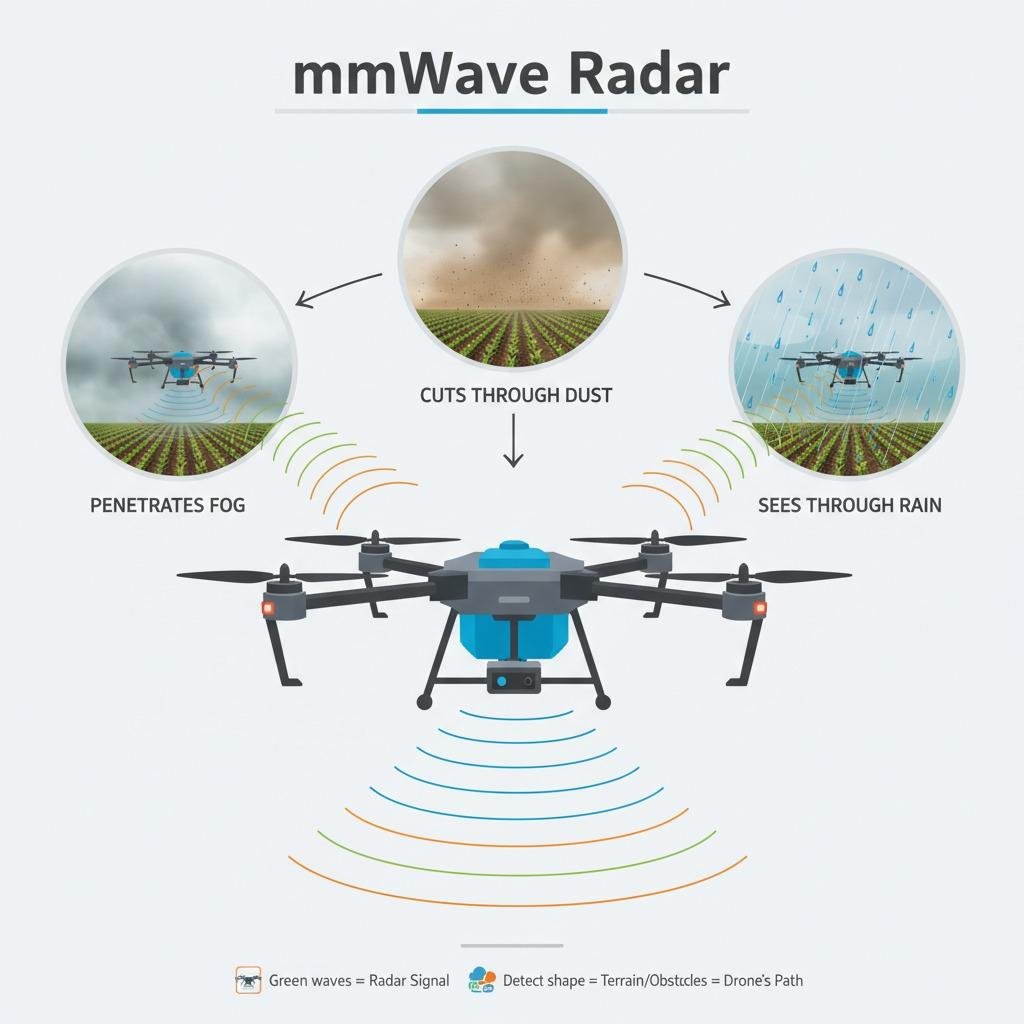
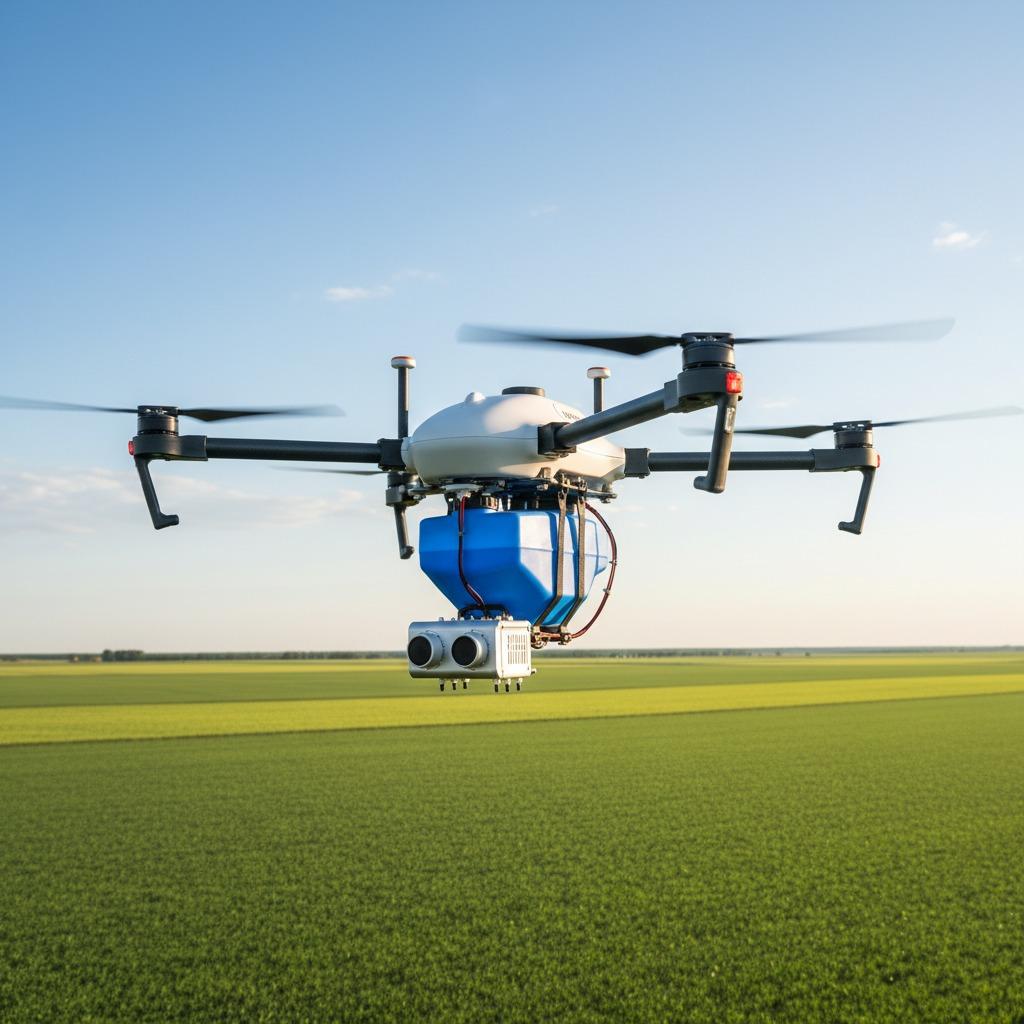
mmWave radar operates using millimeter-wave frequencies to detect objects, measure distances, and sense environmental conditions with high precision, even in adverse weather. Unlike traditional sensors, it penetrates fog, dust, and rain, making it ideal for remote sensing in agriculture. To begin integrating mmWave radar into your agricultural UAVs, start by selecting a compatible module that fits your drone's payload capacity. Our state-of-the-art agricultural drone, with its robust lightweight frame and sleek white casing, is perfectly suited for this. It features four rotors for stable flight and a central blue tank for holding liquids, ensuring seamless operation during integration.
The first step in setup is mounting the mmWave radar sensor near the drone's undercarriage. Ensure it's aligned with the flight path for optimal data collection. Connect it to the drone's onboard computer via standard interfaces like UART or SPI. Calibration involves testing the radar's field of view in a controlled environment, adjusting for the drone's vibration from rotors. This setup enhances drones for agriculture by providing real-time data on crop height, density, and health, directly feeding into precision agriculture technology protocols.
Configuring mmWave Radar for Spraying Drones in Crop Management
Once installed, configure the mmWave radar to work with spraying drones for targeted applications. Program the system to detect vegetation variations, allowing the drone to adjust spray patterns dynamically. For instance, the radar can identify weed patches or stressed plants, triggering the precision nozzles on our drone's tank to release pesticides or fertilizers only where needed. This mmWave technology in agriculture minimizes waste and environmental impact while maximizing yield.
To implement this, use open-source software like ROS (Robot Operating System) to process radar signals. Define thresholds for detection—such as echo intensity for plant presence—and integrate with GPS for georeferenced mapping. Our agricultural drone's advanced GPS already supports autonomous paths, so pairing it with mmWave radar creates a powerhouse for crop management drones. Test flights over sample fields will help fine-tune algorithms, ensuring the radar accurately distinguishes between crops and soil, even at varying altitudes.
Incorporate safety features, like obstacle avoidance, where the radar scans ahead to prevent collisions during low-level spraying. Farmers using agricultural spraying drones can now operate in low-visibility conditions, a game-changer for large-scale operations.
Advanced Applications and Best Practices for Radar Technology in Farming
Beyond basic spraying, mmWave radar elevates remote sensing in agriculture through applications like soil moisture mapping and pest detection. For crop management drones, combine radar data with multispectral imaging for comprehensive field analysis. Our drone's durable design, with easy-to-maintain components, supports extended missions, allowing continuous data gathering over vast areas.
Best practices include regular firmware updates for the radar module to improve accuracy and regular cleaning of sensors to avoid residue from sprays. Train your team on interpreting radar outputs via user-friendly dashboards. For optimal results, fly during dawn or dusk when thermal contrasts aid detection. This approach not only boosts efficiency but also aligns with sustainable farming goals.
By following these steps, integrating mmWave radar into agricultural UAVs becomes straightforward, transforming spraying drones into intelligent tools for precision agriculture technology. Our agricultural drone, equipped with a high-capacity tank and precise nozzles, exemplifies how radar technology in farming can drive productivity and innovation in modern agriculture.