







Understanding Millimeter Wave Radar
Millimeter wave radar technology represents the leading edge in sensor technology, offering remarkable capabilities that are transforming industries such as automotive safety and industrial automation. LINPOWAVE has introduced a lineup of millimeter wave radar boards that showcase the potential of this technology. These boards are designed to integrate seamlessly into a variety of systems, offering precise and reliable radar solutions that stand out in terms of performance and adaptability.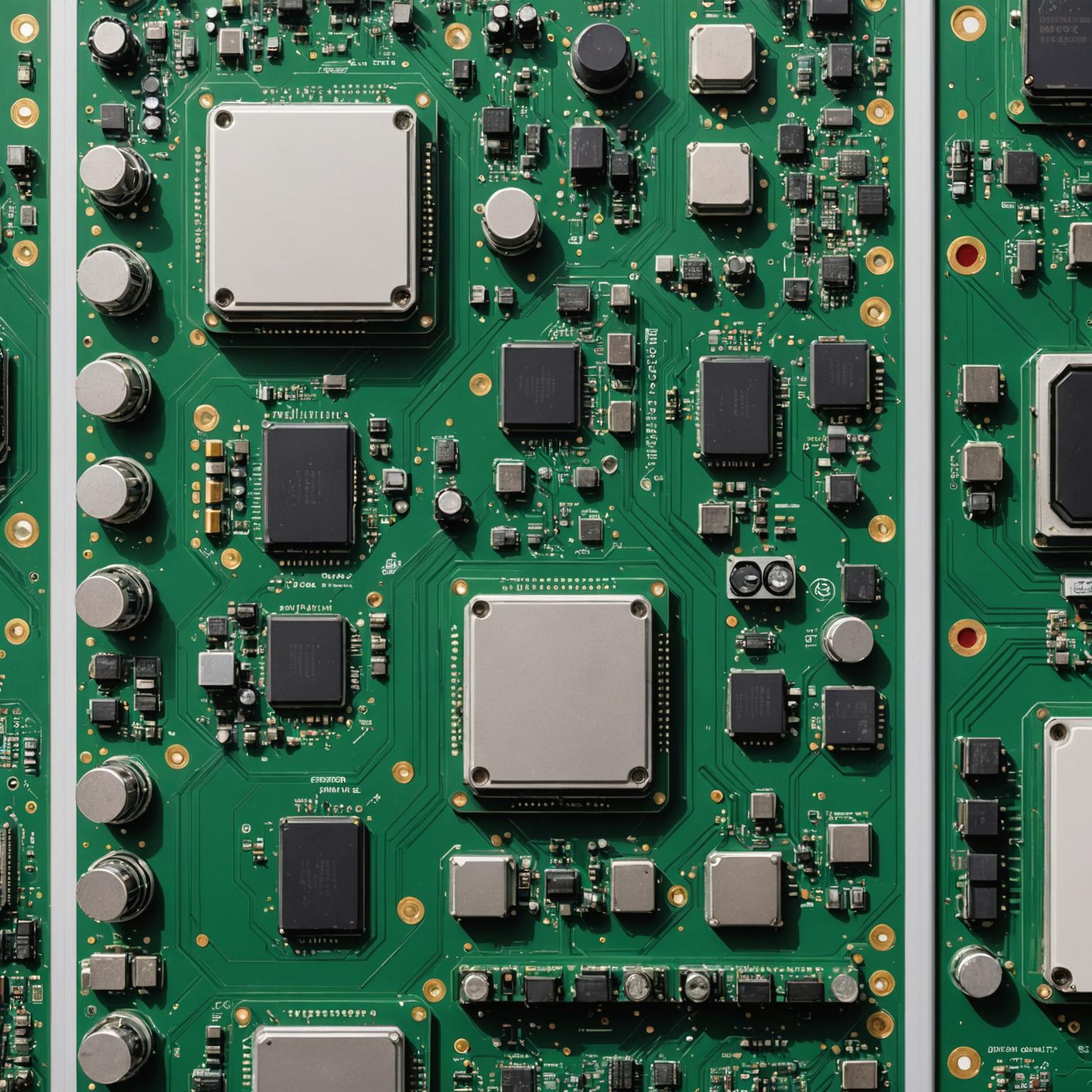
Custom Radar Solutions for Diverse Applications
LINPOWAVE's radar boards stand at the intersection of precision engineering and adaptability, offering custom solutions tailored to the unique demands of diverse industries. Built on a modular design, these boards achieve a critical balance between compact size and full functionality—their small form factor allows seamless integration into space-constrained setups, from vehicle dashboards to smart city infrastructure, without sacrificing performance.
The hardware’s thoughtful design extends to its configurable core: microchips and sensor pathways are laid out to support flexible tuning of parameters such as detection range, field of view (FoV), and data output. For example, industries requiring short-range, high-precision sensing—like robotics or industrial automation—can leverage radar boards configured for close-range measurement starting from 0.2 m, ideal for detecting small objects or fine movements. Conversely, applications such as long-range traffic monitoring or perimeter security benefit from configurations optimized for up to 300 m maximum range, ensuring reliable detection even in large-scale environments.
Models operating in the 76–81 GHz band excel in scenarios requiring both high resolution and robustness in challenging weather conditions—critical for smart city traffic management where distinguishing between vehicles, pedestrians, and roadside infrastructure is essential. High-precision variants like the V300, with ±0.23 m distance accuracy and ±40° azimuth / ±12° elevation FoV, cater to applications demanding precise target localization, from autonomous vehicle navigation (supporting ACC, AEB, and lane-keeping functions) to industrial quality control, where accurate positioning ensures assembly line efficiency.
Advancements in Edge Processing and Contactless Sensing
At the heart of LINPOWAVE’s custom solutions lies a fusion of advanced antenna arrays and edge processing capabilities. The radar’s antenna design—optimized for both azimuth (±40°) and elevation (±12°)—ensures wide coverage without compromising angular precision, making it suitable for contactless sensing across industries. In healthcare, for example, custom-tuned radars can detect subtle chest movements for non-invasive vital sign monitoring, leveraging high-resolution Doppler processing to filter out ambient noise.
Edge processing further enhances versatility: on-board signal processing modules handle raw data locally, supporting refresh rates up to 20 Hz and enabling real-time decision-making. This is transformative for automotive applications, where radar systems must instantly trigger collision avoidance responses, and for industrial robotics, where machinery relies on immediate feedback to adjust movement.
Contactless sensing, a hallmark of LINPOWAVE’s technology, proves invaluable in hygiene-critical environments—such as food processing or healthcare—where physical sensors risk contamination. Custom radars can be configured to detect object presence, motion, or even certain material characteristics without direct contact, enhancing both safety and operational efficiency.
Tailoring to Industry-Specific Needs
LINPOWAVE’s customization goes beyond hardware, encompassing software and communication protocol adaptability. For automotive clients, radar systems can integrate with CAN or Ethernet protocols to synchronize with vehicle ECUs, supporting multi-sensor fusion with cameras and LiDAR. Smart city deployments benefit from configurations designed for 24/7 operation in extreme temperatures (-40 ℃ to +85 ℃), ensuring stability in outdoor installations such as traffic light arrays or parking guidance systems.
In logistics and warehousing, custom radars can track object movement within the radar’s resolution limits, integrating with warehouse management systems via supported data interfaces. For smart home devices, low-power designs ensure efficient operation while retaining the ability to detect gestures or occupancy even through certain obstacles like thin walls.
The Future of Adaptive Sensing
As industries evolve, LINPOWAVE’s custom radar solutions remain at the forefront of sensing innovation. By combining modular hardware, edge intelligence, and industry-specific tuning, they bridge the gap between general-purpose sensors and niche requirements. Whether enabling autonomous vehicles to navigate dense urban traffic, empowering smart cities to optimize resource use, or enhancing industrial robots with human-level responsiveness, LINPOWAVE’s radars demonstrate that customization is not just about meeting a need—it’s about expanding the boundaries of what’s possible.