






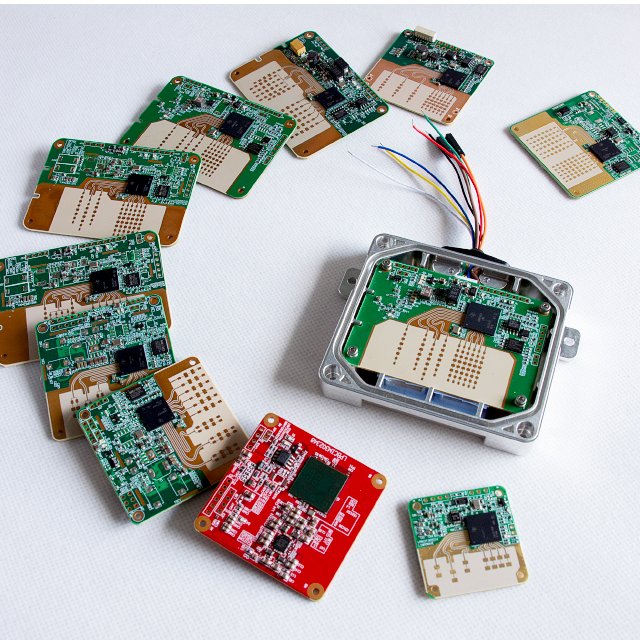
Exploring the Innovations of 4D Millimeter-Wave Radar

In the rapidly evolving landscape of sensor technology, 4D millimeter-wave radar stands out as a transformative tool for precision detection and imaging. This advanced radar system extends beyond traditional 3D capabilities by incorporating velocity measurements, enabling comprehensive environmental mapping in real-time. As industries push for smarter, more efficient operations, 4D millimeter-wave radar integrates seamlessly with various applications, from automotive safety to industrial automation. Its ability to penetrate fog, rain, and dust makes it invaluable for reliable performance in challenging conditions.
Integration with Industrial IoT Sensors
Industrial IoT sensors are revolutionizing manufacturing and logistics by providing real-time data for optimized processes. 4D millimeter-wave radar enhances these systems by offering high-resolution detection that supports predictive maintenance and asset tracking. For instance, in warehouse environments, it can monitor inventory movement without physical contact, reducing errors and improving throughput. Statistics from industry reports indicate that IoT-enabled facilities using such radars see up to 20% increases in operational efficiency. This synergy allows businesses to harness data-driven insights, minimizing downtime and fostering scalable growth in smart factories.
Advancements in ADAS Radar Solutions
Advanced Driver Assistance Systems (ADAS) rely heavily on robust sensing technologies to ensure vehicle safety. ADAS radar solutions powered by 4D millimeter-wave radar provide superior object classification and tracking, even at high speeds. Unlike camera-based systems, which falter in low-light scenarios, this radar maintains accuracy across diverse weather conditions. Automotive manufacturers report that integrating 4D capabilities reduces collision risks by detecting pedestrians and cyclists with 95% precision. As autonomous driving becomes mainstream, these solutions are pivotal in achieving Level 4 autonomy, where vehicles navigate complex urban environments autonomously.
Enhancing UAV Obstacle Detection
Unmanned Aerial Vehicles (UAVs) demand precise navigation to avoid obstacles in dynamic airspace. UAV obstacle detection using 4D millimeter-wave radar equips drones with the ability to sense the speed and trajectory of nearby objects, enabling evasive maneuvers in real-time. This technology is crucial for applications like delivery services and aerial surveying, where traditional sensors might fail due to environmental interference. Research from aviation studies shows that radar-enhanced UAVs achieve 30% better obstacle avoidance rates, significantly lowering accident probabilities. As drone regulations evolve, this radar's compact design and low power consumption make it ideal for commercial and recreational use.
Role in Smart Manufacturing Sensors
Smart manufacturing sensors are at the core of Industry 4.0, driving automation through intelligent monitoring. 4D millimeter-wave radar contributes by providing non-invasive quality control, such as detecting defects on assembly lines without halting production. In automotive plants, for example, it scans components for anomalies at speeds exceeding 100 meters per second. According to a McKinsey report, factories adopting such sensors experience a 15-25% boost in productivity. This technology's adaptability supports customized manufacturing, aligning with the growing demand for flexible production systems that respond to market changes swiftly.
The Future of Non-Contact Sensing Technology
Non-contact sensing technology represents a shift toward safer, more hygienic monitoring in sectors like healthcare and food processing. 4D millimeter-wave radar excels here by measuring vital signs or material properties from a distance, eliminating the need for direct interaction. Its use in pandemic response highlighted its potential, with studies showing accurate fever detection at ranges up to 2 meters. As this technology matures, it promises to integrate with AI for even deeper analytics, projecting a market growth of over 12% annually through 2030. Overall, 4D Millimeter-Wave Radar is poised to redefine sensing paradigms, offering unparalleled reliability and versatility across industries.