






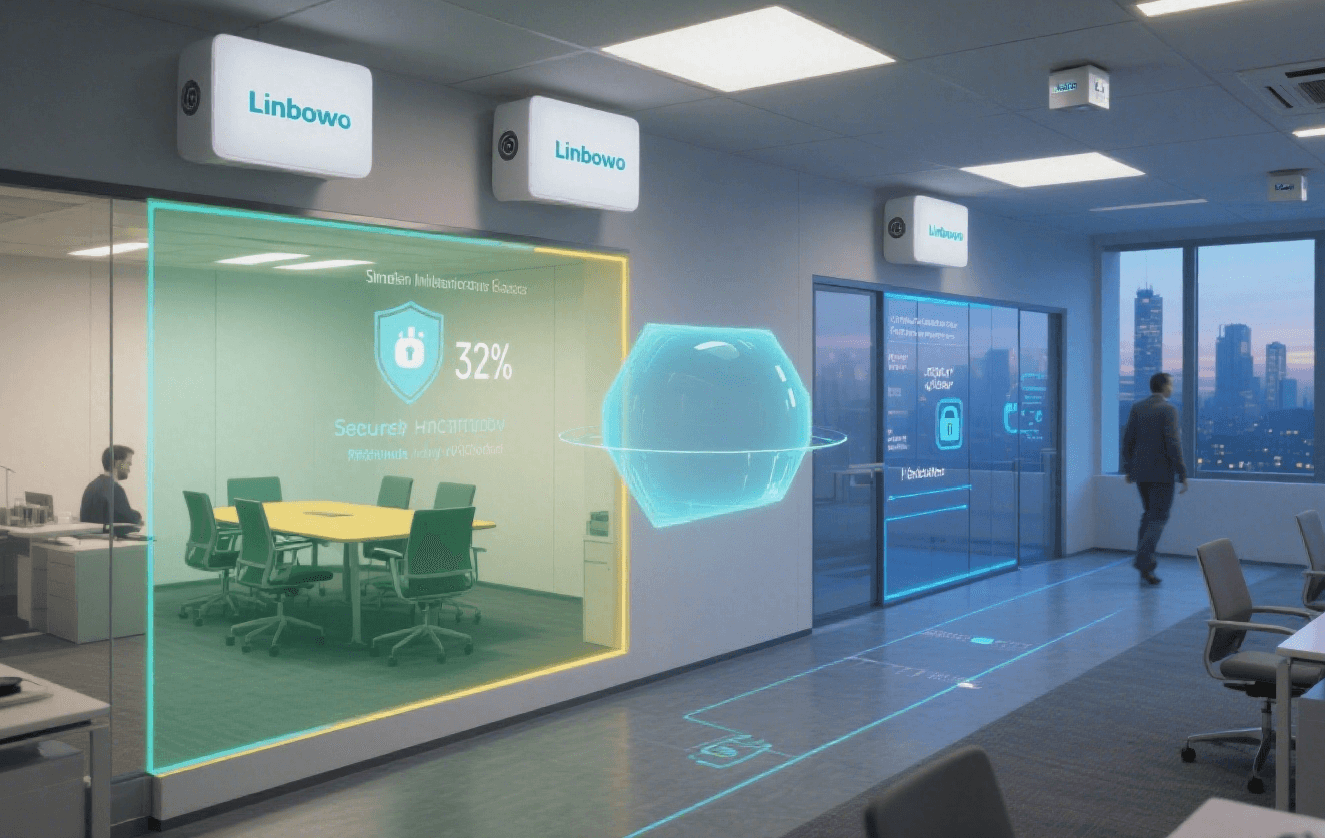
Millimeter-Wave Radar for Human Detection in Smart Building Management
Introduction
Modern buildings are increasingly integrating automation for energy efficiency, security, and occupant comfort. A key component of smart building management is accurate human detection, which allows systems to adjust lighting, HVAC, and security measures dynamically. Traditional camera-based or motion-sensor solutions face challenges such as privacy concerns, lighting dependency, and limited precision. Millimeter-wave (mmWave) radar provides a robust alternative, offering non-contact, privacy-preserving, and highly accurate detection of human presence and movement.
Linpowave, a pioneer in mmWave radar solutions, designs compact and customizable radar modules for seamless integration into smart building systems.
Specific Applications in Smart Buildings
1. Occupancy Detection for Energy Efficiency
-
Lighting Control: Radar sensors can detect when a room is occupied or vacant, allowing lights to turn on or off automatically, reducing energy consumption.
-
HVAC Optimization: By tracking the number of occupants and their locations, radar data enables dynamic heating, cooling, and ventilation adjustments.
-
Conference Rooms and Shared Spaces: Radar detects meeting room usage in real time, ensuring energy is not wasted in empty spaces.
2. Security Monitoring
-
Intruder Detection: Radar can sense unauthorized presence in restricted areas, even under low-light conditions or when visual cameras are blocked.
-
Continuous Monitoring: Unlike cameras, radar works in complete darkness, smoke, or fog, ensuring uninterrupted security coverage.
-
Privacy Protection: Radar detects movement and presence without capturing identifiable images, making it suitable for sensitive areas.
3. Elderly Care and Assisted Living
-
Fall Detection: Radar sensors can identify falls or sudden abnormal movements, triggering alerts to caregivers or emergency services.
-
Activity Monitoring: By analyzing movement patterns, radar systems can provide insights into daily activity and detect health anomalies.
-
Non-Intrusive: Unlike wearable devices, radar requires no direct contact, offering comfort and convenience for residents.
4. Smart Elevators and Entrances
-
Passenger Counting: Radar tracks the number of people entering and exiting elevators, enabling dynamic control for efficiency.
-
Collision Avoidance: Sensors prevent doors from closing when people are detected nearby, enhancing safety.
-
Crowd Flow Analysis: Data can be used to optimize building traffic flow during peak hours.
Technical Highlights from Linpowave
-
Frequency Bands:
-
60 GHz: High-resolution short-range detection for individual rooms or confined spaces.
-
77 GHz: Long-range detection suitable for corridors, lobbies, and atriums.
-
-
4D Radar Imaging: Simultaneously captures distance, angle, velocity, and movement trajectory for precise human detection.
-
Compact and Modular Design: Easy to integrate into ceilings, walls, or IoT devices.
-
AI Integration Ready: Radar data can feed into building management AI systems for predictive analytics and automated decision-making.
Benefits for Smart Building Management
-
Enhanced Comfort and Convenience: Automatic adjustments of lighting, HVAC, and access systems based on real-time occupancy.
-
Energy Savings: Optimized use of energy resources based on actual human presence.
-
Safety and Security: Continuous human detection ensures rapid response to emergencies or unauthorized access.
-
Privacy Compliance: Non-visual sensing allows effective monitoring without compromising personal privacy.
Conclusion
Millimeter-wave radar is revolutionizing smart building management by enabling precise, non-intrusive human detection. Linpowave’s radar solutions enhance energy efficiency, security, and occupant comfort while preserving privacy. From offices and hospitals to assisted living facilities, mmWave radar provides the sensing intelligence necessary to create smarter, safer, and more sustainable buildings.