






Overcoming Challenges in Antenna Design for Modern Radar Systems

In the rapidly evolving field of wireless communication and sensing technologies, antenna design stands as a critical challenge for engineers. Poorly optimized antennas can lead to signal degradation, increased power usage, and bulky hardware that limits deployment in space-constrained applications. This problem is especially pronounced in radar systems, where efficient signal transmission and reception are essential for accurate detection and imaging. Addressing these issues requires innovative approaches that integrate advanced techniques like radar signal processing and MIMO radar to enhance performance while tackling concerns such as low power consumption and miniaturization.
The Core Problems in Traditional Antenna Design
Conventional antenna designs often struggle with interference, limited bandwidth, and high energy demands, particularly in radar applications. For instance, in environments requiring real-time monitoring, such as autonomous vehicles or defense systems, antennas must handle complex signals without compromising on accuracy. The integration of radar signal processing becomes vital here, as it allows for the filtering and amplification of weak echoes amidst noise. Without proper design, systems suffer from false positives or reduced range, leading to unreliable outcomes. Moreover, achieving low power consumption is a significant hurdle; legacy antennas draw excessive energy during operation, shortening battery life in portable devices and increasing operational costs in large-scale networks.
Solutions Through MIMO Radar and Miniaturization Techniques
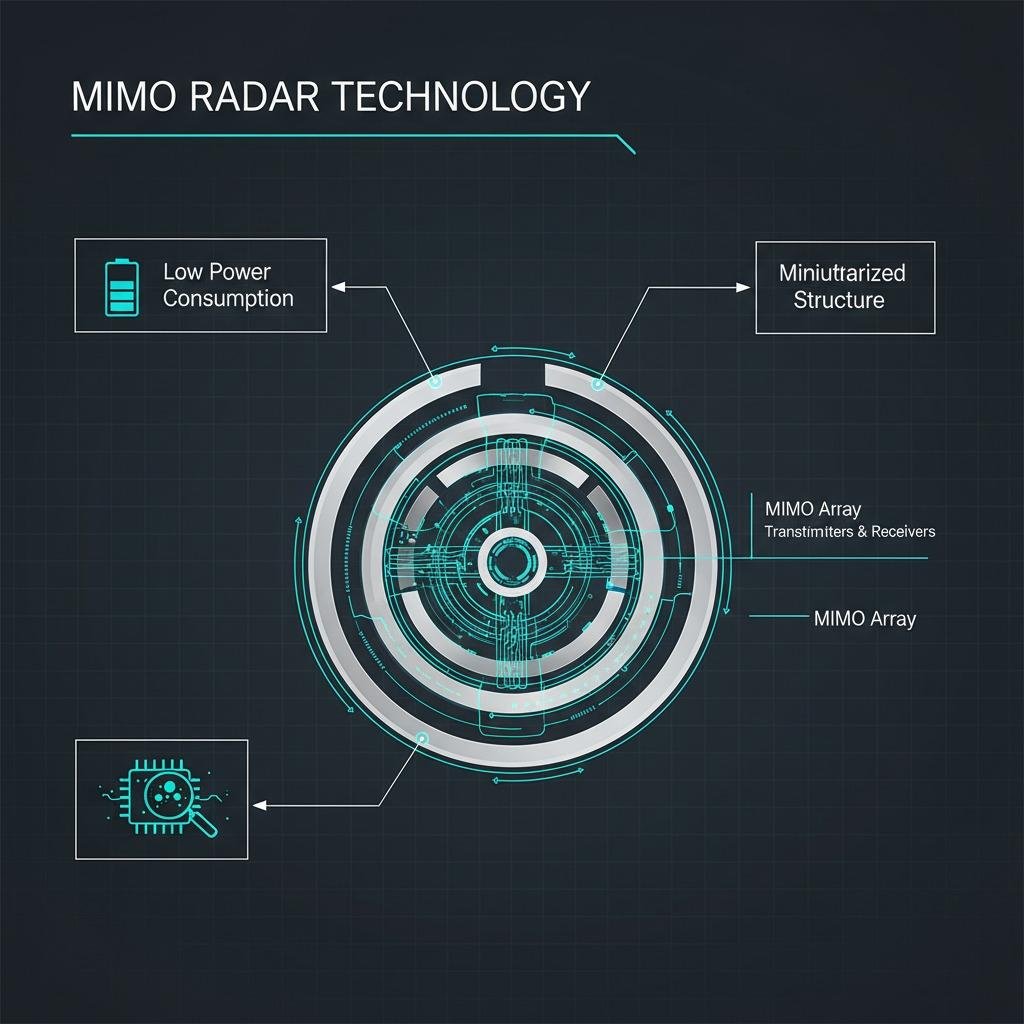
To counter these challenges, modern antenna design leverages MIMO radar, which employs multiple input multiple output configurations to improve spatial resolution and signal diversity. This approach not only boosts radar signal processing efficiency but also enables beamforming that adapts to dynamic environments, reducing the need for physical antenna adjustments. For low power consumption, engineers are adopting metamaterials and efficient feeding mechanisms that minimize losses, allowing systems to operate with up to 50% less energy compared to traditional setups. Miniaturization further addresses size constraints by utilizing fractal geometries and substrate-integrated waveguides, shrinking antenna footprints without sacrificing performance. These solutions ensure that devices remain compact yet powerful, ideal for integration into drones, wearables, and IoT sensors.
Implementing Advanced Antenna Design for Future-Proof Systems
Looking ahead, the fusion of antenna design with radar signal processing and MIMO radar paves the way for resilient, energy-efficient technologies. By prioritizing low power consumption through optimized impedance matching and miniaturization via 3D printing and nanotechnology, developers can create antennas that are both scalable and cost-effective. Practical implementations include phased array antennas for 5G radar hybrids, where signal integrity is maintained across frequencies. Testing in simulated environments reveals that such designs can achieve detection ranges extended by 30% while halving power draw. Ultimately, these innovations solve the pressing problems of inefficiency and bulkiness, empowering industries from telecommunications to aerospace with reliable, next-generation radar solutions. Embracing these strategies ensures that antenna design evolves to meet the demands of an interconnected world.