







Why Joint Communication and Sensing Is Getting Real Attention
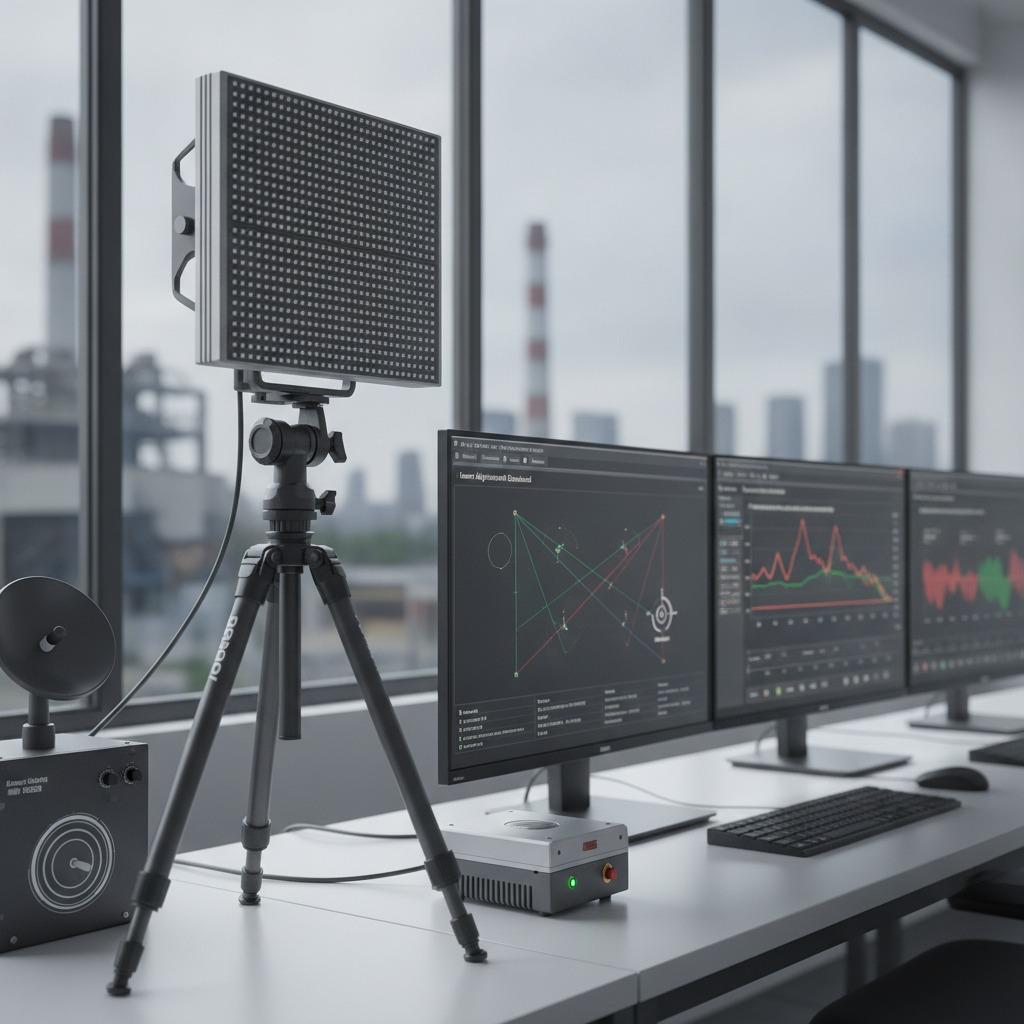
Joint communication and sensing (JCAS) has moved from research slides into practical engineering discussions because wireless systems are being asked to do more than carry data. A network is no longer just a pipe. In a factory, warehouse, vehicle, or campus environment, the same radio infrastructure may need to support connectivity, detect motion, estimate position, and help align beams in a dense RF space. That creates an obvious question for engineering teams: how much value can be extracted from one platform before complexity becomes the real cost?
That is the core appeal of JCAS. Instead of treating sensing and communications as separate stacks, designers try to share spectrum, hardware, and signal processing. For buyers and technical decision-makers, the benefit is not abstract. It affects antenna count, compute load, deployment density, calibration effort, and ultimately whether a system is practical to maintain.
What JCAS Actually Tries to Solve
In many deployments, communication systems already know too little about the environment around them. Beam steering can be fragile when people, vehicles, or machinery move through the path. At the same time, sensing systems often duplicate radios, clocks, and processing chains that the network already has. JCAS tries to reduce that duplication.
The idea is closely related to integrated sensing and communication (ISAC), though people use the terms a little differently depending on the source and application. In practical terms, the goal is the same: one radio front end, one waveform strategy, and a coordinated design that can support both data transfer and environmental awareness.
That sounds elegant, but there is a catch. A waveform that is excellent for sensing may not be ideal for high-throughput links. A communication-centric signal may not give clean enough range or angle estimation. The design work sits right in that tension.
Where the Tradeoffs Show Up
The most immediate challenge is interference management for JCAS. Once a waveform is expected to serve two masters, the engineering team has to decide what gets priority when performance goals conflict. If sensing accuracy is pushed too hard, communication throughput can suffer. If data transfer is optimized aggressively, target detection or ranging can become less reliable.
That tradeoff is not just academic. In real deployments, the environment is messy. Multipath reflections, co-channel interference, and mobility all complicate the picture. A practical JCAS design needs a cleaner strategy than “use one signal for everything.” It needs signal planning, receiver algorithms, and a good understanding of the operating scene.
Radar-assisted beam alignment is one of the more useful ideas in this space. In mmWave and other directional systems, beam management is often a bottleneck. If sensing can help estimate where a device or object is, the network can point its beam faster and with fewer trial-and-error sweeps. That can improve link stability and reduce overhead, especially in dynamic settings.
Waveform Design for Dual Function: The Hard Part
Waveform design for dual function is where many programs succeed or stall. Engineers have to decide whether to modify an existing communication waveform, adapt a radar waveform, or design a compromise signal from the ground up. Each path has implications for spectral efficiency, estimator performance, implementation complexity, and compliance with the rest of the system.
A few practical questions usually matter most:
- Can the waveform carry enough information for the communication link?
- Does it provide enough structure for sensing tasks such as detection, range, or Doppler estimation?
- Can the receiver separate useful signal from interference and clutter?
- Is the design realistic for the intended hardware and channel conditions?
The best answer depends on the application. A smart industrial site may value localization and obstacle awareness more than raw throughput. A mobile platform may need fast beam alignment more than high-precision sensing. A fixed infrastructure deployment may choose the opposite.
Selection Criteria for Engineering Teams
When evaluating JCAS concepts, buyers and engineers should look beyond headline performance claims. The more useful questions are operational ones.
1. What is the system expected to sense?
If the sensing task is simple presence detection, the design burden is lower than if the system must estimate fine motion, position, or multiple targets.
2. How sensitive is the network to latency?
Some beam alignment and sensing functions need fast updates. Others can tolerate slower refresh cycles. That distinction affects everything from waveform choice to processing architecture.
3. How much hardware sharing is realistic?
Not every component can be shared cleanly. Antennas, RF chains, clocks, and baseband resources may still need careful partitioning.
4. What happens in cluttered environments?
A design that looks strong in a clean lab can become less impressive in a warehouse, factory floor, or street-level deployment. Multipath matters.
Common Mistakes in Early JCAS Planning
A common mistake is assuming that one integrated system automatically lowers complexity. Sometimes it does. Sometimes it shifts complexity into software, calibration, or validation. Another frequent error is underestimating interference management for JCAS in shared-spectrum settings. If the architecture is not planned from the beginning, teams end up with a system that is clever on paper but difficult to tune in the field.
It is also easy to overfocus on theoretical peak performance. In the real world, stability often matters more than the best-case number. A slightly less ambitious dual-function design that is easier to deploy can be the better business decision.
Practical Buyer Advice
If you are comparing JCAS-enabled solutions or planning an internal development effort, ask vendors and design partners to explain how sensing and communication are balanced, not just whether they are both supported. Request details on the operating assumptions: range, mobility, target density, beamforming method, and how radar-assisted beam alignment is handled if directional links are part of the system.
You should also ask how the system behaves when conditions change. That can be the difference between a promising prototype and something that survives production use.
FAQ: Quick Questions Buyers Usually Ask
Is JCAS the same as ISAC?
They are closely related. In practice, both refer to designs that combine communication and sensing functions, though terminology can vary by industry and research group.
Does JCAS always improve efficiency?
Not automatically. Efficiency gains depend on the application, the waveform, and how much hardware and processing can truly be shared.
Where does JCAS make the most sense?
It is especially attractive where connectivity and environmental awareness are both valuable, such as dynamic industrial sites, mobility platforms, and dense wireless environments.
A Better Way to Evaluate the Opportunity
The right way to think about joint communication and sensing is not as a universal upgrade, but as an architectural choice. It can simplify some systems and complicate others. The useful question is whether the sensing function improves the communication system enough to justify the design effort, or whether a separate sensing stack is still the cleaner path.
For teams making that decision now, the smartest next step is to map the actual use case first, then test waveform design for dual function against the operating environment. That is where the real answer usually appears.