






Why isn't a single vision sensor enough?
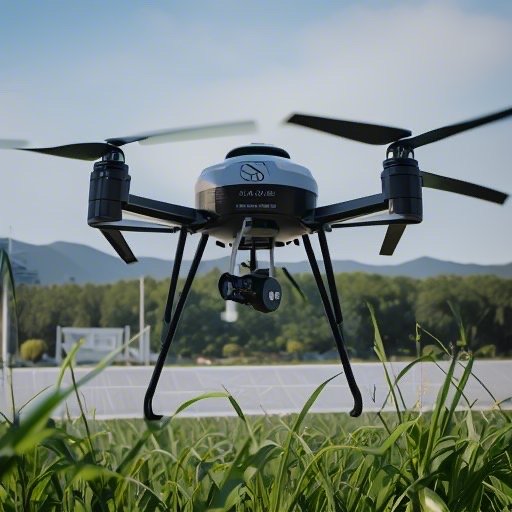
Imagine this: Just before dawn, I'm piloting an EFT agricultural drone, equipped with a forward obstacle radar, over a dense orchard in Jiangxi Province. A thin mist, like a spectral blanket, blankets the trees. Despite the drone's cameras doing their best, the mist refracts the sunlight, making the branches almost invisible. A hidden power line suddenly appears, lurching away from the drone. If it weren't for the MMWave Radar putting my $10,000 drone on expensive paper, it would have turned into an expensive stunt.
Conventional cameras and infrared sensors? They're unreliable in low light, fog, and glare, like trying to see through mud-covered sunglasses. During one test flight, a drone nearly crashed into the pond like a bewildered seagull due to glare from the water. That's when I started using Linpowave's 4D MMWave Radar with a sophisticated drone avoidance system.
Even though many drones (including some DJI models) have obstacle avoidance sensors, their functionality is still limited in fog or strong glare. So, which DJI drones have sufficiently strong obstacle avoidance capabilities? Even the acclaimed obstacle avoidance system of the DJI Mavic Pro struggles in dimly lit areas or dense fog. This underscores the necessity of complementary technologies, such as the MMWave radar developed by Linpowave.
Linpowave's radar: not just eyes, but a sixth sense.
Imagine a drone with bat-like sensory abilities, creating 3D maps in real time by sending pulses and listening to echoes. Linpowave's drones avoid radar sensing their surroundings from all angles, instead "seeing" with light. Once, my drone's camera feed was a blurry, interfering signal when it approached a power plant with tangled wires and buzzing transformers. But radar, like a beacon, calmly guided it through the storm.
With a field of view of ±60°, your drone can "see" in all directions – it won't go unnoticed by clutter or cunning branches. This is a four-obstacle capability that many 4K drones with obstacle avoidance features strive for but rarely achieve effectively.
Linpowave's radar technology excels even when FPV drones encounter obstacles or GPS. GPS drones with obstacle avoidance systems can use radar to supplement or replace it, occasionally encountering trouble in urban canyons or under dense foliage.
How does Linpowave's MMWave radar work?
Let's examine the internal workings of a drone equipped with Linpowave's MMWave Radar:
Radar emits millimeter-wave pulses, which are high-frequency waves traveling at the speed of light. Imagine your drone asking, "What's around?" in a quiet voice. The characteristics of drone-based collision avoidance radar sensor technology are...
Just like using invisible photons to play with capture, these pulses bounce back when they hit an object.
These returned echoes are combined by the drone's onboard processor to create a comprehensive 4D point cloud, which generates a dynamic 3D map containing information about elevation, speed, distance, and angle. This allows the drone to fully understand its surroundings.
After analyzing the map, sophisticated drone avoidance algorithms predicted potential hazards and modified the drone's flight path in real time, enabling it to react faster than human pilots.
This system boasts the best drone obstacle avoidance technology on the market, as it successfully avoids collisions, allows terrain following, and ensures a safe landing—all automatically.
Real-world applications and results
Fog and dust flying
The EFT agricultural drone's altitude and rear obstacle avoidance radar, mounted on both arms, kept the Linpowave VJ80 radar stable, maintaining perfect spray altitude while avoiding branches and unexpected obstacles. Last spring, I assisted a farmer spraying pesticides on his orchard in a heavy morning fog—visibility was practically zero, like that of a blind person. The farmer joked that my drone had "eyeballs on its elbows," referring to the improved front and rear coverage.
This situation demonstrates the essential value of obstacle-avoiding drones in agriculture, especially when traditional cameras or laser lenses cannot function properly due to dust or poor visibility.
Urban rooftop and infrastructure inspection
In confined spaces, GPS signals bounce like ping-pong balls, making navigation and rooftop inspections in Shanghai difficult. A tangled mess of wires and antennas makes it hard for cameras to lock onto landmarks. However, Limboław's radar avoided the dangers of being a porcupine in the city, navigating safely among these obstacles. This illustrates the importance of drones avoiding radar in complex urban environments.
Remote BVLOS Task
The U300 radar model provides situational awareness within a range of up to 300 meters for Beyond-the-Line-of-Visual-Sight (BVLOS) missions, which is crucial for mission safety and regulatory compliance. It helps avoid unforeseen challenges during a delivery trip and ensures the package arrives on schedule without incident. This demonstrates the reliability of BVLOS drone radar avoidance within 300 meters.
Comparing radar with camera-based systems
Some claim that AI-enabled cameras will soon be able to match radar. However, inclement weather can cause AI vision systems to malfunction, making it difficult to detect obstacles. Rain, dense fog, glare, or shadows can all cause confusion.
On the other hand, radar detects it consistently in any weather or lighting condition, much like an experienced hiker who doesn't mind rain or mud. When paired with a camera, it forms a complementary system that significantly improves performance and security.
Why I recommend Linpowave radar
After testing multiple sensors and solutions, Linpowave stood out because...
It holds more than 10 patents in radar algorithms and antenna design, including proprietary innovations for drones to avoid models such as the S95.
Its core team includes experts from Peking University, the Chinese Academy of Sciences, and Microsoft, providing a strong technical foundation.
From agriculture to urban inspection and delivery drones, more than 60 global partners have adopted their radar systems for a variety of applications.
Their drone/drone series is modular, reliable, and globally supported, making them ideal for those looking to upgrade their drones with the best drone object avoidance technology.
For serious drone operators who prioritize safety and performance, Linpowave's radar is truly a game-changer.
Ready to make your drone smarter?
If you want your drones to think, feel, and dodge like a professional, especially in complex terrain, low visibility, or long-distance missions, Linpowave's MMWave Radar is the upgrade you need. Whether you're looking for a Sky Rider drone avoidance upgrade, a mini drone avoidance upgrade, or an industrial drone solution, Linpowave has something for you.
➡️Explore the Drone/Drone Radar Series➡️View the VJ80 Angle Radar➡️Contact Linpowave engineers for a trial kit or customization.
Final thought: It's your turn.
When flying a drone, what's the closest you've ever come to an obstacle avoidance call? Has your EFT agricultural drone, with its radar mount or Linpowave drone radar, managed to avoid obstacles? Have you ever tried an obstacle avoidance drone for under $500? Have you ever wondered what the difference is between DJI obstacle avoidance and MMWave radar? I'd love to hear your experiences, so please share your stories below!