







Why low-power chipset design has become a sourcing issue, not just an engineering preference
Low-power chipset design is no longer a niche specification tucked into the back page of a datasheet. For teams building wearables, remote sensors, portable instruments, and always-on edge devices, it often decides whether a product is practical at all. If the chipset draws too much current, the battery gets larger, the enclosure gets bulkier, and the system cost climbs faster than the BOM forecast suggested.
That is why engineers and sourcing managers now look at power architecture as a chain of decisions rather than a single chip selection. The right chipset can support longer field life, less maintenance, and fewer service calls. The wrong one can force compromises in radio performance, sampling rate, processing headroom, or sleep behavior. In other words, the power budget is not just a technical detail; it is a commercial one.
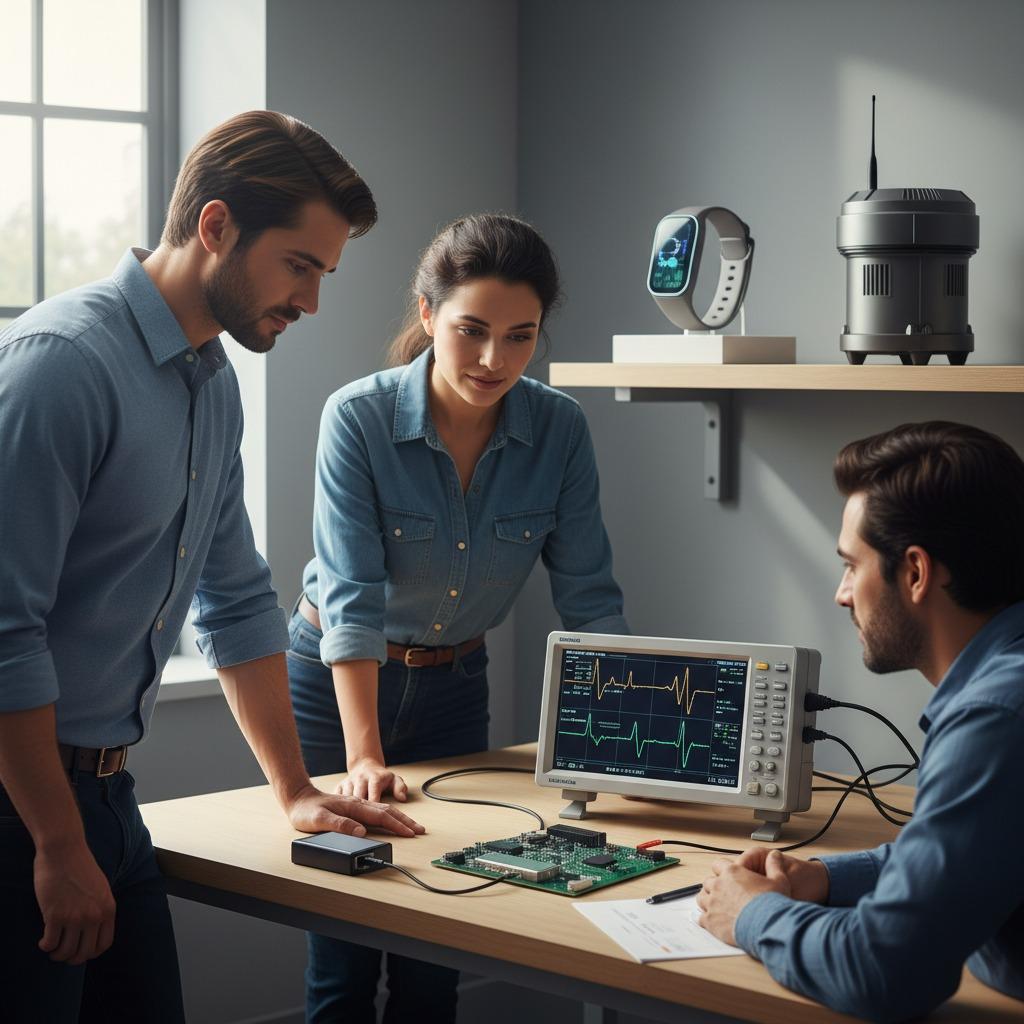
What buyers are really trying to solve
Most teams do not ask for low power because it sounds elegant. They ask for it because the product must survive in the field without constant battery replacement or frequent charging. In many applications, the hard problem is not peak power during transmission or compute bursts. It is average power over weeks, months, or years of intermittent use.
That is where energy-aware sensing and duty-cycled operation matter. A chipset that can stay asleep intelligently, wake quickly, capture data, process a small amount locally, and return to a low-draw state is often more useful than a part that is merely fast. The same logic applies when battery-constrained optimization is the real design target: every milliamp saved in standby can matter more than a higher benchmark number.
Quick reference: the design choices that usually move power the most
Not every low-power claim is equally meaningful. In practice, these are the choices that tend to shift battery life the most:
• Sleep and standby current, especially for devices that spend most of their life idle
• Wake-up time, since long wake cycles can erase the benefit of a deep sleep state
• On-chip signal processing, which can reduce the need to keep a larger MCU or host processor active
• Peripheral integration, because fewer external components usually means fewer leakage paths and less board-level overhead
• Duty-cycled operation, which can be a bigger win than raw low-power mode performance alone
These features are not interchangeable. A chipset with good active efficiency but poor sleep behavior may be fine for mains-powered edge equipment, yet disappointing in a coin-cell product that only transmits a few times a day.
Process and architecture matter as much as the headline power number
Low-power chipset design is usually a system-level discipline. The silicon process, clock strategy, power domains, memory architecture, and analog front end all affect the final result. A practical design may use multiple low-leakage states, selective clock gating, and local processing so the rest of the system can remain dormant.
On-chip signal processing changes the power math
When a chipset can filter, compress, classify, or trigger events internally, it reduces the burden on external processors and communication links. That is important because radios and high-throughput data pipelines often consume far more energy than simple sensing. Even modest local processing can cut pointless transmissions and make energy-aware sensing more effective. There is a tradeoff, of course: more on-chip intelligence can also mean more design complexity, so buyers should not assume “more features” always means “less power.”
Duty cycling is useful, but only if the wake strategy is disciplined
Duty-cycled operation works best when the product’s use pattern is understood clearly. A device that samples periodically and communicates in bursts can benefit heavily from tight sleep scheduling. But if the application needs frequent interrupts, continuous tracking, or low-latency responses, aggressive cycling may not deliver the hoped-for savings. The uncomfortable truth is that some products are simply not friendly to ultra-low-power architecture.
Selection criteria for sourcing and engineering teams
When comparing chipset options, buyers should look beyond maximum MIPS or radio range. The useful questions are more practical:
Does the chipset support the operating profile the product actually needs, not just the one in the lab?
Can it handle sensor input and basic preprocessing without waking a larger host unnecessarily?
Are the low-power states easy for firmware teams to use correctly, or do they require fragile workarounds?
Will the power profile still hold up once the full board, sensor stack, and communications path are added?
That last question is often overlooked. A promising chip can look excellent in isolation and still disappoint once the surrounding circuitry is added. Board leakage, regulator choice, and firmware behavior all influence the real result.
Common mistakes that quietly ruin power savings
One frequent mistake is optimizing the chipset while ignoring the rest of the system. Another is assuming that a single low-power mode solves every use case. There is also a habit, especially in early-stage product teams, of focusing on peak performance and treating low-power tuning as a late-stage cleanup task. By then, the architecture is already harder to change.
Another practical warning: do not trust a power number without asking what state the device is in, what peripherals are running, and how often it wakes. A clean-looking spec can hide a profile that is only achievable under narrow conditions.
What a good buying decision looks like
A sound chipset choice should fit the product’s real operating rhythm. For some teams that means sensor-first behavior with local decision-making. For others it means stronger radio efficiency or a better balance between active performance and sleep current. The best decision usually comes from mapping the use case first, then matching the silicon architecture to that profile.
If the product depends on long field life, ask vendors or design partners for power-mode breakdowns, wake timing details, and realistic application assumptions. If the device is going into a battery-limited enclosure, treat every milliwatt as a design variable, not an afterthought. That is where battery-constrained optimization becomes a sourcing advantage rather than a lab exercise.
FAQ
Is the lowest-power chipset always the best choice?
No. A part with ultra-low sleep current may still be the wrong fit if it cannot process data locally, wake fast enough, or support the required interface stack.
Why does on-chip signal processing matter so much?
Because moving simple decisions closer to the sensor can reduce processor uptime and cut communication overhead, both of which usually save energy.
What should buyers ask first?
Start with the product’s real duty cycle, expected battery life target, and wake frequency. Those three inputs usually determine whether a chipset architecture is plausible.
Next step for product teams
If you are evaluating low-power chipset design for a new device, begin with the operating profile before you compare feature lists. The right part is rarely the one with the flashiest headline number. It is the one that matches the application’s sensing, processing, and communication rhythm without forcing expensive redesigns later.