






Challenges in Radar Signal Processing
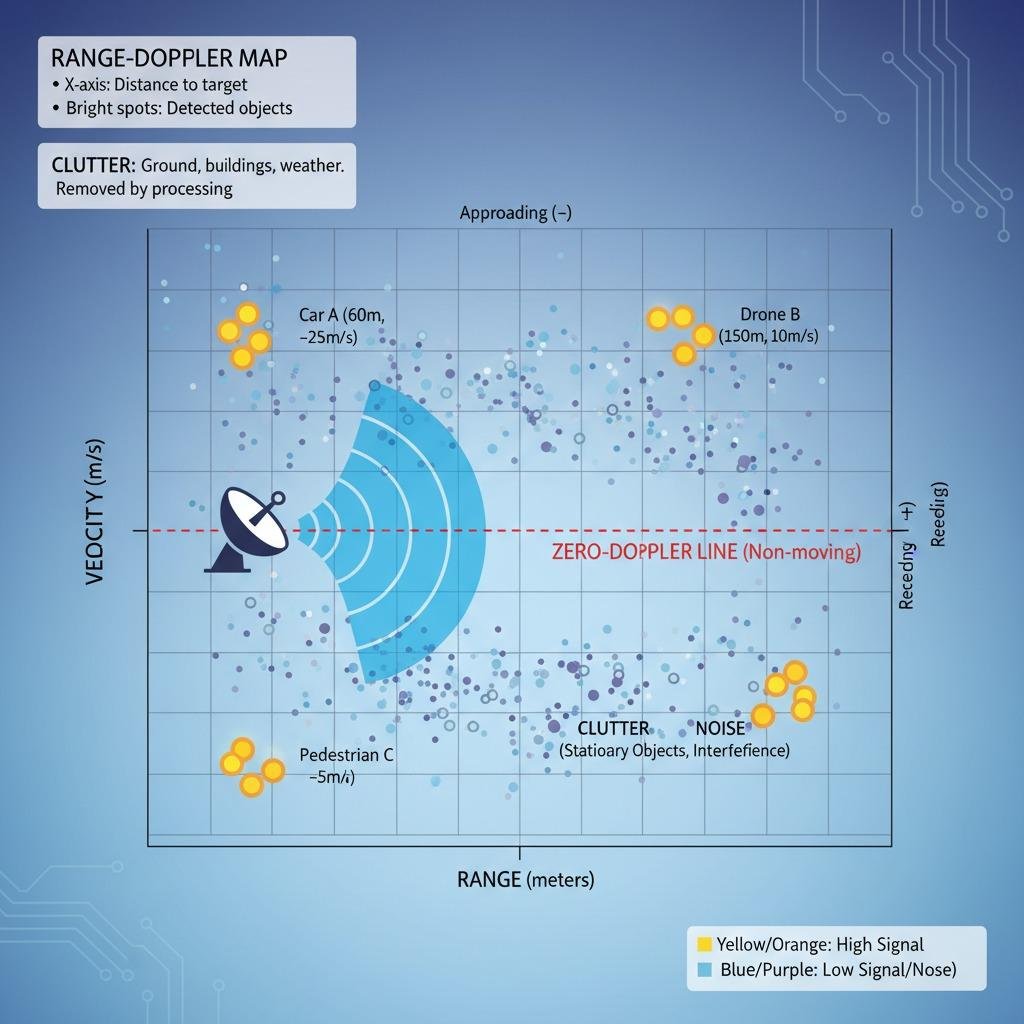
In modern radar systems, one of the primary hurdles is accurately detecting and tracking moving targets amidst complex environments. Range-Doppler processing serves as a foundational technique to map out the range and velocity of objects, but it often falls short when dealing with multipath interference, low signal strength, or dense clutter. Engineers and researchers frequently encounter issues where false detections lead to unreliable performance, especially in applications like autonomous vehicles, air traffic control, and defense surveillance. Without effective Range-Doppler processing, systems struggle to distinguish genuine targets from noise, resulting in missed opportunities or erroneous decisions that could compromise safety and efficiency.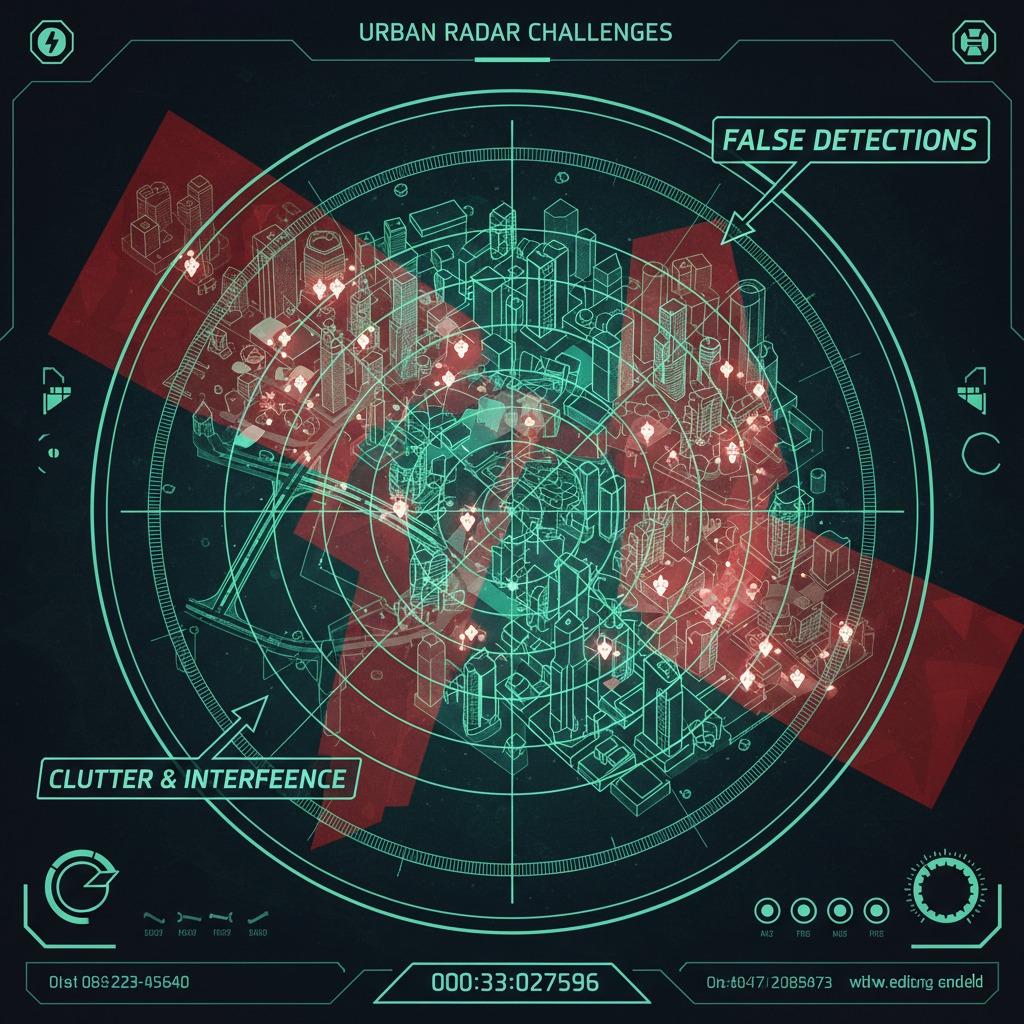
Enhancing Range-Doppler with Angle Estimation
To address these limitations, integrating angle estimation techniques such as Angle of Arrival (AoA) and Angle of Departure (AoD) into Range-Doppler processing can provide a multi-dimensional view of the radar scene. The problem arises when range and Doppler data alone cannot resolve ambiguities in target positioning, leading to overlapping signals in crowded scenarios. By employing AoA/AoD methods, radar systems can pinpoint the azimuthal and elevation angles of targets, effectively refining the output of Range-Doppler processing. This solution not only improves localization accuracy but also reduces false alarms by cross-verifying data from multiple perspectives. For instance, in urban environments where reflections bounce off buildings, angle estimation helps filter out ghost targets, ensuring that the core Range-Doppler map remains clean and actionable.
Adaptive Beamforming for Dynamic Environments
Another critical challenge in Range-Doppler processing is maintaining focus on desired targets while ignoring sidelobe interference, which adaptive beamforming directly tackles. Traditional fixed-beam radars suffer from degraded performance in dynamic settings, where the direction of incoming signals varies rapidly, causing a drop in resolution and increased computational load. Adaptive beamforming algorithms dynamically adjust the antenna array's weights to steer beams towards targets and null out interferers, seamlessly enhancing Range-Doppler processing outputs. This approach is particularly valuable in mobile platforms like drones or ships, where environmental changes are constant. By implementing adaptive techniques, systems achieve better angular selectivity, allowing for precise velocity and range measurements without the need for extensive recalibration.
Clutter Suppression and SNR Optimization Strategies
Clutter from stationary objects like terrain or weather often overwhelms Range-Doppler processing, masking weak target returns and lowering overall detection reliability. Clutter suppression techniques, such as space-time adaptive processing (STAP) or constant false alarm rate (CFAR) detectors, offer robust solutions by adaptively modeling and subtracting background noise. Complementing this, signal-to-noise ratio (SNR) optimization through advanced waveform design and receiver enhancements ensures that even faint signals are amplified relative to noise. For example, using pulsed-Doppler modes with optimized pulse compression can boost SNR, making Range-Doppler processing more effective against low-reflectivity targets. Together, these methods—clutter suppression techniques paired with SNR optimization—transform problematic radar data into high-fidelity maps, enabling real-time applications to perform with greater precision.
Implementing Integrated Solutions for Superior Radar Performance
By combining Range-Doppler processing with angle estimation (AoA/AoD), adaptive beamforming, clutter suppression techniques, and SNR optimization, radar systems can overcome inherent challenges and deliver enhanced situational awareness. This holistic problem-solution framework not only mitigates common pitfalls like signal ambiguity and environmental interference but also paves the way for next-generation technologies. In practice, adopting these strategies requires careful system design, but the payoff is evident in improved accuracy and reduced operational costs. As radar applications expand into smarter cities and beyond, mastering these integrations will be key to staying ahead in signal processing innovation.