






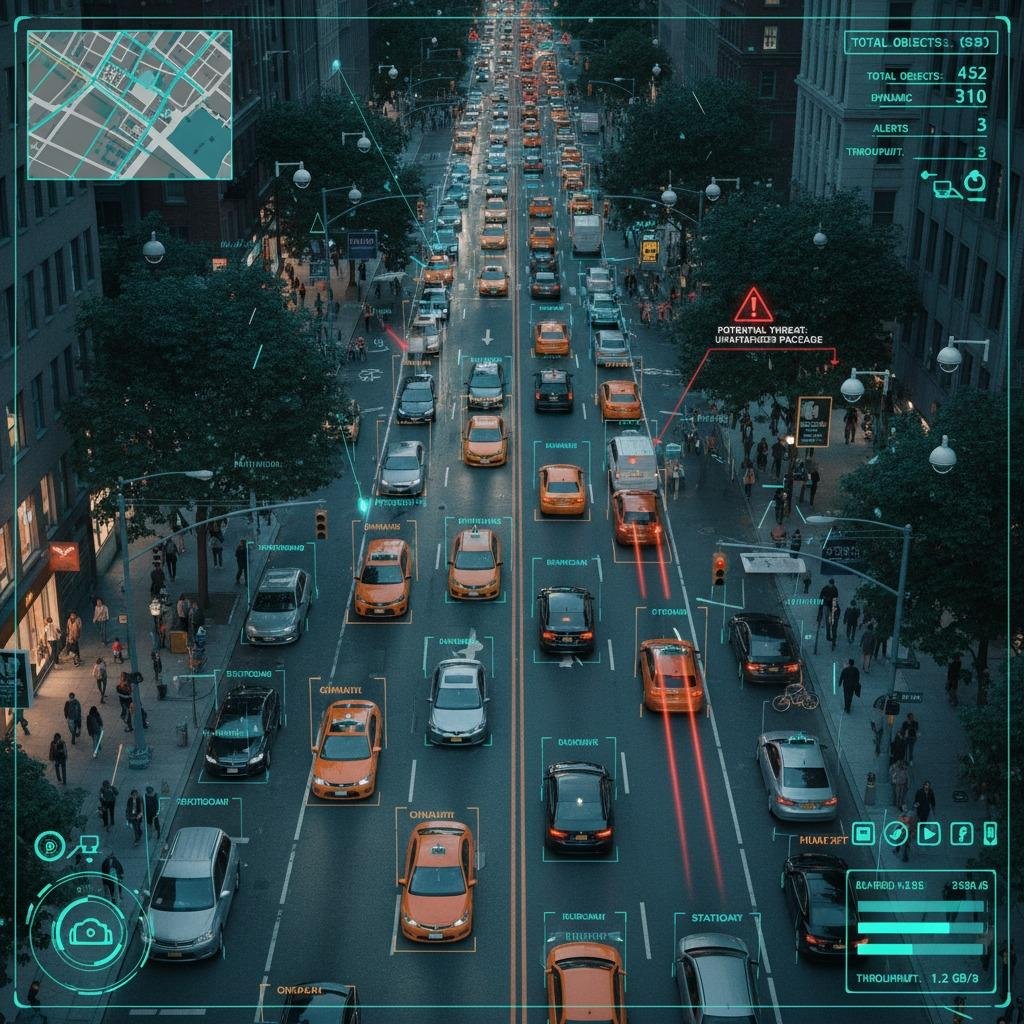
The Challenge of Real-Time Tracking in Modern Surveillance
In today's fast-paced world, real-time tracking has become essential for security, logistics, and autonomous systems. However, professionals often face significant hurdles when trying to monitor moving elements amidst static backgrounds. The problem intensifies in complex environments like crowded urban areas or industrial sites, where distinguishing between stationary and dynamic objects is crucial. Without accurate separation, systems can generate false alarms, waste resources, and compromise safety. This issue not only delays decision-making but also increases operational costs, making it a pressing concern for industries relying on precise monitoring.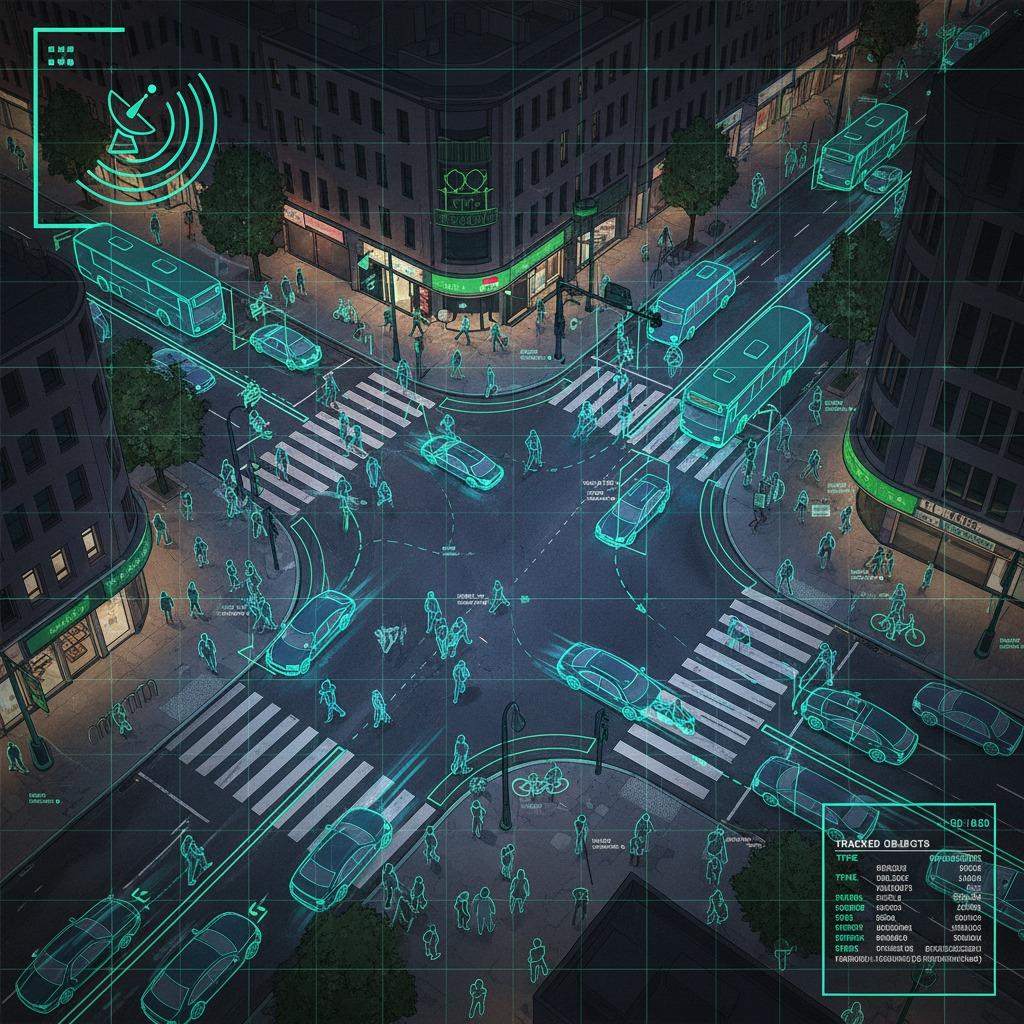
Overcoming Obstacles with Advanced Stationary vs Dynamic Object Separation
To address the core problem of real-time tracking, innovative solutions focus on stationary vs dynamic object separation as a foundational step. By leveraging AI-driven algorithms, these systems analyze motion patterns to classify objects effectively. For instance, machine learning models trained on vast datasets can differentiate a parked vehicle from one in transit by detecting subtle changes in pixel movement over frames. This separation enhances overall accuracy, reducing noise in tracking data. When integrated into surveillance cameras or drone software, such technology ensures that only relevant dynamic elements are flagged, streamlining workflows and minimizing errors. The result is a more reliable real-time tracking framework that adapts to varying conditions, providing users with actionable insights without the clutter of irrelevant static information.
Enhancing Precision Through Velocity Estimation Techniques
Another layer of the real-time tracking challenge lies in accurately estimating velocities of moving objects, which is vital for predicting trajectories. Traditional methods often falter in high-speed scenarios, leading to imprecise forecasts and potential risks. The solution lies in advanced velocity estimation tools that incorporate optical flow analysis and sensor fusion. These techniques process data from multiple sources, such as radar and video feeds, to compute speed and direction in real time. By calibrating for environmental factors like lighting or weather, velocity estimation improves the robustness of tracking systems. This not only aids in collision avoidance for autonomous vehicles but also optimizes traffic management by providing instant speed metrics, turning potential chaos into controlled efficiency.
Achieving Clarity with Moving Target Discrimination
Discriminating between multiple moving targets adds complexity to real-time tracking, especially when objects overlap or share similar paths. The problem manifests as tracking failures, where systems lose focus on critical entities like pedestrians in a crowd. Effective solutions employ moving target discrimination algorithms that use feature extraction to isolate unique signatures, such as shape or behavioral patterns. Deep learning models excel here, enabling the system to prioritize threats or assets dynamically. In security applications, this means swiftly identifying suspicious movements amid general activity, enhancing response times. By solving this discrimination puzzle, real-time tracking becomes more intuitive and scalable, empowering operators to make informed decisions without sifting through overwhelming data.
Unlocking Details via High-Resolution Imaging Integration
Finally, the lack of detail in standard imaging hampers effective real-time tracking, often resulting in ambiguous identifications. High-resolution imaging emerges as a powerful solution, capturing fine-grained visuals that support all other processes. Modern systems combine high-res sensors with edge computing to process ultra-clear images on the fly, revealing textures and movements invisible to lower-quality setups. This integration boosts stationary vs dynamic object separation, refines velocity estimation, and sharpens moving target discrimination. For example, in wildlife monitoring or perimeter security, high-resolution imaging allows for precise identification at distances, transforming vague shadows into verifiable targets. Ultimately, these combined solutions elevate real-time tracking from a reactive tool to a proactive powerhouse, addressing core challenges and driving innovation across sectors.