






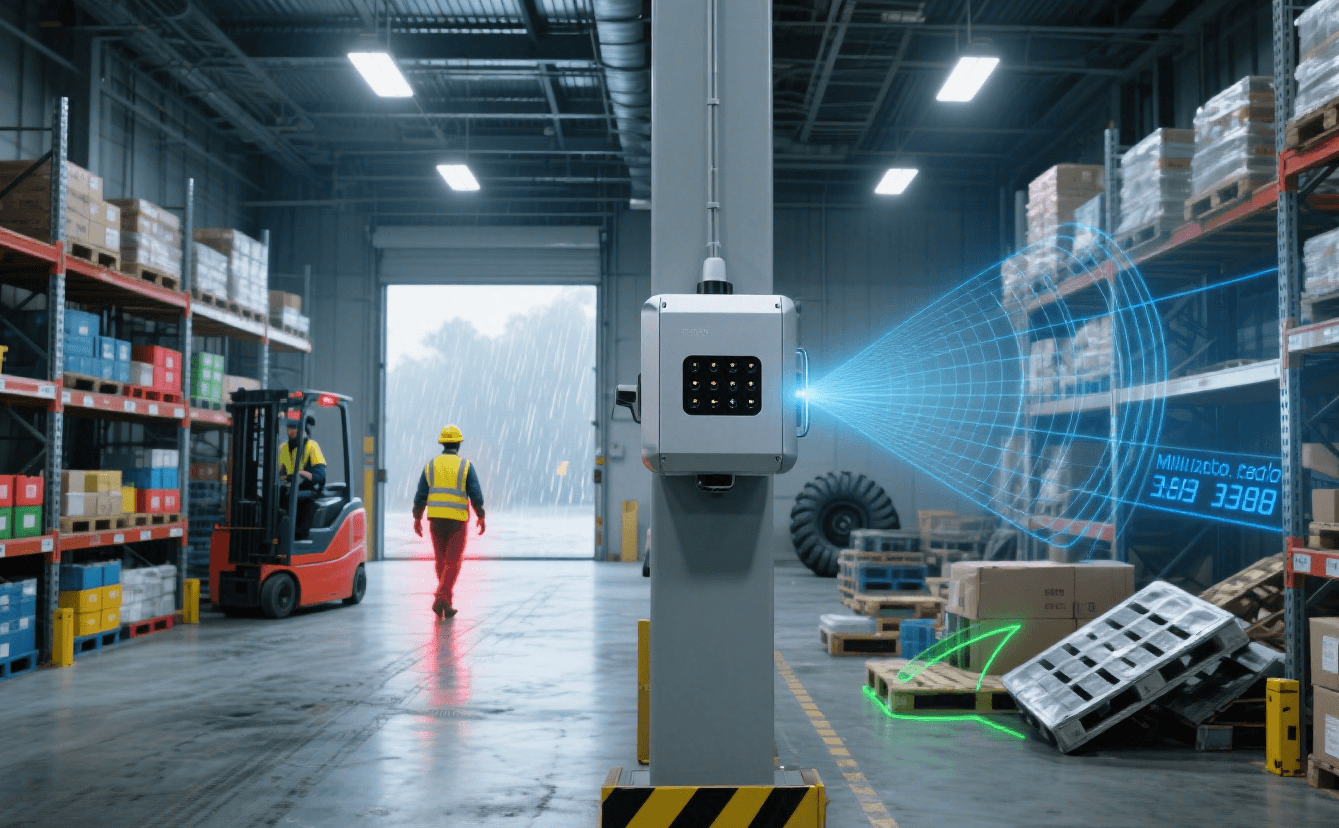
Millimeter-Wave Radar in Warehouse Management: Precision Sensing for Modern Logistics
Introduction
Modern warehouses face growing demands for efficiency, safety, and accuracy. While automation has become widespread, sensing technology is the backbone that enables safe interaction between humans, machines, and inventory. Millimeter-wave (mmWave) radar is emerging as a key technology in warehouse management, offering precise, real-time detection of obstacles, inventory, and human presence, regardless of lighting or environmental conditions.
Linpowave provides high-performance mmWave radar modules that can be integrated into various warehouse systems, supporting better safety, navigation, and operational efficiency.
Specific Applications of mmWave Radar in Warehouses
1. Human Presence Detection
-
Occupancy Sensing: Radar detects the presence of operators in aisles or work zones, enabling systems to adjust robot movement or conveyor speeds.
-
Motion Tracking: Real-time monitoring of human motion helps prevent collisions and ensures safe interaction between personnel and machinery.
-
Privacy Protection: Radar senses movement without capturing visual images, maintaining staff privacy.
2. Obstacle and Inventory Detection
-
Dynamic Obstacle Identification: Millimeter-wave radar distinguishes moving forklifts, carts, or drones from static objects like pallets and racks.
-
Height and Size Measurement: High-resolution radar can detect the dimensions of packages or obstacles, assisting automated systems in precise handling.
-
All-Weather Operation: Dust, low-light conditions, or smoke do not interfere with radar sensing, unlike optical cameras.
3. Warehouse Navigation and Safety Systems
-
Corridor Mapping: Radar continuously scans aisles to provide accurate layouts for automated vehicles or monitoring systems.
-
Collision Avoidance: By detecting both stationary and moving obstacles, radar reduces the risk of accidents.
-
Multi-Target Tracking: Simultaneously tracks multiple objects in crowded warehouse spaces for better operational control.
4. Inventory and Stock Management
-
Shelf Proximity Detection: Radar ensures systems approach shelves at safe distances for loading or unloading.
-
Obstacle-Aware Routing: Real-time radar data allows automated systems to plan optimized routes avoiding temporary obstacles.
-
Integration with AI Systems: Radar feeds enable predictive analytics for inventory movement and risk assessment.
Technical Highlights from Linpowave
-
Frequency Bands:
-
60 GHz: Short-range, high-resolution sensing for close-proximity detection in aisles or shelves.
-
77–81 GHz: Long-range detection suitable for open warehouse floors or large storage areas.
-
-
4D Imaging Radar: Measures distance, angle, velocity, and trajectory of multiple targets simultaneously.
-
Compact Modular Design: Easy integration into existing warehouse systems, from automated conveyors to monitoring units.
-
Reliable All-Weather Performance: Dust, darkness, and temperature changes do not affect sensing accuracy.
Benefits of mmWave Radar in Warehouse Operations
-
Safety Enhancement: Detects humans and obstacles in real time, minimizing accidents.
-
Operational Efficiency: Supports continuous operation with precise sensing even in challenging conditions.
-
Inventory Accuracy: Radar improves package handling and shelf management precision.
-
Cost Savings: Reduces accidents, downtime, and human intervention, lowering operational costs.
Conclusion
Millimeter-wave radar is revolutionizing warehouse management by providing accurate, reliable, and real-time sensing capabilities. Linpowave’s radar modules enable warehouses to track human presence, detect obstacles, and optimize operations under all conditions. By leveraging mmWave radar, warehouses can improve safety, enhance efficiency, and maintain high operational standards in modern logistics.