






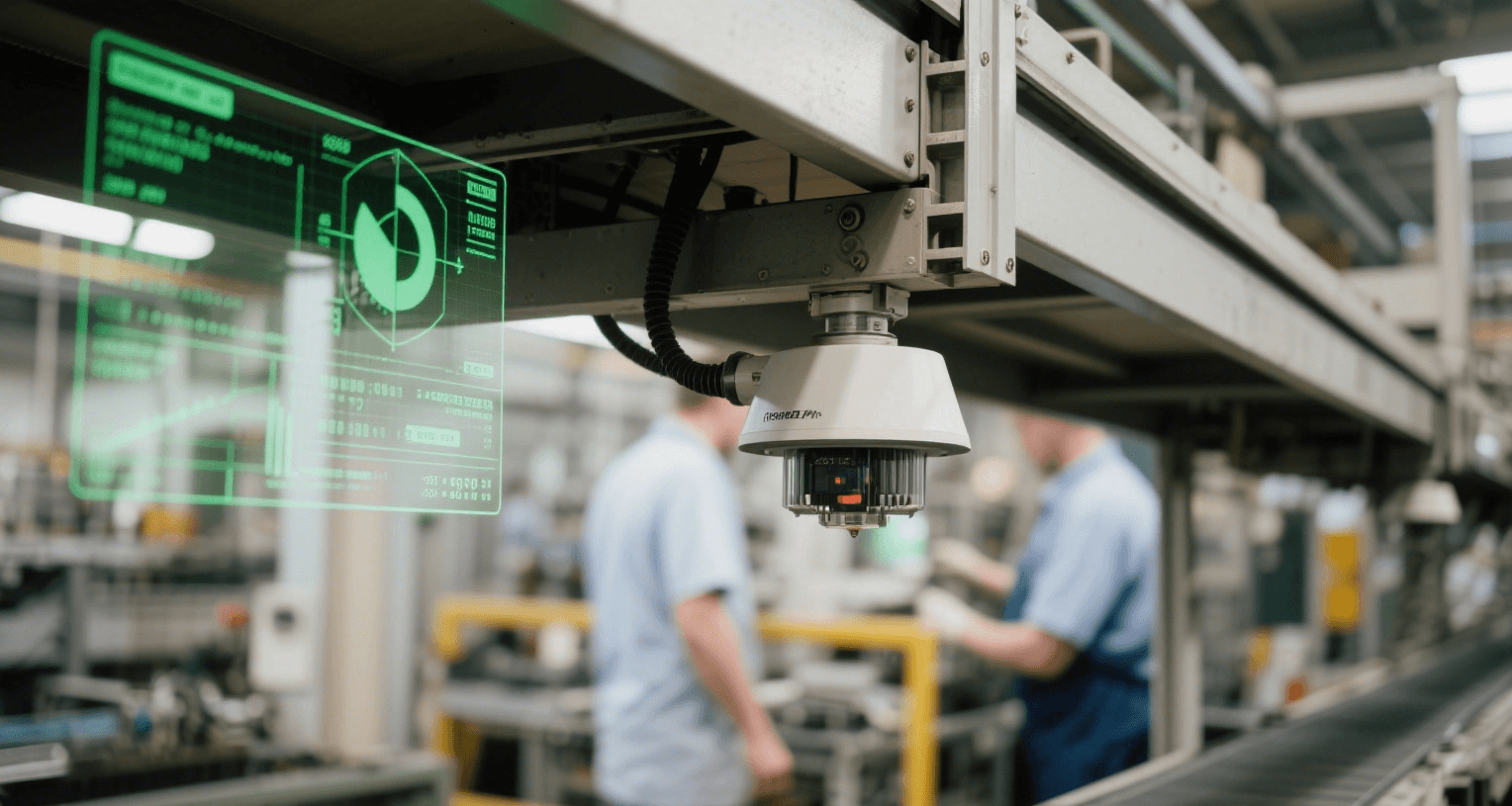
In industrial environments, safety is not just a priority—it is a constant operational requirement. From automated production lines to chemical plants and construction sites, workers are often exposed to dynamic risks such as moving machinery, restricted zones, and hazardous materials. Traditional safety measures, including cameras and infrared sensors, have limitations in poor lighting, dusty air, or visually obstructed areas. This is where AI-enhanced millimeter-wave (mmWave) radar offers a transformative solution for industrial safety.
Why mmWave Radar for Safety?
Unlike cameras or ultrasonic sensors, mmWave radar uses electromagnetic waves in the 60 GHz and 76–81 GHz bands to detect movement, distance, and velocity with high precision. Radar sensors are unaffected by lighting conditions, fog, or dust—making them ideal for rugged industrial environments.
Linpowave’s custom radar solutions are designed for adaptability, enabling safety systems to detect workers’ presence, monitor restricted areas, and even track machinery movement with centimeter-level accuracy.
Key advantages include:
-
Non-intrusive detection: Workers are monitored without the use of cameras, preserving privacy.
-
Robust performance: Effective in low visibility, smoke, or dust-heavy environments.
-
Real-time edge processing: Rapid response times for emergency stop mechanisms.
The Role of AI in Industrial Radar
While radar provides raw sensing data, AI algorithms enhance interpretation. Machine learning models can:
-
Differentiate between humans, machinery, and stationary objects.
-
Predict potential collisions by analyzing trajectories.
-
Detect unusual worker behavior (e.g., sudden falls or entering restricted zones).
-
Optimize safety zones dynamically as workflows change.
For example, in a factory equipped with robotic arms, radar can continuously monitor safety boundaries. If a human enters the danger zone, AI-enhanced radar systems trigger automatic slow-down or shutdown commands in milliseconds—preventing accidents.
Application Scenarios
-
Automated Manufacturing
Robots and automated guided vehicles (AGVs) are increasingly common. Radar sensors create “invisible safety fences” that adapt to real-time movements, ensuring both efficiency and safety. -
Construction Sites
Dust, debris, and large equipment make cameras unreliable. Radar ensures accurate worker detection and alerts when workers approach dangerous zones. -
Chemical & Hazardous Environments
Where flammable gases make cameras or infrared sensors unsuitable, radar provides non-contact, spark-free monitoring. -
Mining and Heavy Machinery
Radar enables collision avoidance between massive vehicles and nearby workers—critical in underground or open-pit mines.
Benefits Compared with Traditional Safety Sensors
| Technology | Advantages | Limitations |
|---|---|---|
| Cameras | High resolution, visual recording | Limited in dust, darkness, and raises privacy concerns |
| Infrared sensors | Low-cost, simple installation | Poor performance in heat or reflective surfaces |
| Ultrasonic sensors | Effective for short distances | Struggles in noisy environments |
| mmWave Radar | Robust in all weather, privacy-friendly, high accuracy | Requires advanced processing (solved with AI) |
By combining radar with AI-driven analytics, companies achieve safety compliance, reduced downtime, and enhanced worker protection.
Linpowave’s Contribution
Linpowave specializes in compact radar modules such as the V200 (77–81 GHz) and V300 (50×50mm form factor). These modules are tailored for industrial IoT safety applications, with:
-
Customizable field of view
-
Edge AI integration support via SDK
-
Long-range detection (up to 200m)
👉 Learn more about Linpowave’s radar sensors for industrial applications.
Industry Standards and Outlook
Global safety standards such as ISO 13849 (Safety of machinery) and IEC 61508 (Functional safety) increasingly emphasize proactive detection systems. Radar-based safety aligns with these requirements by offering fail-safe redundancy and predictive analytics.
External reference: The Occupational Safety and Health Administration (OSHA) highlights the need for advanced sensing technologies to reduce industrial accidents (OSHA report). Radar is emerging as one of the most reliable tools to meet these regulatory demands.
Conclusion
AI-enhanced mmWave radar is reshaping how industries approach worker protection. By combining privacy-friendly sensing, robust environmental performance, and intelligent AI interpretation, radar ensures safer operations without compromising efficiency.
For companies seeking to modernize their safety strategies, adopting radar-based safety solutions is not just an innovation—it is a necessity for the future of industrial work.