







The Challenge of Detecting Small Drones in Modern Security
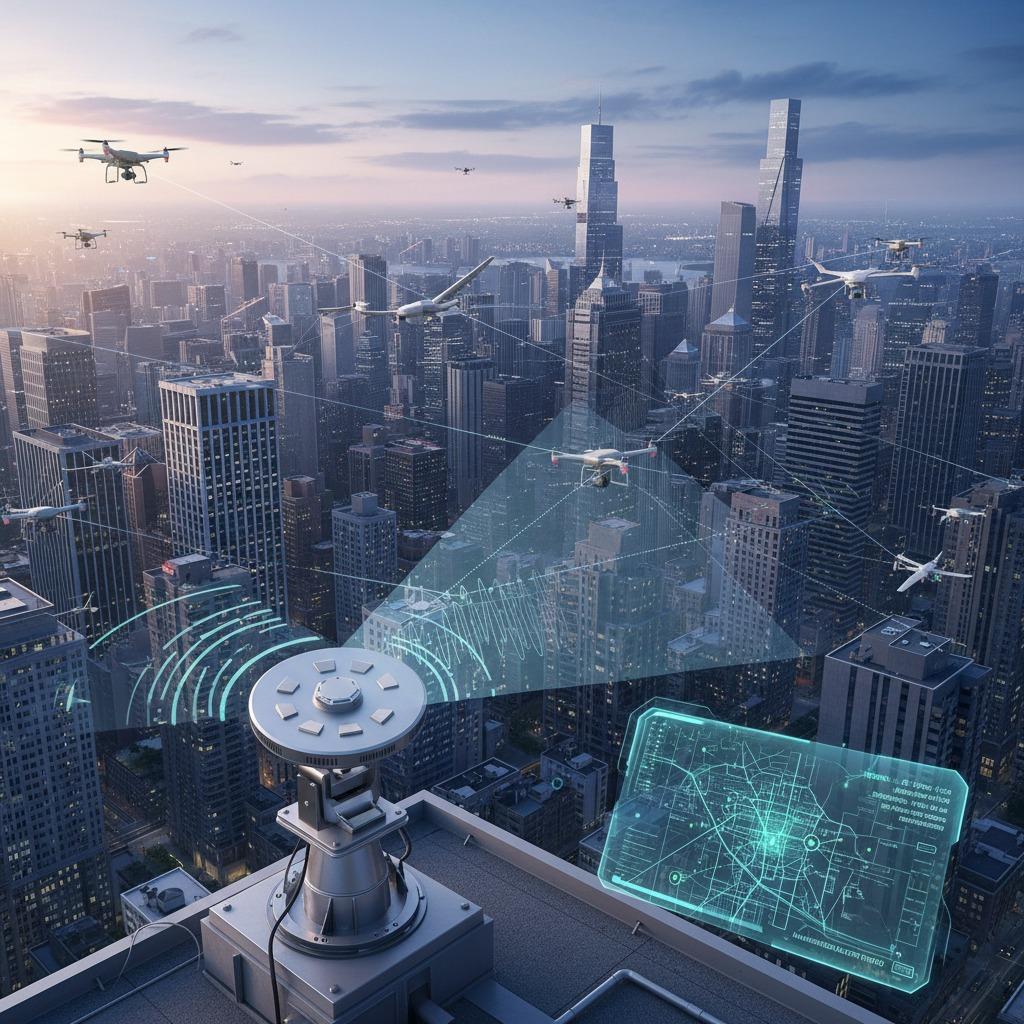
In an era where drones are increasingly used for both legitimate and malicious purposes, the problem of undetected small drones poses a significant threat to public safety and privacy. Small drones, often compact and low-flying, can evade traditional surveillance methods, making it difficult for security teams to monitor airspace effectively. This vulnerability is particularly acute in urban environments, critical infrastructure sites, and events with large crowds. Without reliable detection technology, unauthorized drone incursions can lead to privacy breaches, potential attacks, or disruptions in communication systems. Enter mmWave radar as a core solution to this pressing issue, offering precise detection capabilities even in challenging conditions.
How mmWave Radar Overcomes Detection Limitations
mmWave radar operates using high-frequency radar waves in the millimeter wave spectrum, typically between 30 and 300 GHz, which allow for superior resolution and sensitivity compared to conventional radar systems. The problem with older radar technologies is their struggle to distinguish small drones from birds or environmental clutter, often resulting in false positives or missed detections. mmWave radar addresses this by providing detailed imaging of small objects, enabling accurate small drone detection at ranges up to several kilometers. For instance, in drone surveillance systems, mmWave technology applications integrate seamlessly to track drone trajectories in real-time, even through fog, rain, or darkness—conditions that hinder optical or infrared sensors. By focusing on the unique radar cross-section of drones, this technology minimizes errors and ensures comprehensive airspace monitoring.
Advanced Applications in Drone Surveillance Systems
Beyond basic detection, mmWave radar enhances drone surveillance systems by supporting proactive threat mitigation. The challenge of integrating detection with response mechanisms is solved through mmWave's ability to classify drone types and behaviors, such as distinguishing hobbyist models from potential weaponized ones. High-frequency radar components in these systems allow for multi-target tracking, crucial in scenarios involving swarms of small drones. For example, airports and military bases employ radar systems for drones equipped with mmWave sensors to create no-fly zones, automatically alerting operators to intrusions. This not only prevents incidents but also reduces operational costs by automating monitoring, freeing human resources for higher-level analysis. Moreover, drone detection technology powered by mmWave is scalable, from portable units for temporary events to fixed installations for permanent security.
Future-Proofing Security with mmWave Innovations
As drone usage proliferates, the need for robust, adaptable detection solutions becomes imperative. mmWave radar stands out by evolving with emerging threats, incorporating AI for predictive analytics in small drone detection. Unlike passive systems that rely on visual confirmation, high-frequency radar provides all-weather, day-and-night reliability, ensuring no blind spots in surveillance. Organizations adopting mmWave technology applications report up to 90% improvement in detection accuracy, transforming potential vulnerabilities into fortified defenses. By investing in these advanced radar systems for drones, security professionals can stay ahead of evolving risks, safeguarding assets with cutting-edge precision and efficiency. This problem-solving approach not only addresses current challenges but also positions users for long-term resilience in an increasingly arid world.