






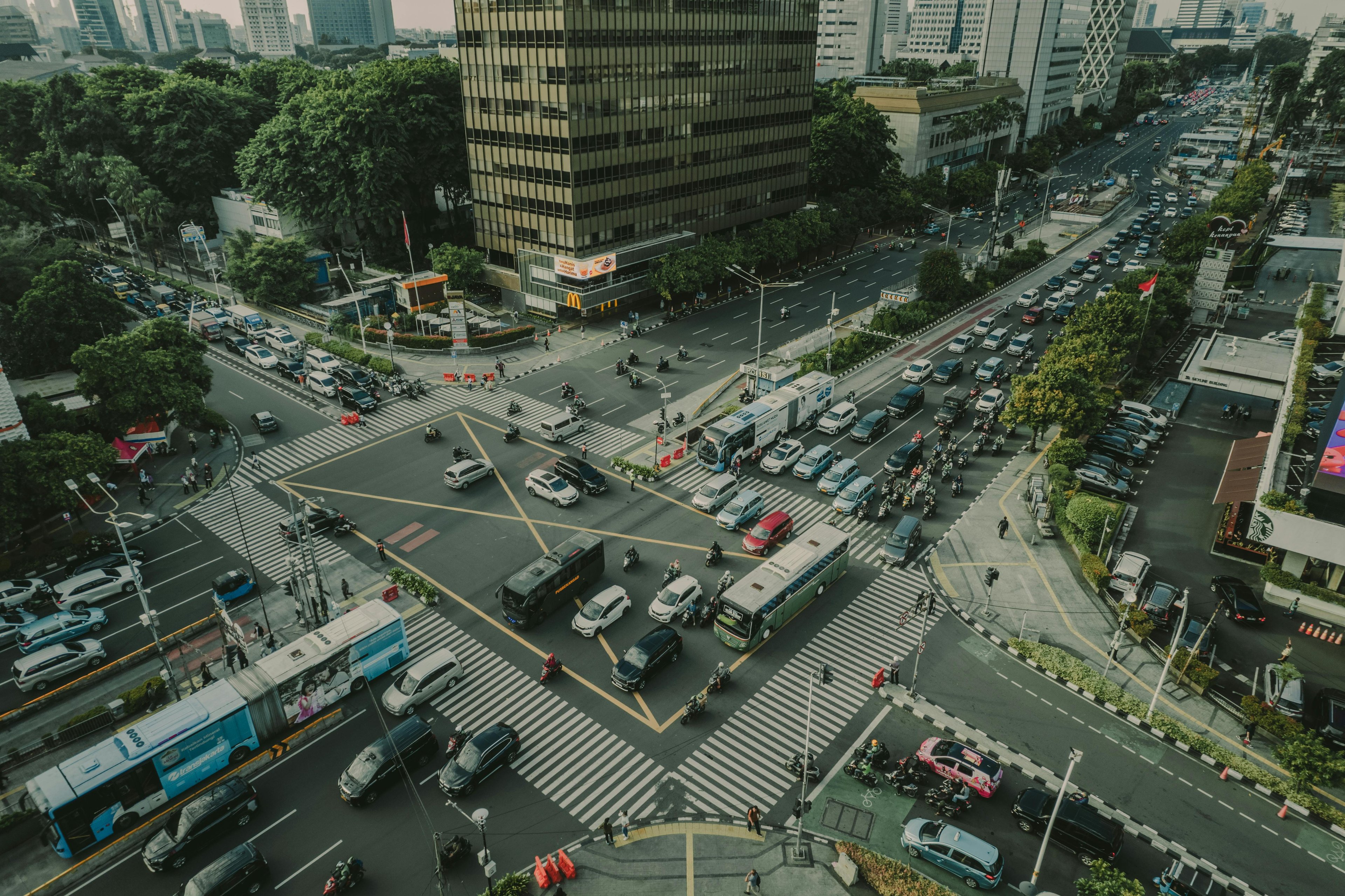
Introduction: Improving urban traffic efficiency
Urban congestion has become an increasingly serious challenge, with traffic delays increasing over the past decade (World Bank). Pedestrian safety is also an issue, especially under low visibility conditions such as at night or in adverse weather.
Traditional traffic management systems rely on fixed counter signals and camera-based detection , which can be limited in adapting to real-time road conditions. MMWave Radar offers advanced detection capabilities that help improve intersection efficiency and road safety in a variety of environments.
Let's explore how this technology enables smarter intersections and why cities are integrating it into their transportation systems.
Advantages of MMWave Radar in Urban Mobility
1. High-precision detection for better traffic flow
Standard traffic cameras and sensors operate under specific conditions:
Cameras may face challenges such as poor lighting, rain, and glare , which can affect visibility.
Infrared sensors detect temperature differences, but may have limitations when tracking moving objects.
The MMWave radar operates using high-frequency signals, providing detailed motion detection and consistent data regardless of environmental changes.
🔹Industry Research: Research shows that mmwave radar achieves high detection accuracy and enhances cross-shaped management.
🔹Urban Implementation: In urban areas where radar-assisted pedestrian detection has been introduced, studies have observed improvements in pedestrian safety and optimized traffic signals.
2. Reliable performance under different weather conditions
Various weather factors (such as fog, heavy rain, and snow) can affect optical sensors and visibility-dependent systems. MMWave radar is independent of lighting conditions, supporting traffic monitoring in a wider range of environments.
🔹Traffic technology trials: Studies in areas with frequent fog or snow conditions have shown that the stable detection capabilities of the MMWave Radar contribute to enhanced intersection reliability.
3. Traffic signals adapted to real-time conditions
Instead of relying on fixed signal cycles , radar-supported intersection analysis analyzes real-time traffic patterns and optimizes signal timing based on current road activity.
🔹Transportation Research: Studies have shown that intersection displays with dynamic signal adjustments improve traffic efficiency and reduce unnecessary waiting times.
Current Applications of MMWave Radar in Intelligent Intersections
1. Optimize traffic signal timing for traffic flow control.
When signal adjustments are made to reflect actual road conditions rather than preset cycles, traffic efficiency can be improved.
🔹City Case Study: Radar-assisted signals in certain locations have helped improve vehicle movement and enhance intersection management.
2. Support safer pedestrian crossings
Visibility plays a crucial role in pedestrian safety, and enhanced detection systems can support better intersection design.
🔹City Initiative: Municipal projects combining radar-based pedestrian detection have reduced incidents involving pedestrians.
3. Enhanced multi-mode traffic identification
With evolving transportation trends – including e-scooters, bicycles, and public transport – advanced detection systems are supporting improved intersection coordination and signal adjustment .
🔹Regional plans: Some areas that implemented radar-assisted systems reported improvements in public transport scheduling and overall mobility.
Integration with AI, 5G and connected vehicles
1. Auxiliary Traffic Pattern Analysis
Machine learning models can process radar data to support congestion prediction and traffic signal optimization.
🔹Research findings: AI-enhanced radar systems have demonstrated improved efficiency in managing overlapping activities during peak hours.
2. Utilizing 5G for real-time data transmission
Enhanced data connectivity helps ensure timely signal adjustments and contributes to optimized urban mobility.
🔹City Deployment: 5G-enabled radar traffic systems have been implemented in various locations, supporting timely updates of response signals.
3. Connected vehicles and radar-assisted traffic
Radar-enabled intersections help improve communication between infrastructure and connected vehicles , contributing to enhanced mobility solutions.
🔹Industry trials: Tests involving radar-assisted V2X technology have shown improvements in route coordination and signal optimization.
Considerations for deploying MMWave radar in cities
1. Infrastructure Costs
Introducing radar-assisted intersections involves investing in new equipment and integrating it with existing transportation systems ; cities can evaluate different adoption approaches.
2. Privacy and Data Management
As the use of connectivity technologies increases, data security and surveillance policies are being considered during implementation.
3. Compatibility with the current traffic system
Many cities are using existing cross-technology and integration strategies to support a smooth transition with current infrastructure.
The future development of intelligent intersections
1. Advances in radar accuracy
The next generation of radar systems will continue to enhance detection accuracy and support evolving transportation needs.
2. AI-driven traffic optimization
Future solutions will combine machine learning with real-time data analytics to support more effective urban mobility management.
3. Expand the adoption of urban technologies
Many urban areas are exploring the integration of advanced transportation solutions to contribute to improved road safety and efficiency.
Conclusion: Supports smarter transportation solutions
mmwave radar contributes to improved intersecting capabilities, enhanced detection capabilities, and integration with advanced mobile technologies .
Despite remaining considerations for implementation, cities are exploring the benefits of radar-assisted traffic systems, including improved road efficiency and safety .
What are your thoughts?
With the development of urban transportation, which cross-technology solutions do you think are most effective? How can traffic flow solutions balance automation and adaptability?
Let's discuss! Share your thoughts below.