






mmWave Radar in Intelligent Transportation: Enhancing Safety and Efficiency
Introduction
As cities evolve into smarter, more connected ecosystems, the role of Intelligent Transportation Systems (ITS) becomes increasingly critical. Traffic congestion, safety hazards, and inefficient infrastructure usage remain persistent challenges worldwide. To address these issues, mmWave radar technology offers a robust, contactless, and scalable solution that enables real-time detection, monitoring, and communication across road networks. Linpowave, with its advanced mmWave radar modules, provides high-precision sensing platforms tailored to the needs of ITS applications.
Why mmWave Radar for ITS?
Unlike traditional sensing systems such as cameras or ultrasonic sensors, mmWave radar operates under 76–81 GHz, ensuring accuracy in diverse weather and lighting conditions. This makes it ideal for road environments where visibility can be compromised.
Key advantages include:
-
All-weather reliability: Rain, fog, and low light do not impact radar performance.
-
Long detection range: Covering distances up to 200 meters (e.g., with Linpowave’s V200 radar).
-
High precision: Capable of distinguishing individual vehicles in multi-lane traffic.
-
Contactless sensing: Reduces maintenance costs compared to physical sensors.
Core Applications of Linpowave mmWave Radar in ITS
1. Smart Intersections
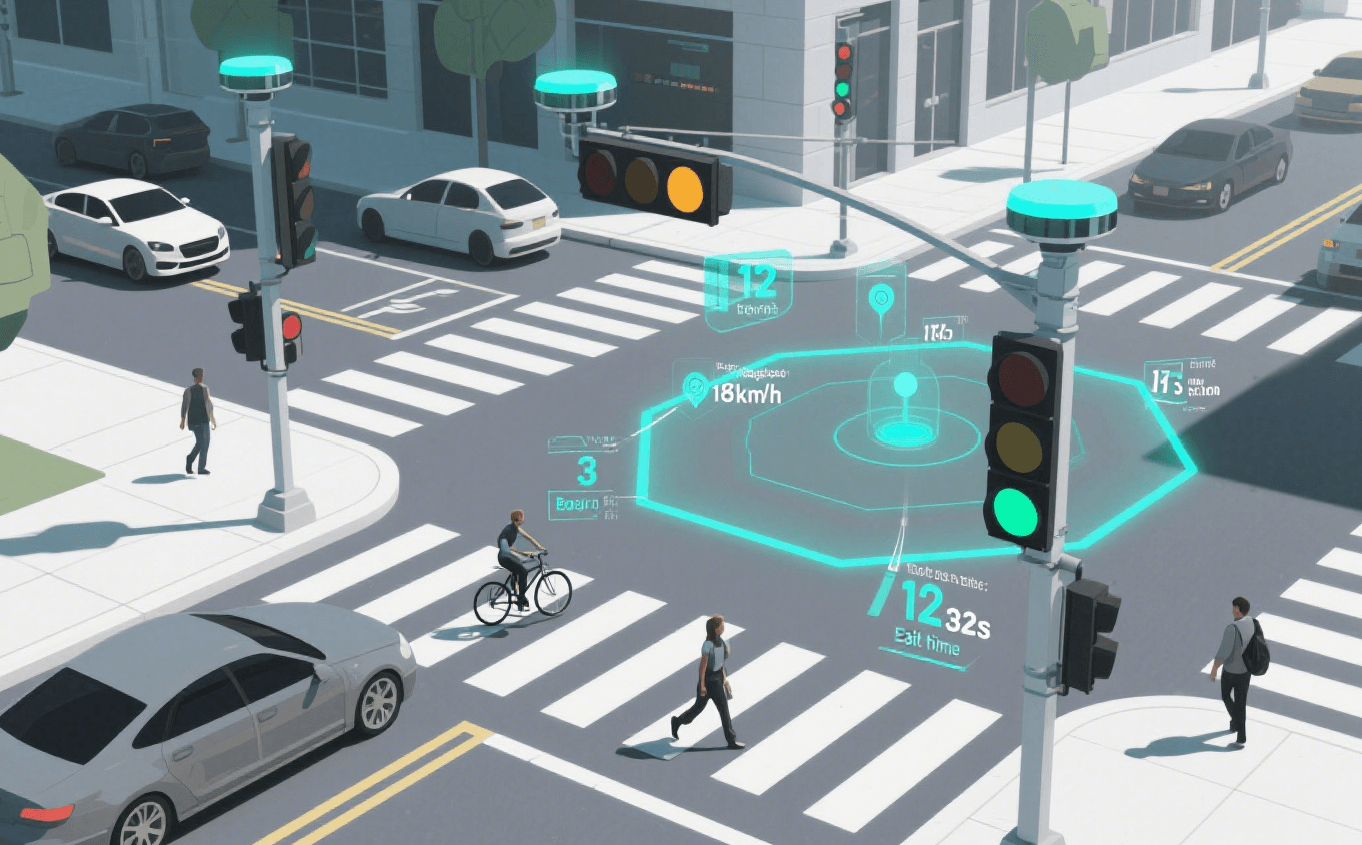
Traffic intersections are hotspots for accidents and congestion. mmWave radar enables real-time monitoring of vehicle and pedestrian movements, supporting adaptive traffic light systems that reduce waiting times and prevent collisions. By tracking speed and direction, radar can anticipate risky scenarios before they occur.
2. Vehicle-to-Infrastructure (V2I) Communication
mmWave radar enhances V2X (Vehicle-to-Everything) communication by acting as a reliable perception layer. Radar modules detect vehicles, cyclists, and pedestrians, feeding data into V2I networks. This helps enable features such as collision warnings, emergency vehicle prioritization, and coordinated traffic flows.
3. Highway Traffic Flow Management
Congested highways reduce economic productivity and increase emissions. With Linpowave’s radars, traffic authorities can monitor vehicle density and flow patterns in real time. Data from radar sensors can be integrated into control centers to dynamically adjust speed limits, open or close lanes, and manage tolling systems.
4. Parking and Tolling Systems
Accurate detection of vehicles at entry points or toll stations is another critical ITS function. mmWave radar ensures precise monitoring of lane use, eliminating errors caused by camera blind spots or environmental interference.
Technical Advantages of Linpowave Radars
Linpowave’s radars, such as the V200 and V300 series, are optimized for both short-range and long-range ITS applications. They feature:
-
Modular, compact designs: Easy integration into roadside infrastructure.
-
High refresh rate: Enables real-time decision-making.
-
SDK support: Developers can integrate radar data into custom ITS platforms.
-
Low power consumption: Suitable for distributed sensor networks across cities.
These features allow ITS operators to deploy scalable networks of radar sensors for continuous monitoring.
Case Example: Narrow Lane Monitoring
One of the specific demands in ITS is single-lane vehicle detection, particularly in urban environments or toll gates. Linpowave’s V200 radar is designed to measure traffic speed in lanes as narrow as 20–30 meters without interference from adjacent lanes, addressing a critical requirement for precision traffic enforcement and monitoring.
Looking Ahead: The Role of Radar in Smart Cities
As smart cities continue to evolve, integrating radar into transportation infrastructure will be essential. Beyond monitoring, radar data can fuel AI-driven predictive analytics, supporting urban planners in designing safer and more efficient traffic systems.
Linpowave is not just providing radar hardware—it is enabling a complete ecosystem where sensing, processing, and communication converge to make transportation smarter, safer, and more sustainable.
Conclusion
Intelligent Transportation Systems require sensing technologies that are reliable, precise, and future-ready. mmWave radar stands out as a cornerstone of this transformation. With its high accuracy, weather resilience, and adaptability, Linpowave’s radar solutions empower cities to tackle congestion, improve safety, and pave the way for the next generation of connected mobility.