






Why perception-aware control is getting more attention
Perception-aware control is moving from research circles into practical engineering discussions because too many machines still make decisions as if the environment were static. In the real world, vehicles, robots, drones, and industrial platforms deal with changing obstacles, noisy sensor data, partial occlusion, dust, glare, vibration, and imperfect maps. A control system that ignores what the sensors are actually seeing can look elegant on paper and still behave poorly on the floor, in the yard, or on the road.
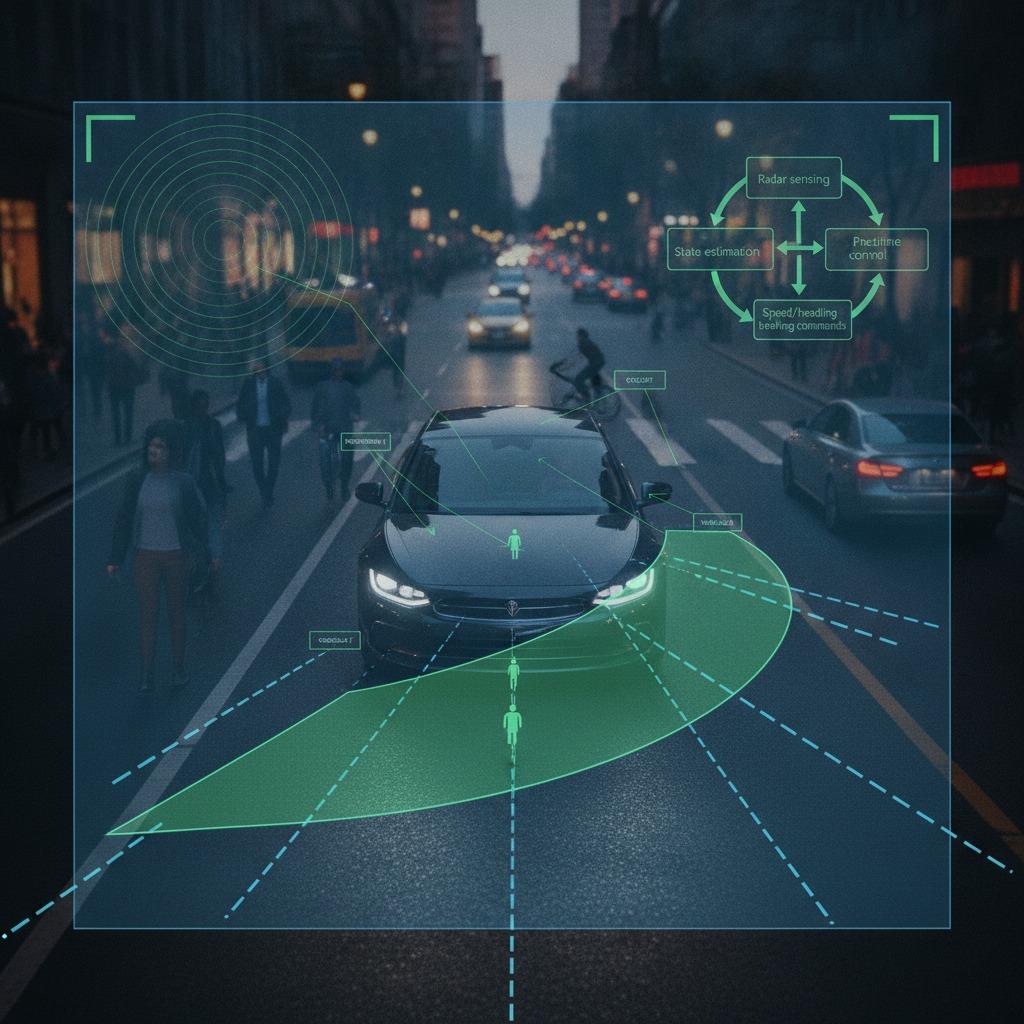
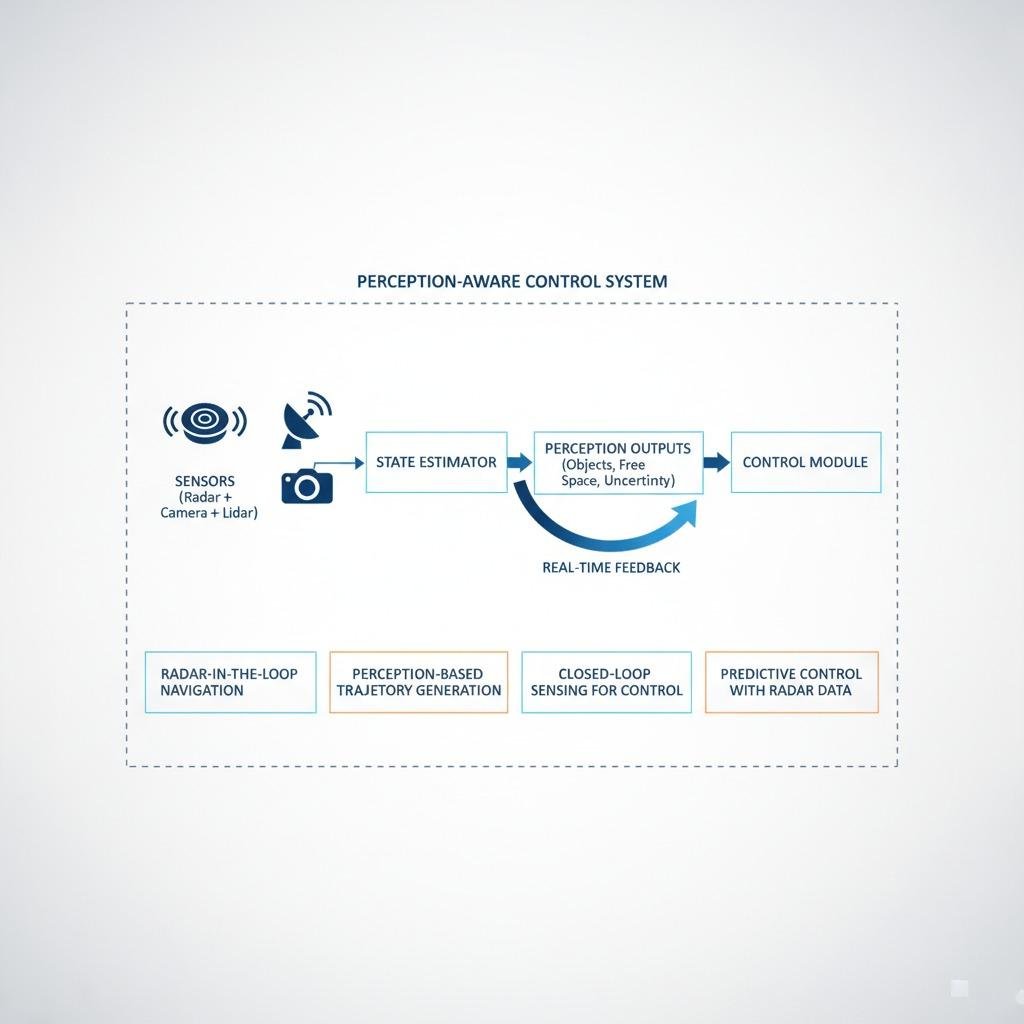
For engineers and sourcing teams, the issue is not whether a platform can move. It is whether it can move safely, consistently, and with enough adaptability to handle the conditions that matter. That is where the idea behind perception-aware control becomes useful: feedback from perception is not treated as a side input, but as part of the control logic itself. The controller does not simply chase a preplanned path; it responds to what the sensing stack is telling it right now.
What the approach is trying to solve
Traditional motion control often assumes the world is known well enough in advance. That can work in structured environments, but it becomes fragile when obstacles shift, sensor confidence drops, or the route itself must be adjusted on the fly. In practice, this creates a familiar set of failures: jerky motion, conservative slowdowns, unnecessary stops, or worse, late reactions to hazards.
Perception-aware control addresses that gap by tying sensing and actuation more tightly together. Instead of perception feeding only a high-level planner, perception can influence speed, heading, braking, collision avoidance, and path updates continuously. The practical value is not just safer motion. It is also smoother behavior, better use of available space, and fewer manual interventions from operators.
How it differs from a conventional control stack
A simple way to think about the difference is this: a conventional system plans first and controls second, while a perception-aware system keeps revisiting the plan as sensor data changes. That does not mean every motion must be recomputed from scratch. It usually means the system uses feedback loops and local adaptation to keep the machine aligned with reality.
Common building blocks
Depending on the application, the stack may include radar, cameras, lidar, or fused sensor inputs; state estimation; path planning; and a control layer that can react to sensor updates in real time. Radar is especially relevant in harsh environments because it can be more tolerant of dust, fog, low light, or certain kinds of visual clutter than purely optical sensing. That is one reason Radar-in-the-loop navigation has become a topic of interest in autonomous and semi-autonomous systems.
Perception-based trajectory generation takes that further by shaping the route itself around detected objects, free space, and uncertainty. It is not just about avoiding collisions. It is about generating motion that is plausible for the machine, acceptable for the process, and stable enough to execute without oscillation or overcorrection.
Where radar data changes the design equation
Radar is not a magic fix, and anyone who has worked with industrial sensing knows that. It has its own tradeoffs in resolution, interpretation, and target separation. Still, when engineers need reliable data in conditions where optical sensing can struggle, radar deserves a serious look. Predictive control with radar data can help systems anticipate closing distances, identify moving objects earlier, and adjust motion before a hard stop becomes necessary.
That predictive element matters. A control loop that only reacts after an object is already too close tends to produce abrupt behavior. A loop that uses radar-informed prediction can moderate speed earlier and preserve more operating room. For AGVs, mobile robots, and certain autonomous platforms, that can translate into better throughput and fewer nuisance interruptions.
Selection criteria that actually matter
Buyers and engineers should look beyond broad claims of “autonomy” and ask how the system behaves under uncertainty. The important questions are often practical:
Does the control scheme degrade gracefully when perception confidence drops? Can it handle dynamic obstacles, not just static ones? How quickly does it update the trajectory? What happens when sensor fusion disagrees? Can the system remain stable if one sensor becomes less reliable for a period of time? These are the questions that separate a promising demo from something you can build into a production workflow.
Another useful check is integration burden. Closed-loop sensing for control sounds straightforward, but the implementation can become complicated if the control stack and perception stack were designed by different teams with different assumptions. Interface definition, timing, and validation planning often matter as much as the underlying algorithm. That is a detail people sometimes underbudget, then regret later.
Common mistakes when evaluating these systems
One common mistake is assuming more sensor data automatically means better control. It does not. Too much unfiltered input can create latency or unstable responses. Another is focusing on nominal-path performance while ignoring edge cases such as reflective surfaces, occlusion, or poor weather. A third is selecting a solution that looks sophisticated but is too difficult to maintain in an industrial setting.
Engineers should also be cautious about overspecifying the perfect scenario. A system that performs beautifully in a clean lab may still need robust fallback logic in a warehouse, field machine, or mixed-traffic environment. In other words, the control strategy should be designed for the environment you actually run, not the one in the slide deck.
Practical takeaway for sourcing and product teams
If you are comparing platforms or building one internally, the question is not whether perception-aware control is fashionable. The question is whether it reduces operational risk and improves motion quality in your actual use case. If the answer depends on dynamic obstacles, uncertain sensing, or variable conditions, then this approach is worth serious evaluation.
For product teams, the next step is usually to map the sensing environment, define the failure modes, and decide how much real-time adaptation the platform needs. For sourcing managers, it means pressing suppliers on how their control architecture handles degraded perception, not just how fast it moves under ideal conditions.
If you are reviewing autonomous motion technology, start by asking for the control logic around sensor uncertainty, the role of radar or other perception inputs, and the strategy for trajectory updates. That is where the real difference between a brochure feature and a dependable machine usually shows up.