






Why platform flexibility matters in sensing hardware
A platform-agnostic sensing interface solves a problem that shows up again and again in defense, industrial inspection, autonomy, and environmental monitoring: the sensor you want is rarely the sensor your platform was originally built to carry. A radar may be ready for field use, but the aircraft, ground vehicle, mast, or marine asset still needs mechanical, electrical, and thermal compatibility. That mismatch slows programs, adds custom engineering, and can turn a straightforward upgrade into a long integration cycle.
For engineers and sourcing teams, the real decision is not just which radar to buy, but how to mount, isolate, power, and configure it so the same sensing package can move across platforms without a full redesign. That is where interface strategy matters as much as sensor performance.
What a platform-agnostic sensing interface is trying to solve
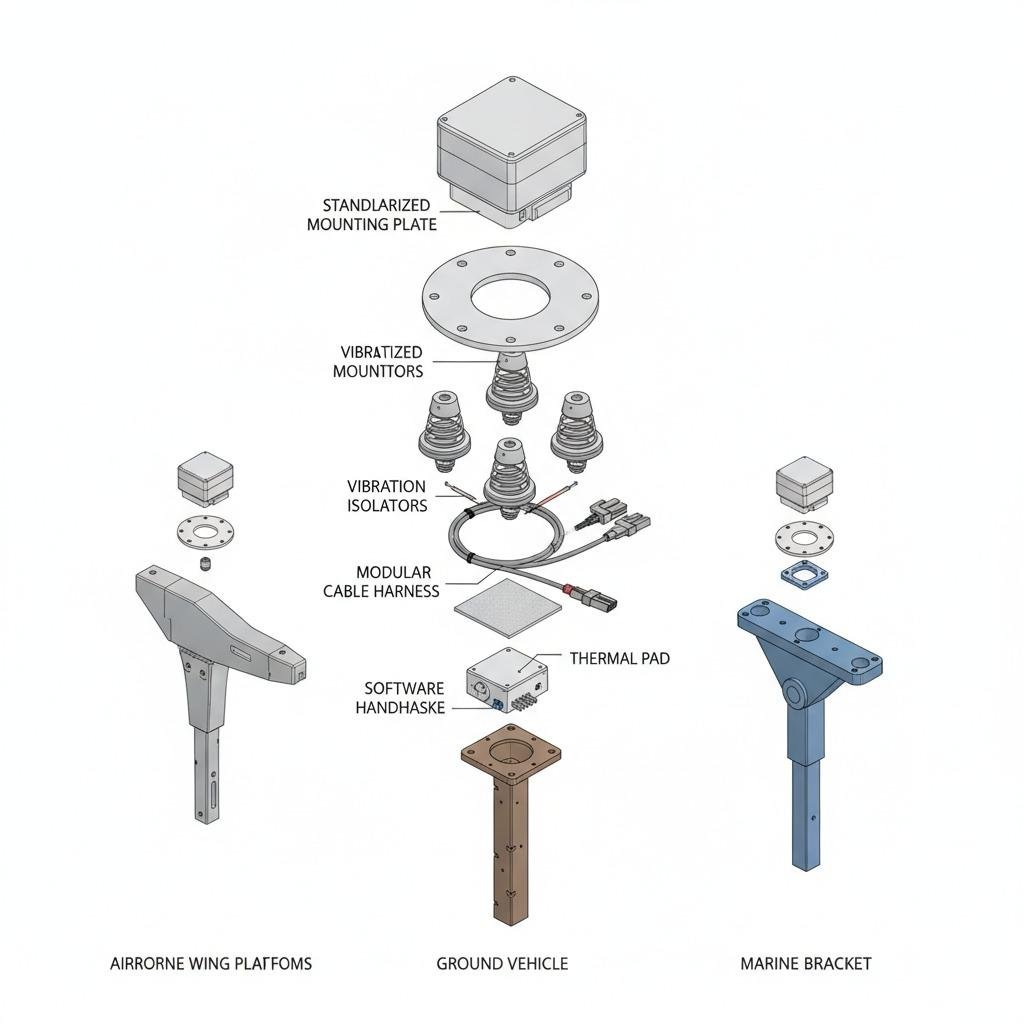
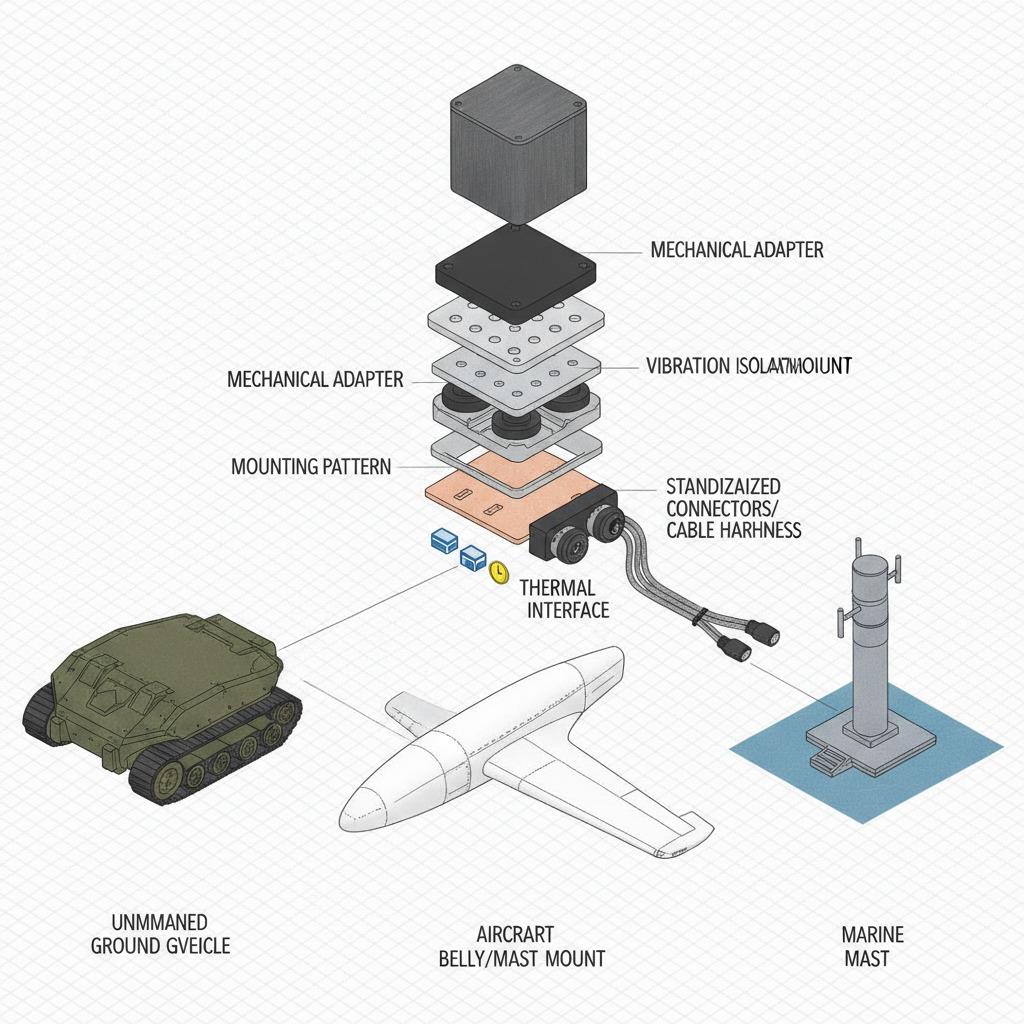
At a practical level, the interface is the layer between the sensor and the host platform. It may include the mounting pattern, structural adapter, cable routing, connector scheme, thermal path, software handshake, and any motion-control elements needed to keep the radar pointed correctly. When that layer is designed around a single vehicle or airframe, reuse becomes awkward. When it is designed to be adaptable, the same sensing module can be moved with far less requalification.
This is especially relevant for teams working with a payload-swappable radar module. The module may perform well on paper, but it still has to survive vibration, meet airflow constraints, and fit within the platform’s center-of-gravity limits. If those details are ignored, the program pays for them later in the form of noise, shortened component life, or poor data quality.
Key design considerations buyers should not treat as afterthoughts
Mechanical fit is only the starting point
Mounting holes and envelope dimensions matter, but they are not the whole story. A radar can be “compatible” in the catalog sense and still be a poor fit once the platform starts shaking, flexing, or changing attitude. That is why vibration isolation for radar is often a central design requirement, not an optional accessory. The interface needs to reduce harmful loads without introducing so much compliance that the sensor loses pointing stability.
Airflow and drag can change the whole integration picture
For airborne and fast-moving platforms, aerodynamic integration is not just about streamlining a bracket. It can affect heating, radar exposure, structural loads, and even maintenance access. A bulky adapter may be easy to machine, but it can create drag or turbulence that a program cannot afford. Buyers should ask early whether the proposed interface preserves the host platform’s aerodynamic assumptions, especially when the sensor is external or semi-external.
Motion control adds capability, but also complexity
Gimbaled radar mounting is useful when the platform cannot provide stable line-of-sight on its own, or when the radar must scan a wider sector without repositioning the whole vehicle. The tradeoff is obvious to anyone who has serviced this equipment: more moving parts, more wiring considerations, more validation. Gimbals can improve coverage, but they also create new failure modes that procurement teams should understand before committing to one architecture.
Common integration mistakes
The biggest mistake is treating the interface as a late-stage bracket design. By then, the sensor’s mass properties, cable bend radius, cooling needs, and service access have already been fixed, and the team is forced into compromises. Another frequent problem is assuming one host platform’s vibration profile predicts another’s. It usually does not.
Teams also underestimate maintenance. A clever adapter that takes an hour to remove in the lab can become a nuisance in the field if technicians need special tools or cannot reach the fasteners. A platform-agnostic design should make redeployment easier, not merely possible.
How to evaluate a sensing interface before buying
Start with the mission envelope, not the brochure. Ask where the sensor will operate, how often it will move between platforms, and whether the hardware will be exposed to weather, dust, salt, or high vibration. Then check whether the interface supports repeatable installation. Repeatability matters because a sensor that shifts a few millimeters after every swap is no longer truly interchangeable.
It also helps to separate three questions: Can the sensor physically mount? Can it operate without performance loss? Can it be maintained and redeployed at acceptable labor cost? If any one of those answers is weak, the system is not as platform-agnostic as it first appears.
What good looks like in practice
A strong interface usually keeps the sensor module itself relatively stable while allowing the adapter layer to change across platforms. That may mean standardized mounting geometry, modular cable sets, and documented electrical and software interfaces. In some applications, it may also mean using a gimbaled radar mounting option for one platform and a fixed mount for another, while keeping the core sensing package common.
The best programs do not chase universal compatibility for its own sake. They define a manageable family of platforms and build enough commonality to reduce redesign, spare parts complexity, and field support burden. That is a more realistic target, and frankly a more honest one.
Practical buyer questions to ask suppliers
Ask what parts of the system are truly standardized and what parts are platform-specific. Ask how vibration isolation for radar is handled, and whether the same architecture has been used on platforms with different load profiles. Ask what changes when the sensor is moved from a fixed installation to a payload-swappable radar module setup. If aerodynamic integration is relevant, request a conversation early rather than after the mount is nearly frozen.
Suppliers that can answer these questions clearly usually understand integration in the real world, not just at the drawing level.
Next step for engineering and sourcing teams
If you are comparing radar or sensing packages for multiple platforms, build the interface requirements alongside the sensor requirements. That simple shift often shortens procurement cycles and avoids expensive retrofits later. The module may be the headline item, but the interface is what decides whether the system can actually travel from one platform to the next without drama.