





Why predictive control with radar data is getting more attention
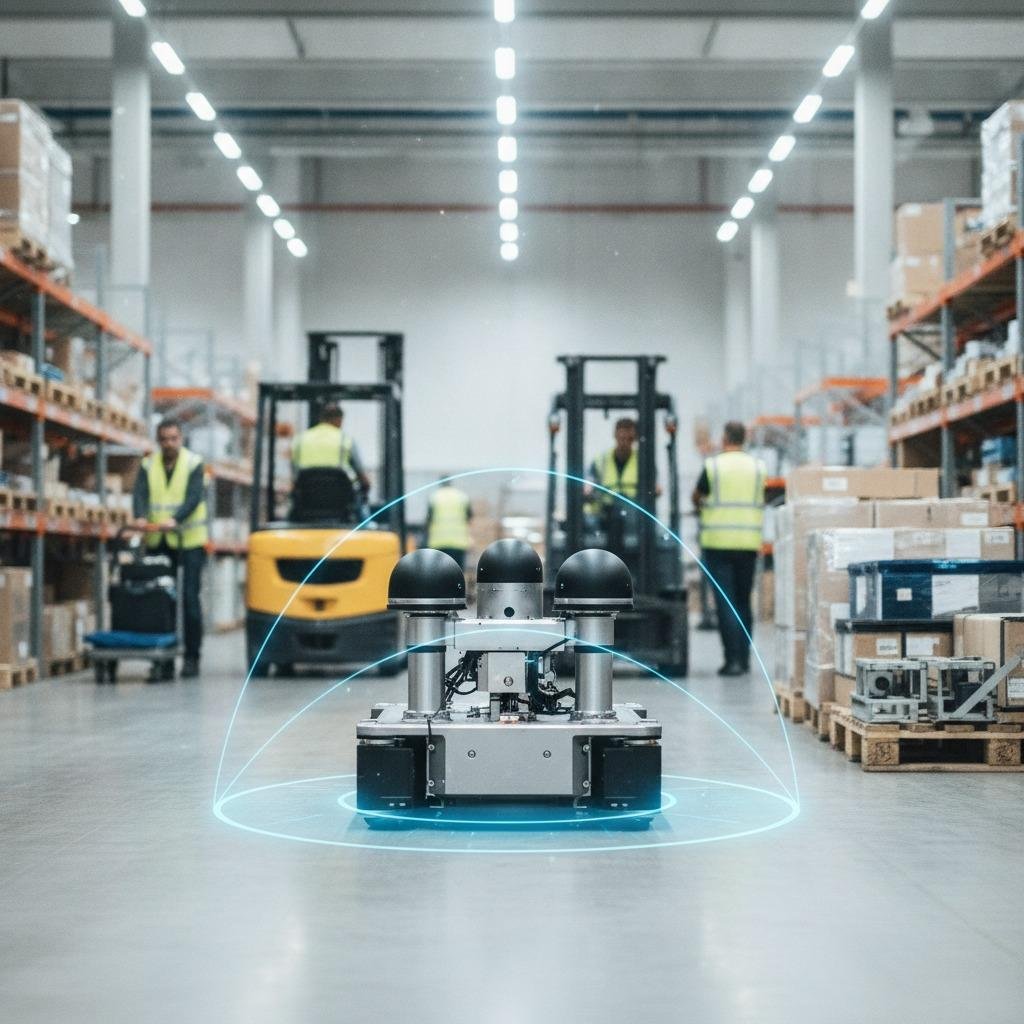
Predictive control with radar data is becoming harder to ignore in factories, warehouses, ports, and other environments where robots and vehicles have to keep moving even when the scene is messy. Cameras can struggle with glare or dust, lidar can lose confidence in rain or fog, and both can be blocked by people, pallets, or machine frames. Radar has its own limitations, but it brings something practical to the table: it can keep sensing when the environment is not ideal, which makes it useful for control loops that need to make decisions before a collision, drift, or missed path becomes expensive.
For engineers and sourcing teams, the real question is not whether radar is “better” in a universal sense. It is whether radar can support the kind of control behavior you need: stable motion, safe obstacle response, and enough prediction to keep throughput high without turning the system into a cautious, stop-and-go machine.
What this approach actually changes
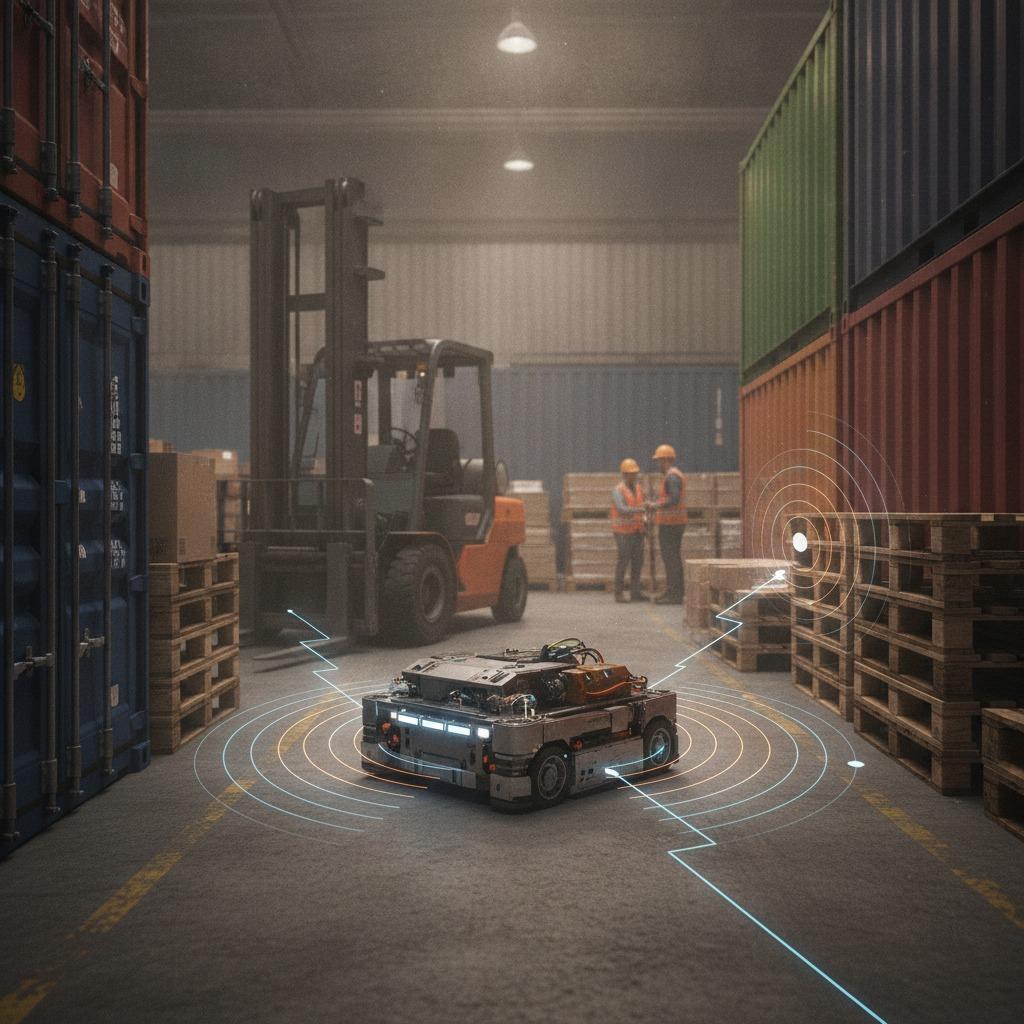
Traditional robot control often treats perception as a separate upstream task. The sensor detects an object, the planner reacts, and the controller executes. That separation works well in clean, structured conditions. In less predictable settings, though, the gap between sensing and action can be too wide. By feeding radar observations directly into the control logic, the system can adjust speed, heading, or braking based on what it is sensing right now, not just on a map or a delayed detection.
This is where closed-loop sensing for control matters. The sensor is not just watching; it is continuously informing the motion decision. In practice, that can improve stability around moving obstacles, improve stopping behavior in low-visibility zones, and reduce the awkward lag that often shows up when a robot sees danger a little too late.
Where radar has an edge, and where it does not
What radar handles well
Radar is strong in conditions that challenge optical systems. It can be valuable in dusty industrial spaces, outdoor yards, loading areas, and mixed indoor-outdoor routes. It also offers direct sensing of motion, which can help the controller reason about relative speed instead of relying only on geometry.
That makes it useful for radar-in-the-loop navigation in vehicles and mobile robots that must keep moving through cluttered, changing spaces. For example, an autonomous tug moving through a dock area may need to account for trucks, forklifts, and pedestrians that do not behave like fixed map features.
What radar does not solve by itself
Radar data is not a magic answer. It can be noisy, can produce ambiguous reflections, and may not give the crisp shape detail an engineer would like for fine manipulation or tight docking. It usually needs careful filtering, fusion, and tuning before it becomes reliable enough for motion control. If a buyer expects radar to replace every other sensor, disappointment follows quickly.
That is why perception-aware control is a better mental model than “radar replaces the planner.” The best implementations still use the planner, but they let perception shape the trajectory more directly and more often.
A practical view of the control pipeline
A workable system usually has four steps: detect, estimate, predict, and act. Radar contributes data at the detection and estimation stages, often with velocity information that helps the system infer future positions. The controller then uses that information to adjust the next motion command.
This is where perception-based trajectory generation comes in. Instead of generating a path once and hoping the world stays still, the system revises the path as radar updates arrive. That matters most when the scene is dynamic: moving people, crossing vehicles, changing aisle conditions, or temporary obstructions.
For a sourcing manager, the key issue is not how elegant the algorithm sounds. It is whether the sensor package, compute load, and software stack can be maintained on the actual machine. A brilliant demo can be useless if it needs constant retuning after a forklift route changes.
Selection criteria that matter in the real world
When evaluating solutions that use radar data for control, buyers should look beyond raw range numbers. Several factors are more relevant to deployment success:
First, consider the operating environment. A clean indoor aisle is very different from a wet loading bay. Second, look at update rate and latency. Predictive control is only helpful if the sensor-to-actuator loop stays responsive enough to matter. Third, examine how the radar data is fused with other sensors, because many systems work best when radar complements camera or lidar rather than replacing them.
Fourth, ask how the system behaves under uncertainty. Does it slow down gracefully, stop abruptly, or keep a usable margin while maintaining productivity? That last point is often overlooked. A system that becomes overly conservative may be technically safe but commercially frustrating.
Common mistakes buyers and integrators make
One common mistake is treating radar as a late-stage add-on. If the mechanical layout, mounting positions, or compute architecture were designed around a different sensor, radar may never perform well enough to justify the spend. Another mistake is ignoring calibration and synchronization. Even a modest timing offset can weaken the value of radar for control.
A more subtle problem is overfitting the system to a single route or test lane. Radar-based control often performs well in controlled trials, then loses confidence when aisle widths change, reflective surfaces appear, or traffic patterns shift. In other words, the system may be “technically working” while still being operationally fragile.
There is also a tendency to ask for more autonomy than the data supports. If the radar setup is mainly good at detecting relative motion, it may be better suited for speed adaptation and collision avoidance than for precise docking at very close range. That distinction matters when the machine is expected to do both.
How to evaluate a supplier or solution provider
When you talk to suppliers, ask for evidence of integration quality, not just sensor specs. You want to know how the radar data is filtered, how the controller handles false positives, and whether the system can be tuned for your aisle geometry, traffic density, and stopping distance requirements.
It helps to ask for scenarios rather than slogans. How does the system behave when a person steps out from behind a stack? What happens when the floor is wet? How much revalidation is needed after a layout change? These are the questions that separate a promising lab setup from a production-ready platform.
If the application requires speed and flexibility, look for solutions that support iterative tuning. If it is safety-critical, verify how radar contributes to the overall safety strategy rather than assuming it is a safety device by itself. That caveat is worth repeating because radar can improve awareness without automatically satisfying every safety requirement.
FAQ: short answers for busy teams
Is radar enough on its own?
Usually not. It is often strongest as part of a fused sensing stack.
Where does it fit best?
Dynamic environments with poor visibility, moving traffic, or changing conditions.
What is the main advantage for control?
It can provide motion-aware updates quickly enough to adjust trajectories before a problem grows.
What should I watch for first?
Latency, false alarms, calibration burden, and how the system behaves when the scene gets messy.
A practical next step
If you are comparing automation options, start by mapping the actual operating environment rather than the ideal one. Then test whether predictive control with radar data can improve stability, response time, and continuity of motion without making the system overly cautious. For many teams, that means focusing on closed-loop sensing for control and perception-based trajectory generation as part of a broader navigation strategy, not as isolated features on a datasheet.
The best decision is usually the one that fits your route, your traffic, and your tolerance for rework. If radar can give the controller earlier, more useful motion cues in your environment, it may be worth the integration effort. If not, a simpler sensing stack may be the smarter buy.