






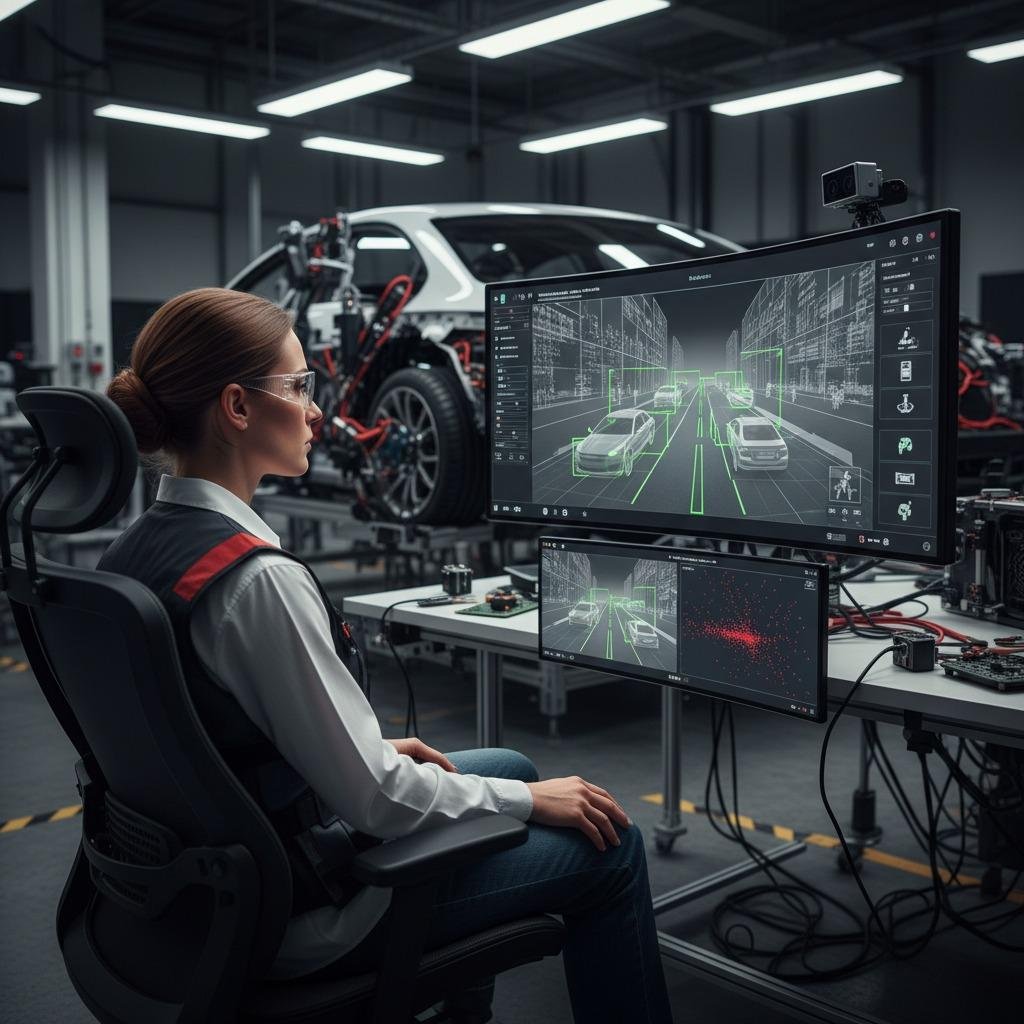
Why radar-camera fusion keeps showing up in serious sensor discussions
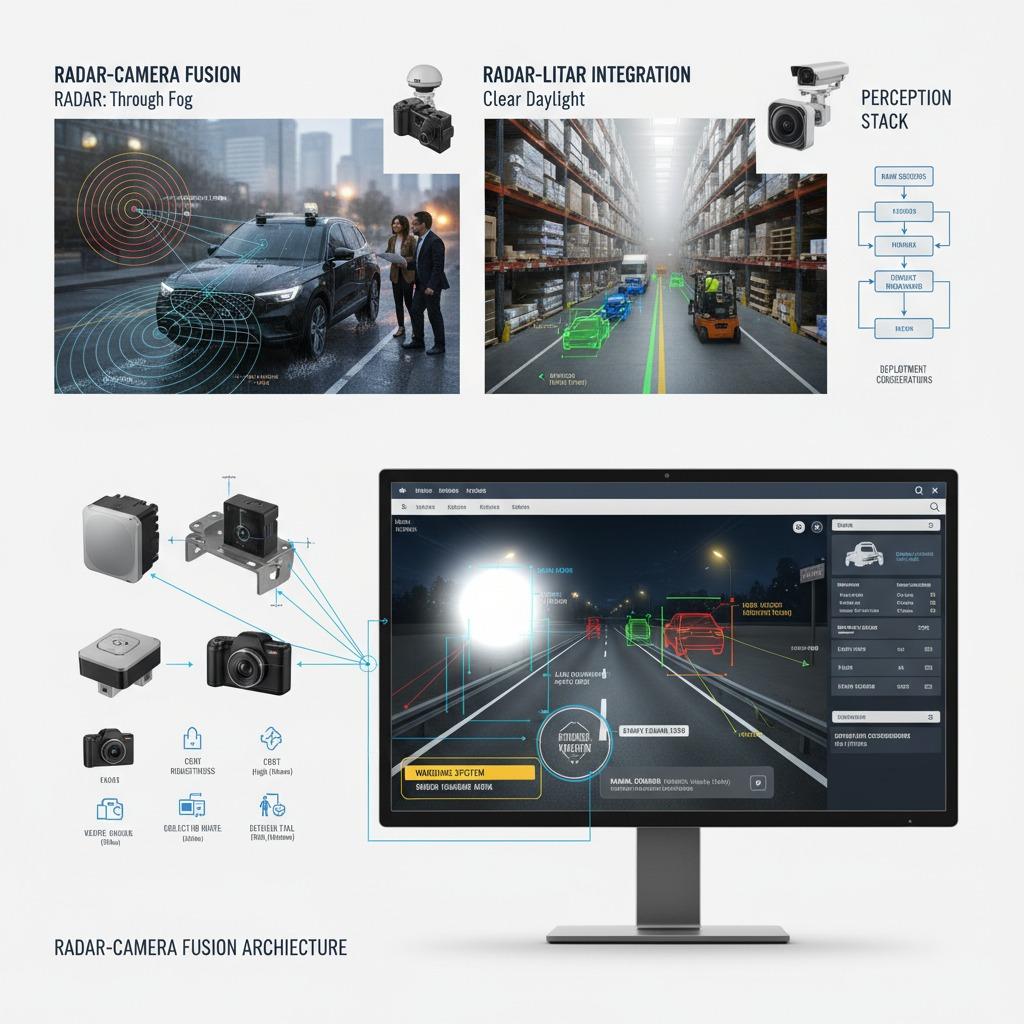
Radar-camera fusion is no longer a niche phrase reserved for advanced driver assistance teams and robotics labs. It sits at the center of a practical engineering problem: how do you build a perception system that keeps working when lighting changes, surfaces get reflective, weather turns messy, or a single sensor simply misses something important? For engineers and sourcing managers, that question is less academic than it sounds. It affects safety margins, system cost, integration effort, and how much confidence a product team can place in its perception stack.
The appeal is straightforward. Cameras are strong at visual classification and context. Radar contributes distance, relative speed, and robustness in difficult visibility. Used together, they can cover each other’s weak spots. That is the promise. The harder part is deciding what kind of fusion architecture fits the application, what level of complexity is justified, and where the integration risks hide.
What problem the fusion approach is meant to solve
A camera alone can struggle with glare, darkness, fog, or low-contrast targets. Radar alone can be less descriptive when the system needs object shape, lane context, or fine classification. Put them together and the system can compare one sensor’s uncertainty against another’s. That is why radar-camera fusion has become a default consideration in automotive sensing, industrial automation, security monitoring, and mobile robotics.
The practical value is not just better detection. It is more stable detection. In real production environments, a system that behaves consistently is usually more useful than one that looks impressive in a clean demo. That matters to buyers because inconsistency drives field returns, extra support calls, and lengthy validation cycles.
Quick reference: what each modality contributes
Radar
Radar is valued for range and motion sensing, especially where visibility is poor. It can help track objects through dust, light rain, or glare conditions that confuse optical systems.
Camera
Cameras remain the better tool for texture, color, shape, signage, and classification. They give the system richer scene understanding, but they are more dependent on the environment.
Combined output
When fused well, the result is stronger detection confidence and more useful object context. In some designs, the two sensors also provide sensor fusion for redundancy, which is important when a single point of failure is not acceptable.
Where radar-camera fusion makes the most sense
This architecture is especially useful where the product must keep operating across varied conditions. Automotive systems are the obvious example, but the same logic applies to warehouse vehicles, perimeter monitoring, traffic sensing, and outdoor industrial equipment. In those settings, complementary sensing modality is not a marketing phrase. It is a design choice that helps the system maintain coverage when conditions change.
That said, not every application needs the full complexity of multi-sensor fusion. If the task is simple, a single well-chosen sensor may be easier to validate and cheaper to support. Buyers sometimes overlook this and assume “more sensors” automatically means better performance. It does not. It means more data, more software effort, and more integration work.
Key technical choices that shape the result
Fusion level
Some systems combine raw data early, while others merge features or final detections later in the pipeline. The earlier the fusion, the more computation and synchronization discipline it demands. The later the fusion, the easier it may be to integrate, though sometimes with less nuance.
Calibration requirements
Calibration can become a hidden cost. Mechanical drift, mounting variation, and environmental vibration all matter. For teams looking at calibration-free fusion, the attraction is obvious: less setup, fewer service steps, and potentially easier deployment. Still, “calibration-free” should be read carefully in technical documents. It may mean reduced field calibration rather than literally no alignment concerns at all.
Latency and timing
Radar and camera data rarely arrive in perfectly matched intervals. Timing mismatches can weaken association logic and reduce trust in the output. In a buyer review, this is one of the first things worth asking about. A system can look strong on paper and still underperform if the timing architecture is sloppy.
Radar-lidar integration versus radar-camera fusion
Some teams compare radar-camera fusion with radar-lidar integration when deciding on their perception stack. Lidar often brings dense spatial detail, while radar adds motion robustness. Cameras bring semantic richness. The right choice depends on the environment, budget, and required perception quality. In many cost-sensitive or weather-exposed products, a radar-camera pair is easier to justify than a heavier multi-sensor build. In higher-end systems, all three can play a role, but the complexity rises quickly.
Common mistakes buyers make
The first mistake is treating fusion as a software fix for weak hardware. If one sensor is badly placed, under-specified, or frequently obstructed, fusion will not rescue the system for long.
The second mistake is ignoring data alignment and mounting constraints. A visually elegant model can fail when the real installation introduces vibration, misalignment, or inconsistent fields of view.
The third is overestimating how much redundancy exists. True redundancy requires thoughtful architecture, not just two sensors on the same bracket.
What to ask suppliers before you commit
Ask how the system handles disagreement between sensors. Ask what assumptions are made about vehicle speed, scene complexity, or target type. Ask whether the design depends on rigid mounting, periodic calibration, or specific environmental limits. If the supplier mentions calibration-free fusion, request a plain-language explanation of what is and is not being eliminated from the deployment process.
Also ask for the failure behavior. That is often where the real product quality shows up. A mature sensing system should degrade gracefully, not collapse into uncertainty the moment one input becomes noisy.
A practical next step for engineering and sourcing teams
If you are evaluating radar-camera fusion for a new platform, start with the operating conditions rather than the sensor catalog. Define the visibility problems, the motion requirements, the cost ceiling, and the acceptable maintenance burden. From there, compare architectures by integration effort as much as by detection performance. The best system is usually the one that your team can deploy repeatedly, support reliably, and trust when the environment stops being ideal.
That is the real decision in front of most buyers: not whether fusion sounds advanced, but whether it makes the product more robust without turning the program into a calibration project.