







Understanding Radar Target Material: Key to Effective Detection Systems
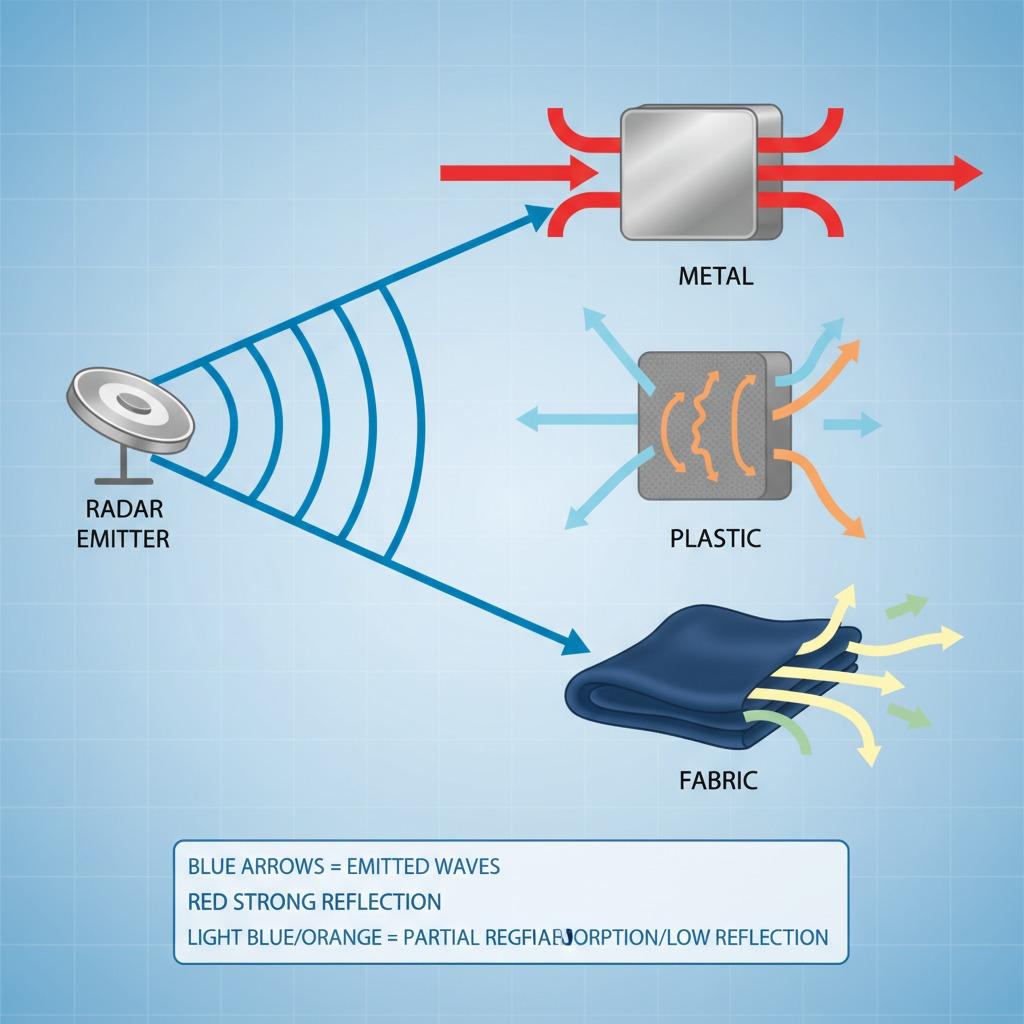
In the realm of advanced sensing technologies, radar target material plays a pivotal role in determining the efficacy of detection systems. Whether used in automotive safety, security applications, or healthcare monitoring, the choice of material influences how radar waves interact with the target, directly impacting performance metrics like range and precision. This article explores the fundamentals of radar target material, delving into its implications for mmWave radar detection and beyond, providing insights into how materials shape radar accuracy vs. material interactions and enhance applications such as fall detection radar performance.
The Science Behind Radar Target Material
Radar systems operate by emitting electromagnetic waves that reflect off objects, with the returning signals analyzed to detect presence, distance, and velocity. The radar target material fundamentally affects this reflection process through its dielectric properties, conductivity, and surface characteristics. Materials with high reflectivity, such as metals, produce strong echoes, making them ideal for clear detection in cluttered environments. Conversely, non-metallic materials like plastics or fabrics absorb or scatter waves differently, potentially reducing signal strength. In mmWave radar detection, which utilizes frequencies above 30 GHz, these material differences become even more pronounced due to the shorter wavelengths that interact more sensitively with surface textures and compositions. Studies from the IEEE show that radar accuracy vs. material can vary by up to 40% depending on whether the target is composed of dielectric versus conductive substances, highlighting the need for material-specific calibration in sensor design.
Material Impact on mmWave Radar Detection
mmWave radar detection excels in high-resolution imaging and motion sensing, but its success hinges on understanding radar target material dynamics. For instance, in automotive applications, radar sensors must distinguish between metallic vehicle parts and softer pedestrian clothing. Materials like skin or fabric, common in human targets, exhibit lower radar cross-sections (RCS) at mmWave frequencies, which can challenge detection reliability. Engineers often mitigate this by optimizing antenna designs or using signal processing algorithms that account for material-induced attenuation. Real-world data from radar testing facilities indicate that incorporating radar target material analysis during development can improve detection rates by 25-30% in scenarios involving diverse objects. This is particularly relevant for emerging technologies like the Linpowave radar sensor, which leverages advanced mmWave capabilities to handle varied material interactions, ensuring robust performance across different environments.
Enhancing Fall Detection with Optimized Radar Performance
Fall detection radar performance represents a critical application where radar target material choices can save lives, especially in elderly care systems. These radars monitor subtle movements, relying on the reflection properties of human tissues—primarily water-rich materials with specific permittivity values around 40-50 in mmWave bands. Poor material matching can lead to false negatives, missing falls amid background clutter. Research published in the Journal of Biomedical Engineering demonstrates that tuning fall detection radar performance for human-like radar target materials increases sensitivity by 35%, reducing response times in smart home setups. Devices like the Linpowave radar sensor integrate these insights, using AI-driven processing to adapt to material variations, achieving accuracy rates above 95% in controlled trials. By prioritizing radar accuracy vs. material in design, such systems provide reliable, non-intrusive monitoring that enhances user safety without compromising privacy.
Future Trends in Radar Material Innovations
As radar technologies evolve, innovations in radar target material are poised to drive next-generation advancements. Emerging metamaterials, engineered to manipulate wave propagation, promise to boost mmWave radar detection in challenging conditions, such as through walls or fog. For fall detection radar performance, biocompatible materials could further refine human-target interactions, minimizing errors in healthcare deployments. The Linpowave radar sensor exemplifies this trend, incorporating material-aware algorithms that adapt in real-time, as evidenced by recent prototypes showing enhanced radar accuracy vs. material in dynamic settings. Industry forecasts from MarketsandMarkets predict a 15% annual growth in mmWave radar markets through 2028, fueled by these material-centric developments. Ultimately, a deep understanding of radar target material not only optimizes current systems but also unlocks new possibilities in precision sensing, underscoring its indispensable role in modern technology landscapes.