






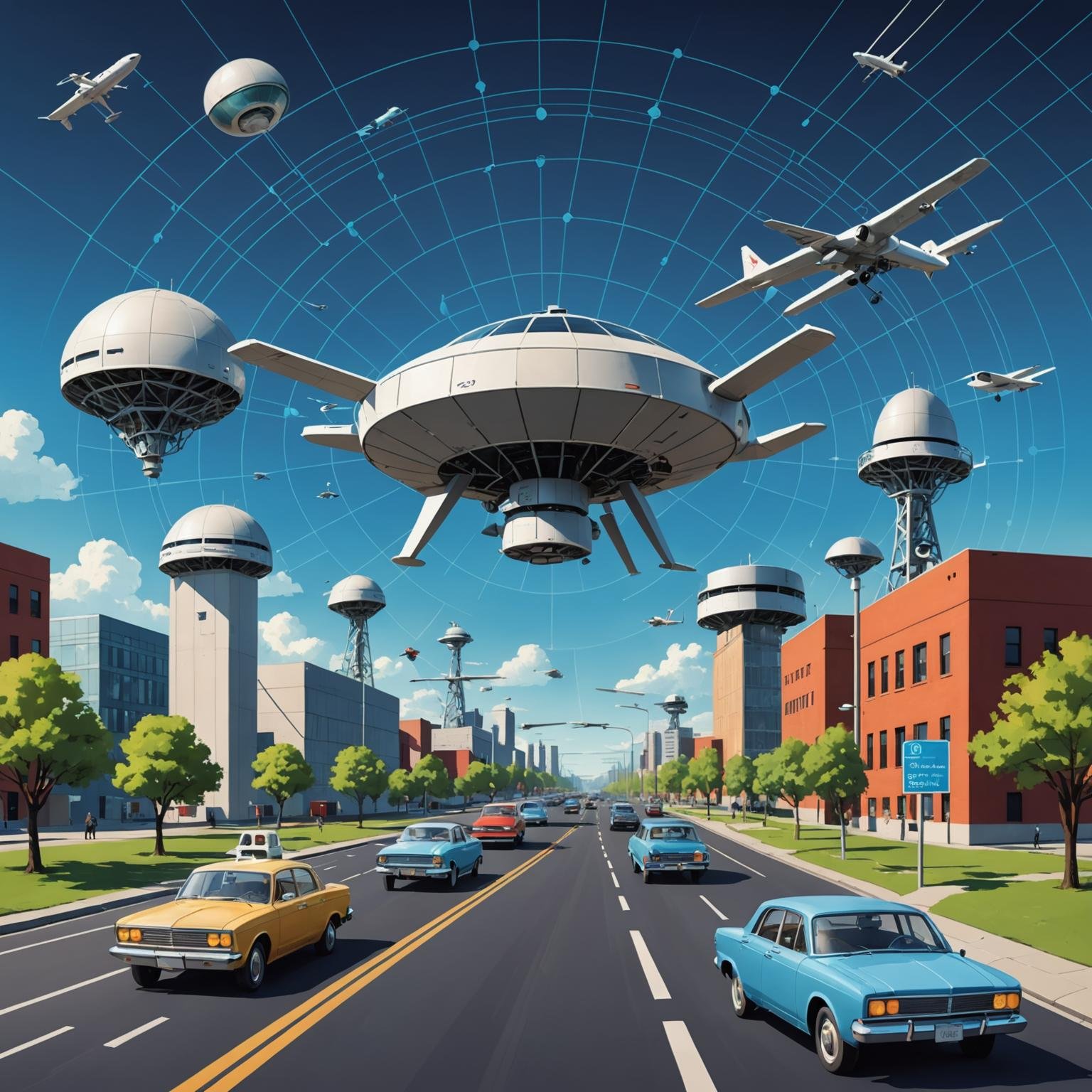
Understanding the basics of Radar
Radar, an abbreviation for radio detection and ranging, is a powerful and versatile technology that uses radio waves to determine the distance, angle, or speed of objects. While radar technology is most prominently used in air traffic control, weather monitoring, and military applications, its potential extends far beyond these traditional areas. By transmitting radio waves and analyzing the returned echoes, radar systems can vividly depict the surrounding environment, even in low-visibility conditions such as at night or in inclement weather.
Advances and applications of radar technology
Over time, radar technology has made significant progress, improving its accuracy, resolution, and range. Modern systems are sophisticated enough to detect even the smallest objects, such as drones, or to monitor subtle changes in atmospheric conditions for weather forecasting. In the automotive industry, radar is integrated into collision avoidance systems and adaptive cruise control, greatly enhancing vehicle safety. Furthermore, radar is crucial in maritime navigation, helping ships avoid collisions even in congested or foggy waters.
In law enforcement, radar guns have proven invaluable for speed limit enforcement and ensuring road safety. Wildlife conservation efforts also use radar to track animal activity and study behavior without invasive methods.
The Future of Radar Systems
Looking ahead, radar technology is expected to play a central role in the development of autonomous vehicles. As these vehicles become more common, radar systems will be crucial for navigating complex environments, ensuring pedestrian safety, and managing efficient traffic flow. In space exploration, radar helps map planetary surfaces and monitor space debris, contributing to our understanding of the universe.
Radar technology also shows promise in the medical field, offering non-invasive imaging techniques that could revolutionize health diagnosis. By differentiating between different tissues, radar-based imaging can provide real-time insights during surgical procedures.
In conclusion, radar is a dynamic and valuable tool across numerous fields. With technological advancements, the potential applications of radar systems continue to expand, promising to drive innovation and enhance security, efficiency, and detection capabilities in various sectors.