






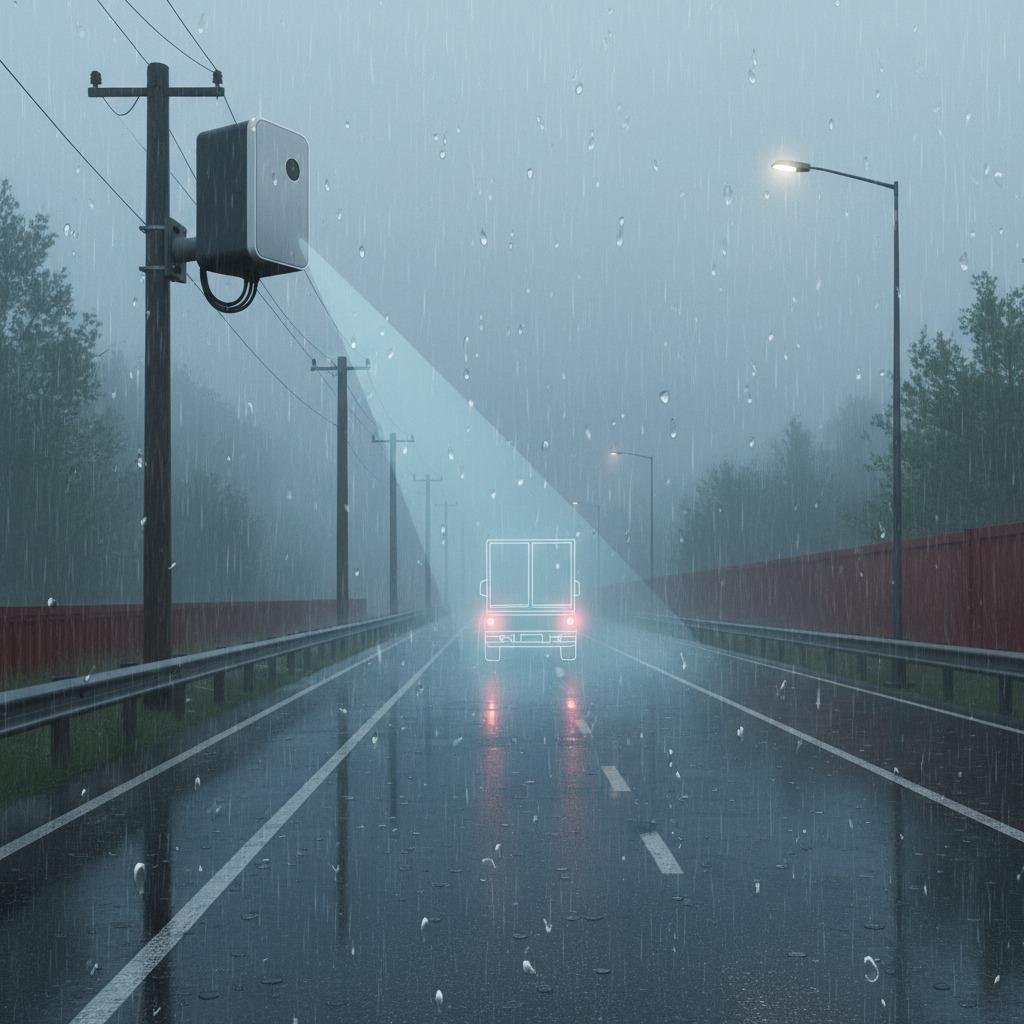
Why rain and fog robustness is no longer a niche requirement
Rain and fog robustness has become a practical buying criterion for radar, sensing, and detection systems that are expected to work outside the lab and outside fair weather. Engineers and sourcing teams are no longer asking only whether a sensor performs well in clear air; they want to know whether it still sees the target when the scene is wet, hazy, reflective, or partially blocked. That matters in automotive, industrial safety, perimeter monitoring, ports, smart infrastructure, and any application where false alarms and missed detections carry real costs.
The challenge is simple to describe and hard to solve: moisture in the air, water on surfaces, and dense atmospheric conditions can weaken returns, distort echoes, and create confusing background signals. A system that looks excellent on a specification sheet may struggle once the environment starts working against it. Buyers therefore need to judge not just sensitivity, but the full chain of signal processing, antenna behavior, and deployment assumptions behind the numbers.
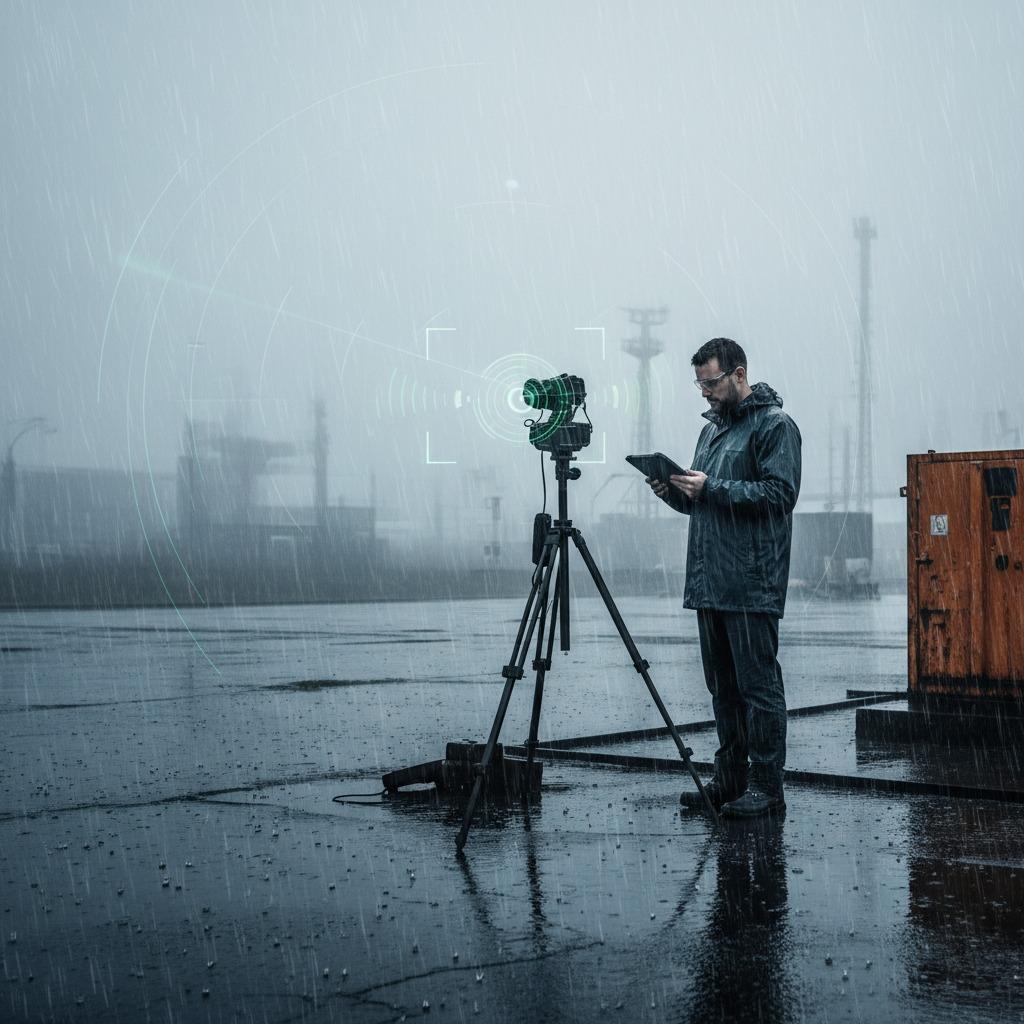
What weather actually does to sensing performance
Rain and fog do not break every sensing technology in the same way, but they tend to create a familiar mix of problems. Attenuation reduces signal strength. Scattering adds noise-like returns. Wet surfaces can produce reflections that look more important than they are. In dense scenes, the result is often a lower-confidence detection picture, especially at longer ranges or when the target is small.
For buyers, the important point is that this is not only a range issue. Weather can also affect track stability, target classification, and the ability to separate real objects from background clutter. A system may still detect a large vehicle, for example, while struggling with smaller obstacles, edges, or partially obscured targets. That is why low SNR target detection is often discussed alongside weather resilience; once the return weakens, the signal chain has less margin to work with.
Quick reference: what to look for in a weather-tolerant system
There is no single feature that guarantees performance, but the best systems usually combine robust hardware with software designed for messy environments. In practice, that means looking for stable operation across a wide set of conditions rather than an impressive result under one ideal scenario.
Key capabilities that matter in the field
Multipath mitigation can help when reflections bounce off wet ground, metal structures, or nearby vehicles and create misleading echoes. Ground clutter filtering is equally important in outdoor scenes where the environment itself becomes a source of false returns. And in tightly constrained spaces, non-line-of-sight (NLOS) sensing may be useful when direct visibility is blocked by corners, machinery, or temporary obstacles.
These capabilities do not replace good placement or intelligent system design. They reduce the penalty for imperfect conditions. That distinction matters, because too many product selections assume software can rescue a poorly chosen installation. Usually it cannot.
Hardware and processing both carry the load
A weather-resilient design typically depends on more than one layer of defense. On the hardware side, antenna pattern stability, receiver sensitivity, and careful front-end design all influence how much usable information reaches the processor. On the software side, filtering, tracking logic, adaptive thresholding, and clutter suppression determine whether the sensor can turn a weak return into a reliable decision.
Engineers should be cautious about comparing only headline detection distance. A longer nominal range is not always the better choice if the sensor becomes erratic as soon as the weather turns. In many real projects, a slightly shorter but steadier sensing envelope is the better commercial and operational decision.
How buyers should evaluate rain and fog robustness
Start by asking what “good enough” means in the actual application. A warehouse doorway, a roadside unit, and a port crane do not share the same risk profile. Then check whether the vendor’s performance claims are tied to realistic environmental conditions, not just clean-air demonstrations. If the documentation is thin, ask how the system behaves under precipitation, mist, or wet-surface reflections, and whether the detection logic can be tuned for the site.
It is also worth asking how the system behaves in mixed conditions. Real sites rarely offer one problem at a time. Rain often comes with spray, vibration, moving machinery, or reflective surfaces. Fog may coincide with low contrast and slow-moving obstacles. A useful system should remain intelligible when several of these factors overlap.
Common mistakes that cause disappointment later
One common mistake is assuming that a lab-range figure will translate directly into field performance. Another is ignoring installation geometry. Even a capable sensor can underperform if mounted at a poor angle, placed too low, or aimed through a zone full of reflections. A third mistake is underestimating the role of software updates and configuration. If the product offers little visibility into filtering or detection logic, the buyer may have less room to adapt when the site changes.
There is also a procurement habit that deserves a warning: comparing only the sensor and not the full system. Weather robustness is often a system property. Mounting, shielding, processing, and downstream logic all shape the result.
Practical buyer advice before you commit
For sourcing managers, the best request is usually a structured one: ask for evidence that the product has been evaluated in conditions close to yours, ask which failure modes are most likely, and ask what tuning options are available after installation. For product teams, the key question is whether the sensor can support graceful degradation rather than sudden failure. In safety or autonomy-related use cases, that distinction is more important than raw sensitivity alone.
If your application depends on low SNR target detection, multipath mitigation, ground clutter filtering, or non-line-of-sight (NLOS) sensing, make those requirements explicit during vendor review. They are not interchangeable features, and they do not always come bundled together. A system may be strong in one area and mediocre in another, which is exactly the kind of detail that gets lost in a short datasheet review.
FAQ
Is weather robustness only important for outdoor systems?
No. Outdoor systems feel the problem first, but indoor environments with steam, dust, reflective surfaces, or obstructed lines of sight can present similar challenges.
Can software fully solve rain and fog effects?
Not fully. Software can improve detection quality, but it works best when the underlying hardware and installation are already well matched to the environment.
Should we always choose the most sensitive sensor available?
Not necessarily. Sensitivity is useful, but stability in cluttered, weather-affected scenes is often more valuable than a best-case number.
Next step for engineering and sourcing teams
If rain and fog robustness is becoming a design constraint rather than an afterthought, build it into your sourcing checklist now. Ask for environmental performance data, deployment guidance, and clear explanations of how the system handles clutter, weak returns, and blocked views. That is usually the fastest way to separate a promising spec from a product that will still behave predictably when the weather turns against it.