






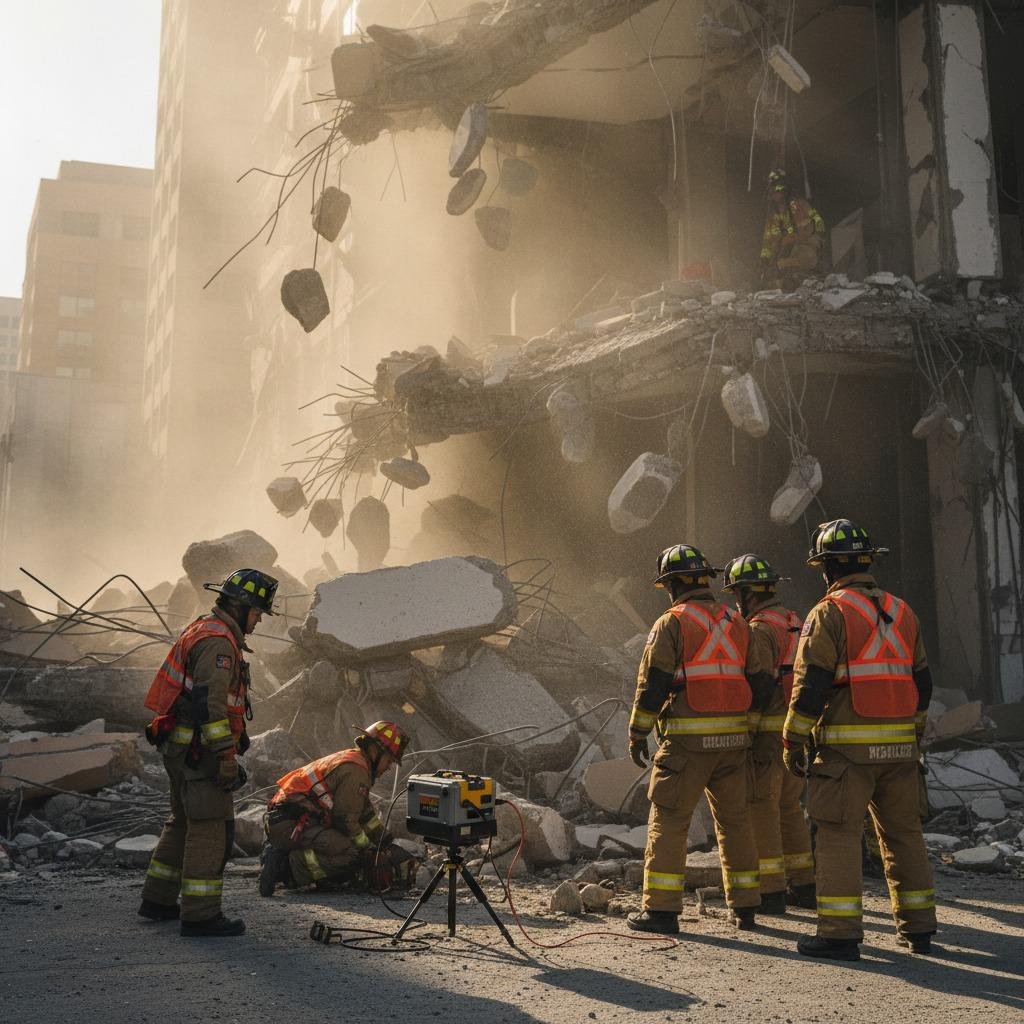
Why rapid deployment matters in rescue work
Rapid deployment for first responders is not a slogan; it is the difference between getting eyes on a collapse zone in minutes versus losing precious time setting up the wrong equipment. In fireground operations, urban search and rescue, and disaster response, the first tool that reaches the scene has to do more than move quickly. It has to help crews assess conditions, locate people, and work safely in places where dust, smoke, and unstable debris make ordinary inspection impossible.
That is the real search intent behind this topic: what should responders and procurement teams look for when they need fast, dependable detection under harsh field conditions? The answer depends on how the device performs in the first few minutes after arrival, when visibility is poor and the situation is changing faster than the team can brief itself.
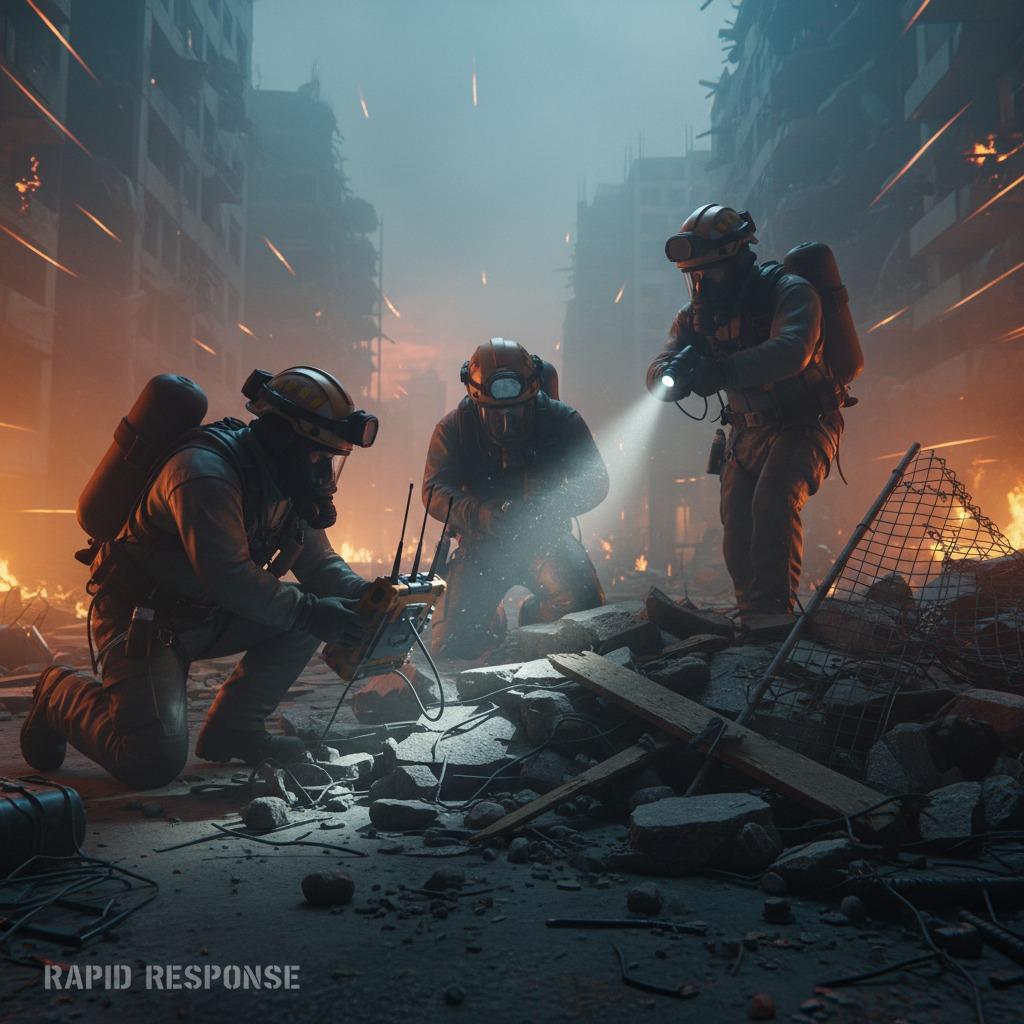
The operational problem: speed without losing signal quality
In emergency environments, a tool can be quick to deploy and still fail the mission if it cannot maintain useful sensing through smoke and dust penetration. Fine particulate matter, broken concrete, insulation fibers, steam, and wind can all interfere with field electronics and make a visual search unreliable. The first responders need is not just a camera or sensor that turns on quickly. It needs to keep returning actionable information when the scene is ugly, noisy, and unstable.
That is especially true in victim detection under debris. A collapsed structure often hides a person behind layers of concrete, wood, sheet metal, and void spaces. Crews are usually trying to answer a simple but difficult question: is there a human presence here, and if so, where is the strongest sign of life? The faster that answer comes back, the faster command can decide whether to mark, breach, shore, or continue systematic searching.
What the best rapid-deployment tools should help confirm
Good rescue equipment should support more than one type of clue. Human presence confirmation is rarely based on a single data point. Teams often combine visual cues, sound, thermal differences, and movement signals. In many scenarios, heartbeat and breathing detection become especially valuable because small chest movements or periodic motion may be the only signs available when a victim is buried behind debris or isolated in a void.
That does not mean every site will allow clean readings. A practical caution: walls, rebar, water intrusion, and debris density can all reduce detection confidence. Experienced teams know to treat sensor output as decision support, not a verdict. The right tool helps narrow the search area; it does not replace disciplined rescue procedure.
Key takeaways for buyers and response teams
For sourcing managers and program leads, the buying question is not simply whether a device detects something. It is whether the unit can be deployed under stress, interpreted quickly, and used by personnel who are already wearing gloves, helmets, and breathing apparatus. A field-ready system should support:
- fast setup with minimal training burden
- clear feedback that can be understood in poor visibility
- detection support for human presence confirmation in complex environments
- useful performance when smoke and dust penetration is a real challenge
- enough durability to handle transport, vibration, and rough scene handling
The best systems often win not because they are the most complicated, but because they reduce friction. If a tool takes too long to stage, requires perfect alignment, or demands an expert operator, it can become dead weight during a real callout.
Selection criteria that matter in the field
Deployment time and workflow
Look closely at how many steps are needed before the first usable reading. A device that powers on quickly but still needs a long calibration routine may not be truly rapid in field terms. The workflow should fit the pace of rescue operations, where one team may be stabilizing access while another is already searching.
Signal reliability in mixed conditions
Not all rescue scenes are dry rubble piles. Some involve rain, fire suppression runoff, shifting dust clouds, or dense smoke. If the technology is meant for these conditions, ask how it handles interference and whether it supports victim detection under debris without requiring an ideal surface or line of sight.
Operator clarity
The display, alarms, and output language should be unambiguous. In a noisy scene, vague indicators waste time. Crews need a readable signal, a logical range of confidence, and enough contextual feedback to decide whether to keep searching, mark the zone, or call for another method.
Common mistakes buyers make
One common mistake is focusing on peak performance claims while overlooking real-world speed. Another is assuming one sensing method will cover every collapse scenario. Rescue work is layered. A unit that performs well for heartbeat and breathing detection may still struggle in a deep void space with thick barriers. Likewise, a tool that is excellent at quick scanning may not provide enough confidence for final confirmation.
There is also a procurement trap: overbuying complexity. If the team cannot train to a system in a realistic timeframe, it will sit in storage or be used only by a handful of specialists. That is a poor outcome for equipment purchased to support urgent response.
Practical advice for agency decision-makers
Before buying, ask how the equipment will be used in the first five minutes after arrival, not just in a controlled demo. Review glove-friendly controls, battery management, transport packaging, and whether the device can be handed from one operator to another without a long reset. If the system is intended for cross-agency use, simplicity matters even more.
It also helps to define the operational priority in advance. Is the main goal rapid area screening, human presence confirmation, or deeper victim detection under debris? A clear mission profile prevents mismatched purchases and makes field adoption easier.
Choosing equipment that supports real rescue decisions
Rapid deployment for first responders is ultimately about compressing the time between arrival and informed action. The right equipment should help teams work through smoke and dust penetration, identify likely signs of human presence, and support search efforts where heartbeat and breathing detection may be one of the few usable clues. In other words, the best tool is the one that earns trust in a difficult scene.
If you are evaluating this kind of solution, start with the workflow, not the brochure. Compare how fast the unit can be staged, how clearly it reports findings, and how well it fits the realities of victim detection under debris. For rescue teams, that practical fit is usually worth more than any feature list.
FAQ
Is one detection method enough for collapse rescue?
Usually not. Teams often need multiple indicators because debris, barriers, and environmental noise can distort any single signal.
Why is quick setup so important?
Because the first minutes after arrival are when the scene is changing fastest and command needs usable information to guide actions.
What should buyers prioritize first?
Prioritize field usability: deployment speed, clarity of output, and whether the device still performs when conditions are dirty, dark, or unstable.
For agencies and buyers planning their next equipment review, the next step is straightforward: map your likely rescue scenarios, then test any candidate system against those conditions before committing budget.