






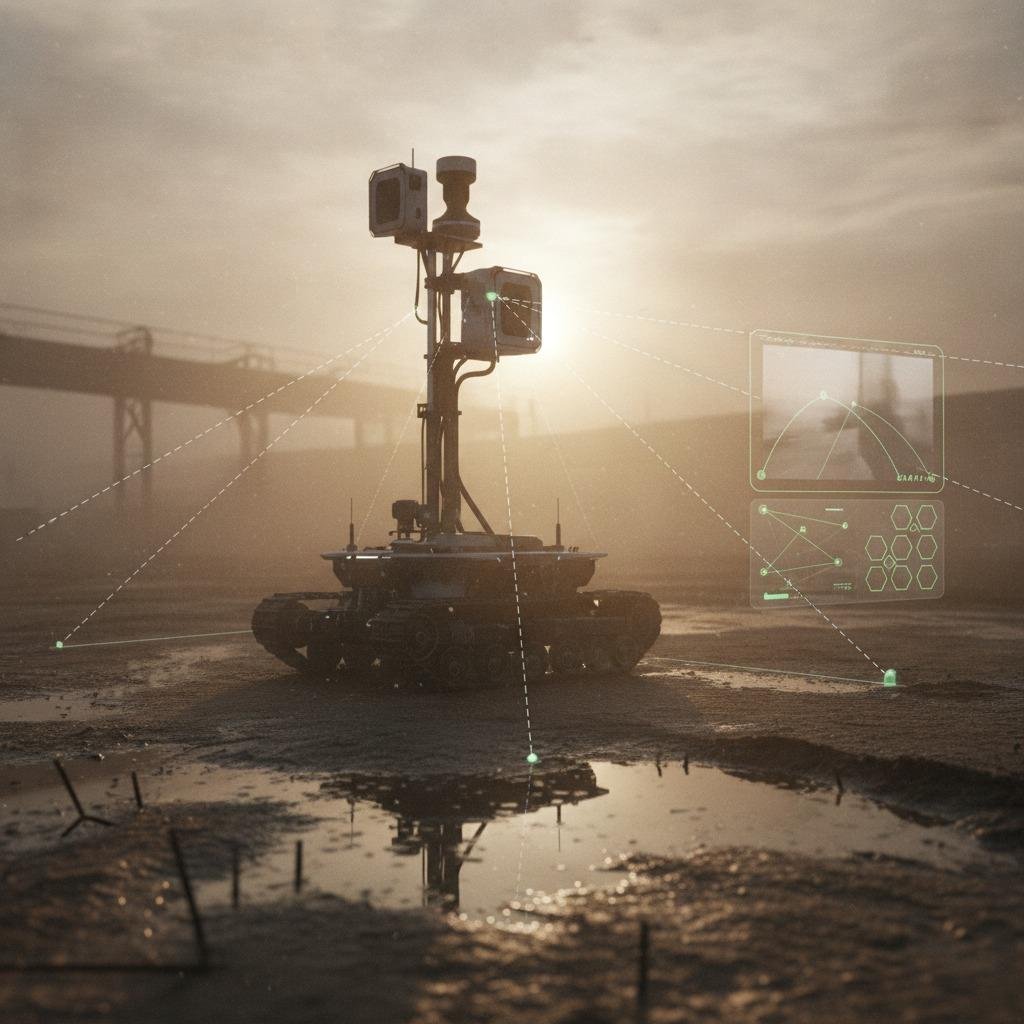
Why robust sensing matters when conditions stop cooperating
Robust sensing is what keeps machines, vehicles, and inspection systems useful when the environment gets messy. In a clean lab, almost any sensor looks impressive. On a factory floor, at a windy loading dock, or in an outdoor fleet application, the picture changes fast. Dust builds up. Fog rolls in. Vibration, glare, moisture, and electrical noise start to distort what the system thinks it sees.
For engineers and sourcing teams, the real question is not whether a sensor can perform in ideal conditions. It is whether it can still deliver trustworthy data when the operating window narrows. That decision affects safety, uptime, maintenance burden, and in some cases whether a product is even viable for the intended market.
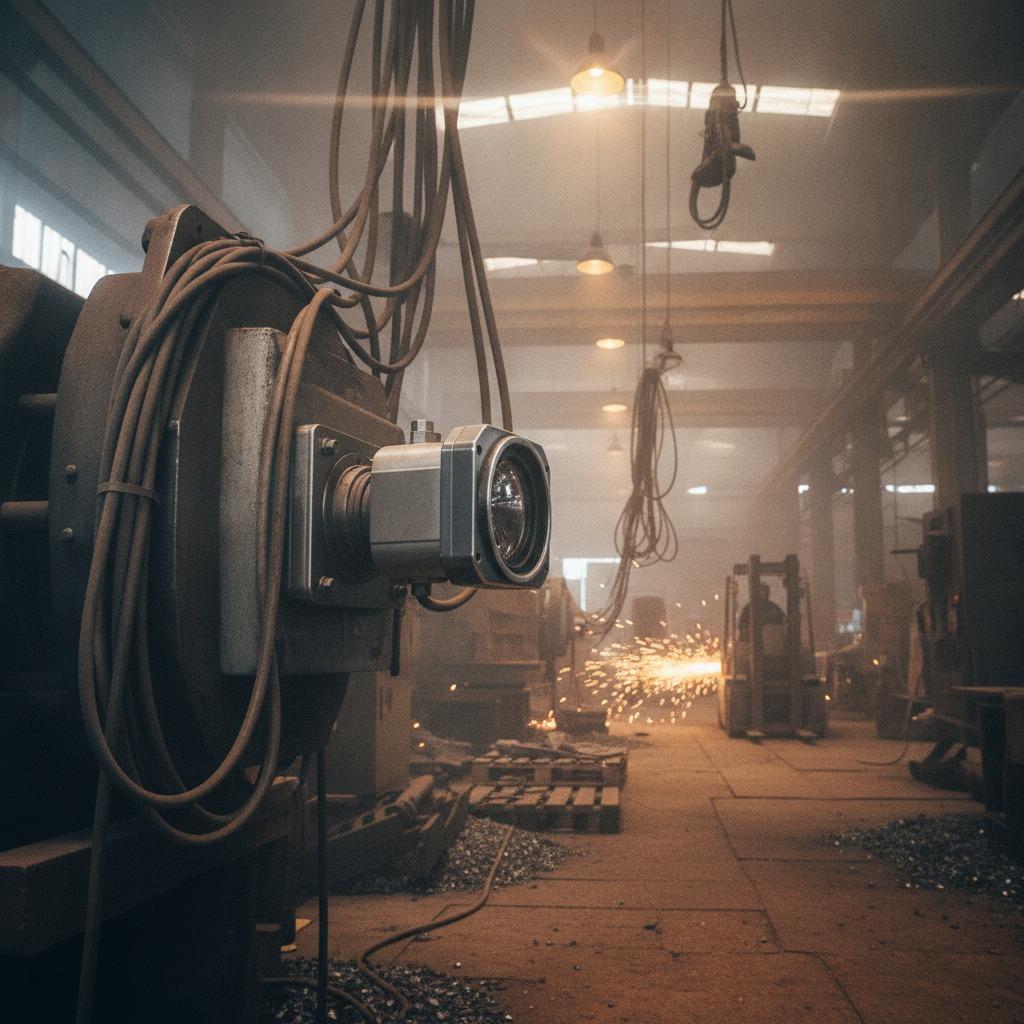
The practical problem: when good sensors fail in bad environments
Many sensor packages perform well in controlled demos but become brittle once the application leaves the test bench. Optical systems can struggle with dust and fog penetration. Cameras and lidar can lose confidence in low visibility navigation. Even otherwise solid sensing stacks can be weakened by interference from electrical systems, reflective surfaces, temperature swings, or contamination on housings and lenses.
This is why robust sensing is not just a technical feature. It is a design philosophy. The system has to tolerate uncertainty and still provide enough signal quality for the controller, operator, or analytics stack to make a safe decision. In practice, that means thinking about the full sensing chain: emitter, receiver, housing, cleaning method, signal processing, and fallback behavior.
What robust sensing usually requires
There is no single recipe, but there are recurring traits in systems that hold up well.
Interference resilience
Sensor outputs should remain stable when nearby equipment introduces noise or when multiple sensing channels overlap. This is especially important in dense industrial environments, where motors, welders, radios, and moving metal structures can all affect measurements. Strong filtering helps, but so does smart placement and a housing design that avoids unnecessary exposure.
Dust and fog penetration
In outdoor or particulate-heavy settings, the challenge is not just seeing through obscuration once; it is doing so continuously. Shorter wavelengths, alternate sensing modes, or multi-sensor fusion may improve survivability, but each option brings trade-offs. A buyer should always ask how the system behaves as visibility degrades, not only what its peak range looks like on a datasheet.
Low visibility navigation
Autonomous vehicles, mobile robots, and guided equipment often need dependable position awareness when lighting or atmospheric conditions drop. That usually means combining sensing modalities rather than relying on one technology alone. Cameras, radar, lidar, inertial sensors, and encoders each contribute different strengths. The best result is often a layered system that can degrade gracefully instead of failing abruptly.
All-weather perception
Outdoor systems must survive rain, snow, fog, heat, and cold without requiring constant intervention. Sealing, thermal management, lens cleaning, and enclosure placement become part of the sensing design, not afterthoughts. A technically elegant sensor can still be a poor choice if its maintenance demands are incompatible with the deployment.
How buyers should compare options
When evaluating sensing solutions, compare them in the conditions that matter most to your application, not in the easiest ones. A useful shortlist usually starts with three questions: what fails first, how badly does it fail, and can the system recover?
Ask suppliers how the device handles contamination, whether the output includes confidence information, and what happens when signal quality drops below threshold. If the answer is vague, that is a warning sign. Real-world robustness is often less about headline range and more about predictable behavior under stress.
It also helps to separate mechanical robustness from sensing robustness. A rugged enclosure is valuable, but it does not automatically solve poor optical performance, signal drift, or interference susceptibility. The best systems address both.
Common mistakes that create fragile systems
One frequent mistake is overreliance on a single sensor type. Another is assuming that a high-performance component will remain high-performing after installation in a dirty, vibrating, or reflective environment. Teams also underestimate maintenance. A sensor that needs frequent cleaning may be technically capable and commercially impractical.
There is also a habit of specifying for nominal conditions while ignoring failure modes. That can lead to surprises later, especially in automated systems where a degraded reading is more dangerous than a complete shutdown. Better to design for a controlled fallback than to hope the environment stays polite.
Practical buyer advice
If you are sourcing a robust sensing solution, insist on application-specific validation. Ask for environmental limits, integration notes, and evidence of performance in similar operating conditions. If the use case involves dust and fog penetration or all-weather perception, probe the supplier’s approach to signal processing and cleaning strategy. If the use case is mobile, ask about low visibility navigation behavior and sensor fusion options.
For product teams, the most useful internal document is often a failure-mode checklist. It should cover what the sensor sees, what it misses, how often it needs service, and how the system responds when the data quality is poor. That sounds simple, but it prevents a lot of expensive optimism.
Where robust sensing tends to pay off
The payoff is usually seen in fewer unplanned stoppages, safer operation, and less time spent compensating for sensor blind spots. In logistics, mining, agriculture, industrial automation, and autonomous platforms, that can translate into better uptime and less operator intervention. The value is not theoretical; it shows up whenever the environment gets worse and the system keeps working anyway.
What to ask before you commit
Before finalizing a platform, ask whether it can maintain stable performance under interference, whether it supports degraded-mode operation, and how it behaves in dust, fog, rain, or glare. Those answers tell you more than a polished feature sheet. A sensor that looks ordinary on paper may be the one that survives Monday morning in the field.
If you are comparing technologies for a new build or redesign, the next step is to map your worst-case environment first, then judge each sensing option against that reality. That is usually where the right choice becomes obvious.