






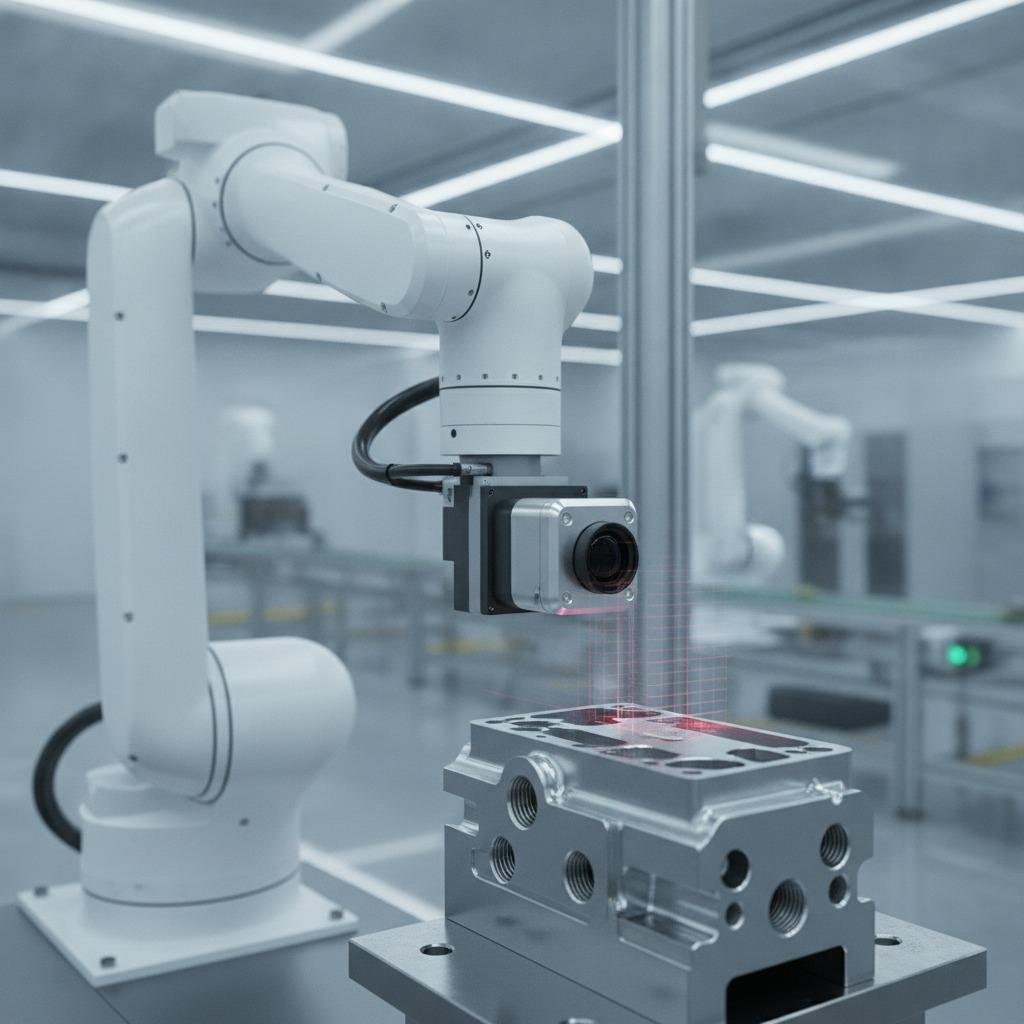
Why short-range high-precision sensing matters
Short-range high-precision sensing sits in the awkward but important space where ordinary distance sensors stop being useful and full machine-vision systems become too slow, too noisy, or too expensive for the task. If you are trying to measure a tiny gap, read a subtle surface change, detect a small vibration, or spot a hazard before a machine gets too close, the difference between “close enough” and truly precise can decide whether a line runs smoothly or starts generating scrap, alarms, and maintenance calls.
This is why engineers often treat short-range sensing as a design decision rather than a component choice. The real question is not just whether a sensor can detect an object nearby. It is whether it can do so consistently, in the right space, under real production conditions, and with enough fidelity to support the next action. That could mean triggering a stop, guiding an alignment step, mapping a surface, or verifying that a small assembly has actually seated properly.
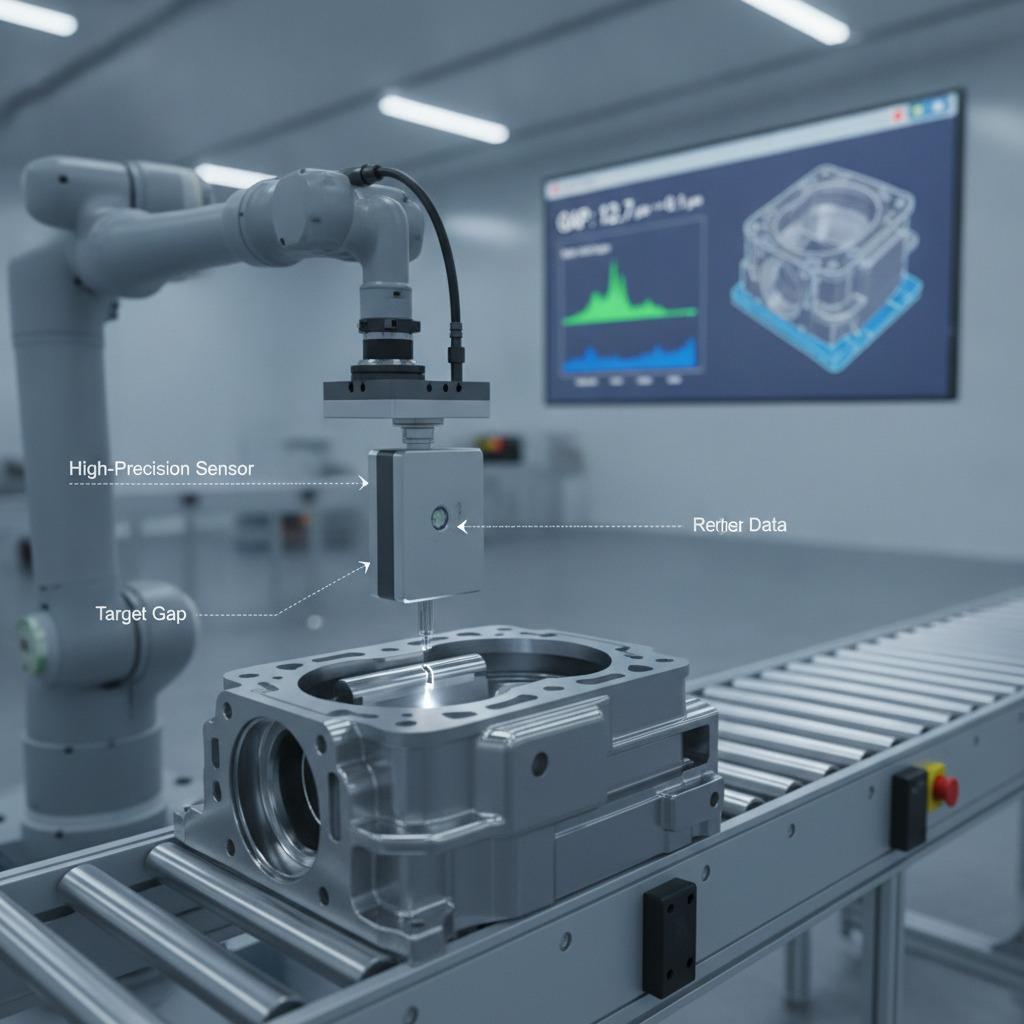
The practical problem: close-up measurements are harder than they look
At short distances, small errors become large ones. A slight change in angle, surface reflectivity, ambient light, vibration, or mounting position can skew results. That is one reason short-range high-precision sensing is often used where conventional detection is not enough. The sensor is not only looking for presence; it is trying to resolve detail.
For example, near-field imaging can support inspection tasks where geometry matters more than simple detection. Micro-motion detection is useful when a machine part moves only a fraction of a millimeter but that movement still indicates wear, imbalance, or a fault condition. Intricate structure reconstruction comes into play when the surface or part has fine features that must be captured rather than merely spotted. Proximity hazard warning, meanwhile, is less about measurement elegance and more about avoiding a collision or unsafe encroachment in tight workspaces.
Common sensing approaches and where they fit
Optical and imaging-based methods
Optical approaches are often chosen when the target has fine features, a stable viewing path, and enough contrast for the system to interpret. They can be well suited to near-field imaging and intricate structure reconstruction, especially in inspection stations, robotics, and quality control. The trade-off is that optics can be sensitive to contamination, glare, or inconsistent lighting. In a plant environment, that matters more than many project teams expect.
Laser and triangulation-style measurement
Laser-based systems are often used when the user needs repeatable distance readings at short range. They can be strong candidates for gap measurement, height checks, and alignment tasks. Their value is not only precision but speed. That said, shiny metals, dark plastics, and angled surfaces can complicate interpretation, so test samples from the actual production mix are worth the effort.
Vibration- and motion-sensitive methods
For micro-motion detection, the sensing method must respond to very small displacement without being overwhelmed by machine noise. In practice, this often means paying close attention to mounting rigidity, filtering, and the surrounding mechanical environment. A sensor may look excellent in a lab and then become frustrating on a frame that vibrates during every cycle.
What buyers should compare before specifying a system
Resolution gets attention first, but it should not be the only metric. Working range, repeatability, response time, target material, and immunity to environmental interference often shape whether a system is useful day to day. If the application involves proximity hazard warning, the response time and fault behavior can matter as much as the measurement itself. If it involves inspection, repeatability and data stability usually matter more than headline precision.
It also helps to ask how the sensor behaves outside ideal conditions. Can it hold performance across dust, mist, oil film, or varying surface finish? Does it require frequent recalibration? Is the output easy for the control system to interpret, or will the team spend weeks cleaning up integration issues? These are not minor details. They often decide whether a project gets scaled or quietly shelved.
Where teams get into trouble
A common mistake is choosing a sensing technology based on one impressive demo part. Production reality is less polite. Parts vary, operators change setups, and the environment is rarely as controlled as the test bench. Another frequent issue is overspecifying the sensor and underspecifying the application. A highly precise device will not rescue a poor mounting design, unstable part presentation, or an unclear acceptance criterion.
Another caution: do not assume that tighter range automatically means better short-range high-precision sensing. Narrowing the field too much can make the system fragile. In some cases, a slightly broader sensing window improves uptime because the sensor tolerates normal variation without losing the signal entirely.
Practical guidance for sourcing and engineering teams
Start with the actual decision the sensor must support. Is it inspection, control, warning, or reconstruction? Then define the smallest meaningful change you need to see. That single step can eliminate a lot of unnecessary complexity. After that, test with real samples, not just idealized pieces. Include surface finish variation, vibration, and the worst alignment you expect on the line.
If the application involves near-field imaging or intricate structure reconstruction, ask how the system handles contrast, occlusion, and fine edges. If the task is micro-motion detection, look closely at noise rejection and how the sensor behaves when the machine is active rather than idle. For proximity hazard warning, prioritize reliability and straightforward integration. A sensor that is technically elegant but hard to trust will not protect anyone.
Quick checklist for selection
Before placing an order, confirm the range, output type, environmental limits, mounting constraints, and maintenance burden. Make sure the calibration method is realistic for the production team. If the sensor will feed automation logic, verify latency and signal stability early. And if the purchase is part of a broader quality upgrade, compare the total system effort, not just the unit price. Cheaper hardware can become expensive once installation, downtime, and troubleshooting are counted.
FAQ
Is short-range sensing only for inspection?
No. It is also used for alignment, motion monitoring, automated control, and safety-related warnings. The use case matters more than the technology label.
Can one sensing method handle every short-range job?
Usually not. Optical, laser-based, and motion-sensitive methods each solve different problems, and the best choice depends on the surface, environment, and required output.
What should teams test first?
Real samples under real conditions. That is the fastest way to expose weak assumptions before they become expensive in production.
What to do next
If your project depends on short-range high-precision sensing, start by defining the smallest feature or movement that truly matters, then test candidate systems against that requirement in the actual operating environment. The right sensor is the one that keeps giving useful data after the first week, not only during the demo.