






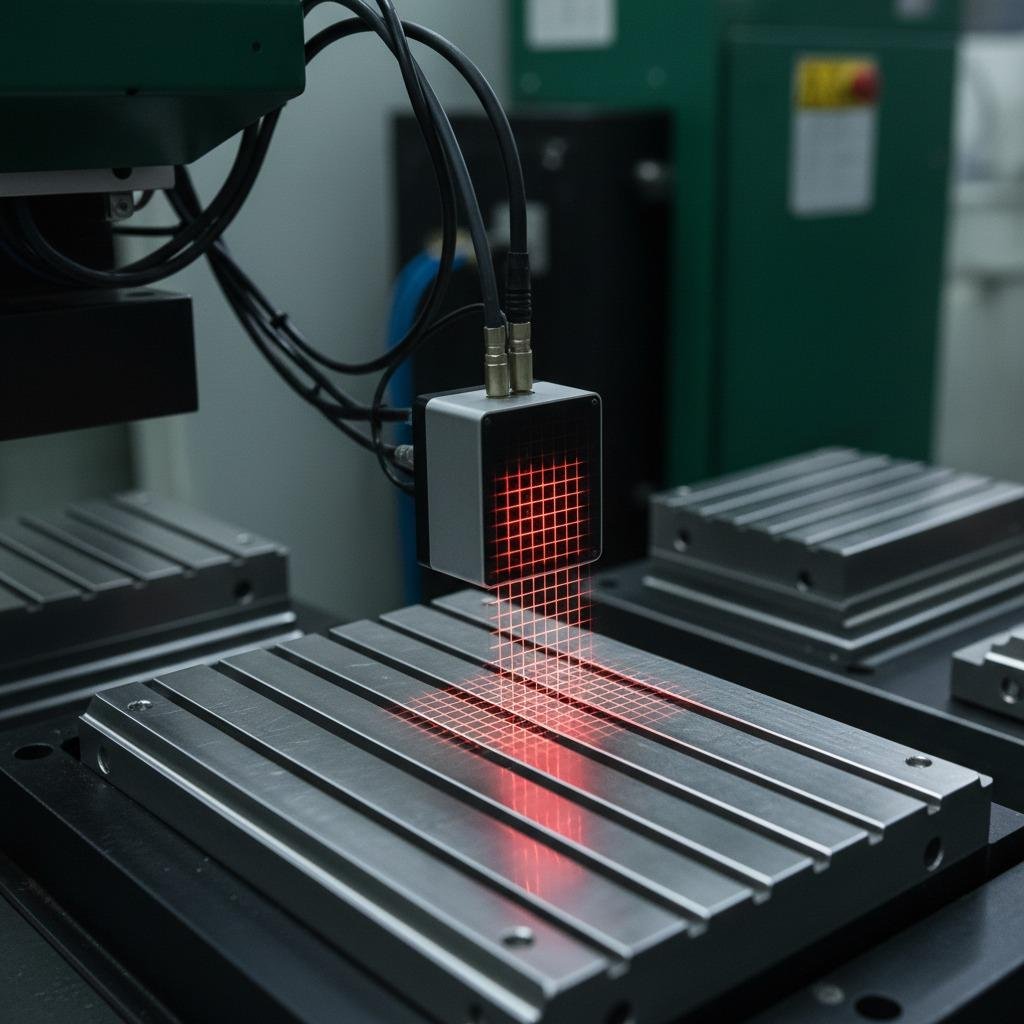
Why short-range high-precision sensing matters in real production settings
Short-range high-precision sensing is one of those capabilities that only gets attention after a process starts failing. A robot misses a pickup by a few millimeters. A machine vision station cannot read a fine feature on a crowded part. A safety system detects an object, but not early enough to prevent a clash. In each case, the gap is small, yet the consequence can be scrap, downtime, or a near miss that sends a line manager back to the drawing board.
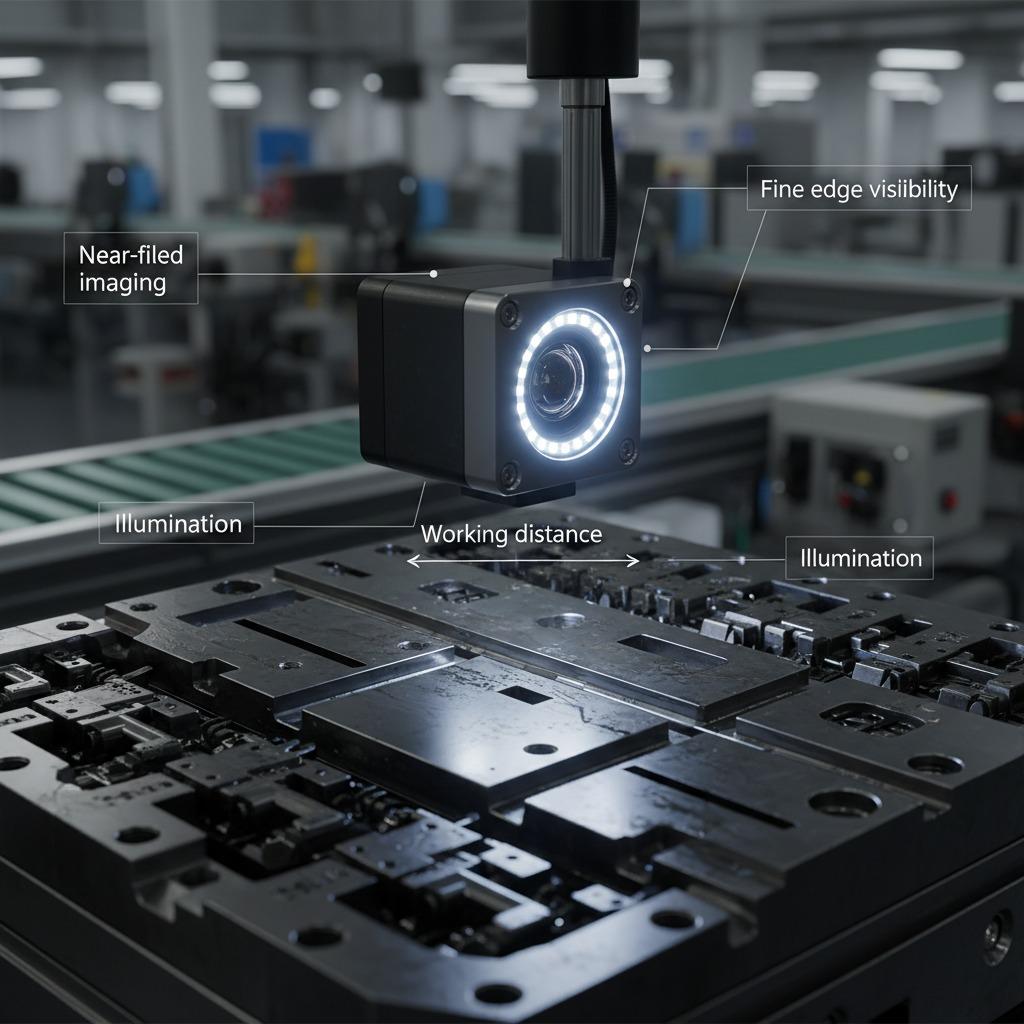
The practical value of this sensing class is not abstract accuracy. It is the ability to make reliable decisions when the target sits close to the sensor and the details are fine enough that ordinary distance measurement is no longer enough. For engineers and sourcing teams, the real question is not whether a sensor can detect something. It is whether it can do so consistently in a tight working envelope, under the vibration, clutter, and reflectivity problems that show up on an actual factory floor.
What problems this technology is meant to solve
Short-range high-precision sensing is usually selected for one of four jobs: near-field imaging, micro-motion detection, intricate structure reconstruction, or proximity hazard warning. Those four applications sound different, but they share the same demand: the system must resolve small changes at close distance without becoming noisy or unstable.
Near-field imaging is useful when a part contains fine edges, shallow grooves, or surface texture that conventional inspection setups blur out. Micro-motion detection matters when a machine needs to notice tiny shifts, oscillation, or deformation before the movement becomes visible to the eye. Intricate structure reconstruction comes into play when a component’s geometry is too detailed for a coarse scan. Proximity hazard warning, by contrast, is less about image quality and more about dependable early detection in constrained spaces, where a late warning is not much of a warning at all.
A buyer often discovers that the sensing problem is really a system problem. Lighting, mounting distance, target material, ambient vibration, and the surface finish of the part can all change the result. That is why “best sensor” is a weak purchasing criterion. Better questions are: what is the minimum feature size that matters, how close is the working range, and what kind of output does the downstream controller actually need?
Where the trade-offs usually appear
There is always a trade-off between resolution, range, and robustness. Tighten one and you often give up some of the others. A sensor tuned for very small movements may be sensitive to noise. A system designed for structure reconstruction may require more careful calibration or more stable positioning. A proximity warning setup may work well for presence detection yet be less informative when a buyer wants both warning and inspection in the same package.
That does not mean the technology is fragile. It means selection needs discipline.
Key factors to compare before buying
Operating distance matters first, because “short-range” can mean several different things across product families. After that, look at the smallest feature or motion that must be detected, the surface types involved, and whether the environment includes dust, glare, heat, or vibration. Interface and data handling are also easy to overlook. A technically strong sensor can still be awkward if it does not integrate cleanly with the machine controller, PLC, or inspection software already in use.
A practical caution: do not rely on ideal lab samples when specifying a system. Real parts often arrive with oil film, minor warpage, or finish variation. Those small differences are exactly where short-range high-precision sensing proves its value or exposes its limits.
Common mistakes buyers make
One mistake is assuming a more expensive sensor will automatically solve a difficult detection task. Another is choosing a device based only on headline resolution, then discovering that the mounting window is too narrow or the signal is unstable on reflective materials. A third mistake is underestimating the downstream workload. High-precision sensing can create more data, not less, and the processing stage needs to be ready for it.
Teams also sometimes ask a single sensor to do too many jobs. If a line needs both proximity hazard warning and detailed structure reconstruction, it may be wiser to separate safety detection from inspection rather than force one device to carry both responsibilities.
How to evaluate a solution in a real buying process
The most useful evaluation sequence is straightforward. Start with the application, not the catalog. Define the critical feature, the target distance, and the failure mode you are trying to prevent. Then confirm whether the sensing method is suitable for the material and geometry. After that, ask for representative samples, setup guidance, and integration notes. If the supplier cannot explain how the sensor behaves on your kind of surface or part shape, that is a warning sign.
For sourcing managers, total cost should include setup time, calibration effort, and maintenance overhead. For engineers, the key question is repeatability under real operating conditions. For product teams, the issue is whether the sensing performance improves the customer experience in a way that can be defended on the spec sheet and on the factory floor.
FAQ: a few questions that come up often
Is short-range high-precision sensing only for inspection?
No. It is also used for machine guidance, motion monitoring, safety warning, and detailed reconstruction tasks.
Does higher precision always mean better performance?
Not necessarily. If the sensor cannot hold up in the target environment, precision on paper will not matter much in production.
What should a buyer request from a supplier?
Request application fit information, integration details, and evidence that the sensing approach matches the target distance and part characteristics.
Next step for engineers and sourcing teams
If your application depends on close-up detail, early warning, or small-motion detection, short-range high-precision sensing should be evaluated as a process tool, not just a component. Start with the measurement problem, define the real operating conditions, and compare options against the part, the environment, and the control system together. That is usually where the right choice becomes visible.